Usuba
Usuba
Yeast-free puff pastry
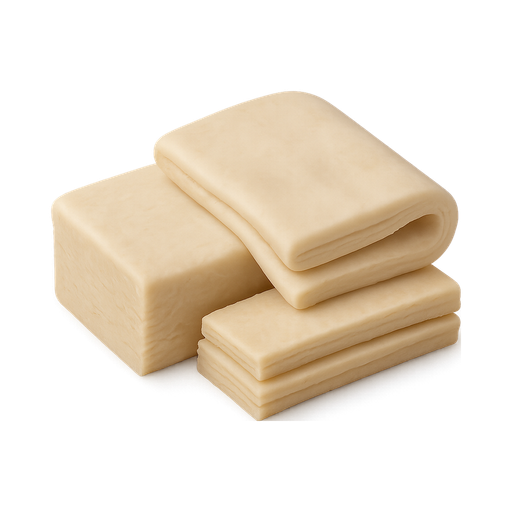
Yeast-free puff pastry is created through repeated folding and rolling of butter with flour, which forms thin airy layers. This dough rises in the oven due to moisture and steam rather than fermentation, resulting in crispy and light pastries. It is versatile and suitable for both sweet and savory pies, croissants, vol-au-vents, and other pastry products, requiring only precise temperature control and proper folding technique.
About
Yeast-free puff pastry is a baking base that relies on mechanics rather than fermentation. Layers are created through alternating thin sheets of butter and flour, and air enters them during baking under the action of temperature. This dough works faster than yeast-based dough and gives baked goods a crispy, flaky structure with distinct layers.
Nature and Application
The dough has a neutral, buttery taste, without sourness or yeast notes. This is its main advantage: it does not compete with the filling and works well for both sweet and savory products. The consistency after baking is crispy and flaky, with visible thin layers that easily separate from each other.
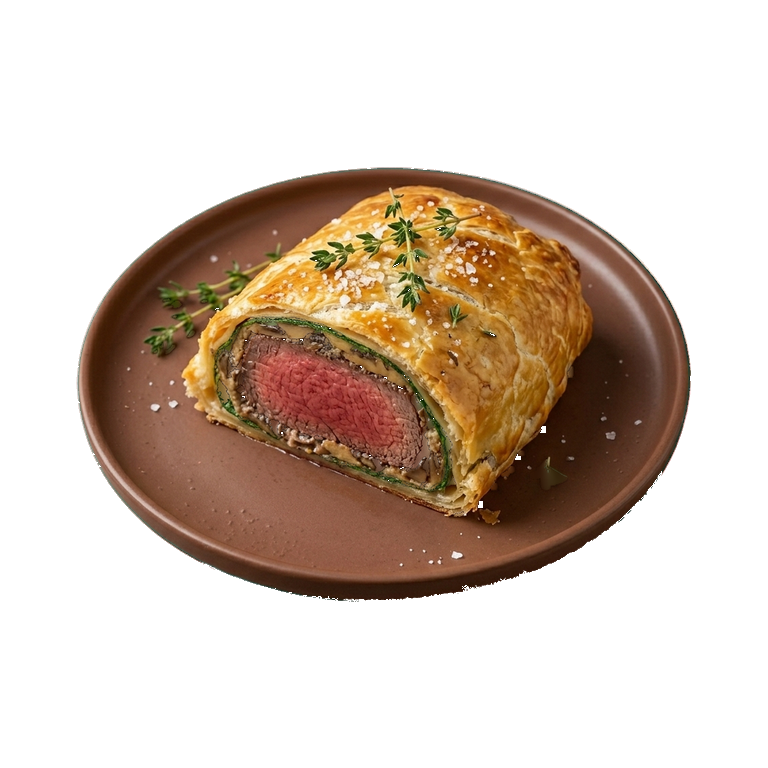
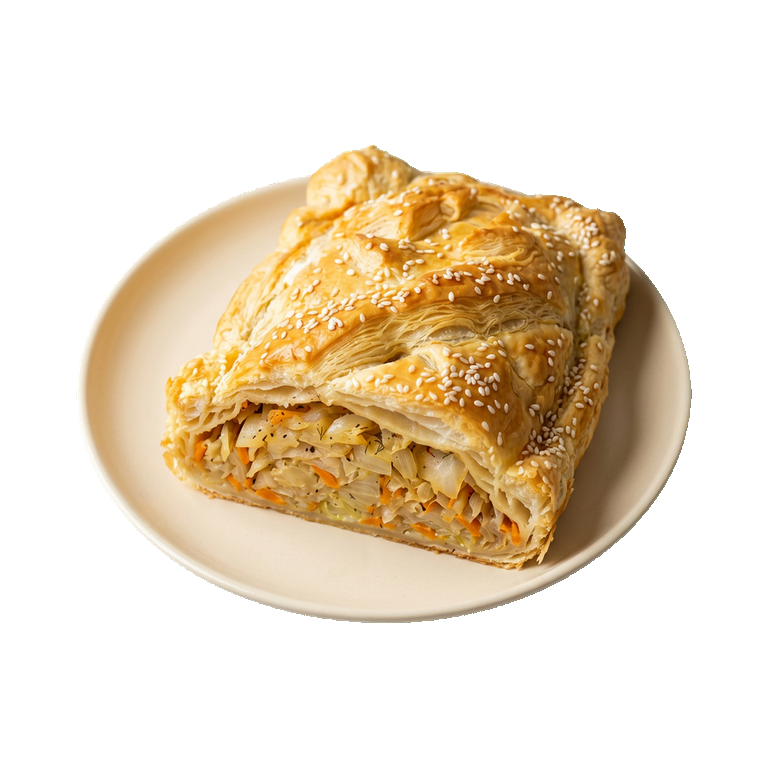
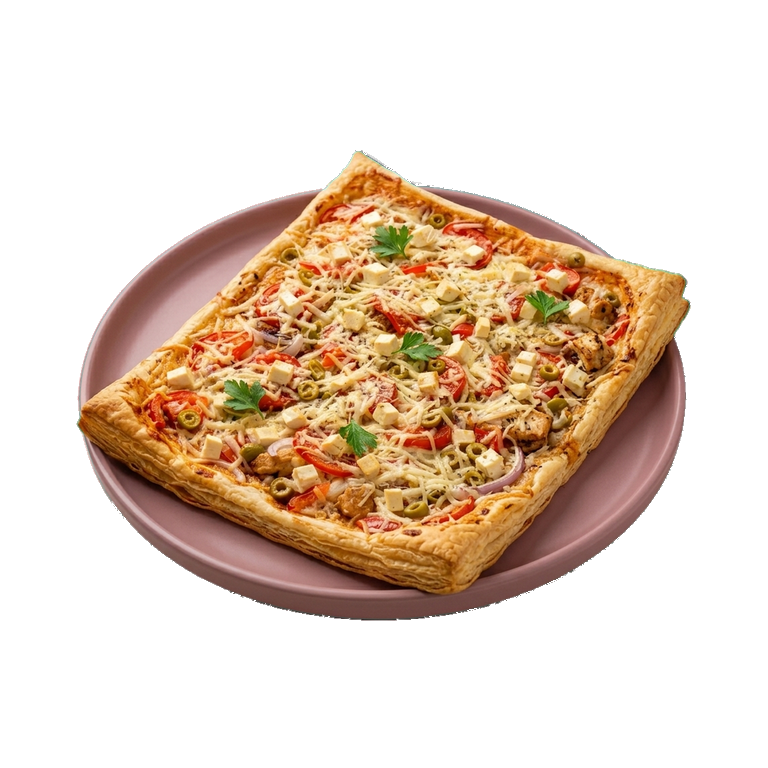
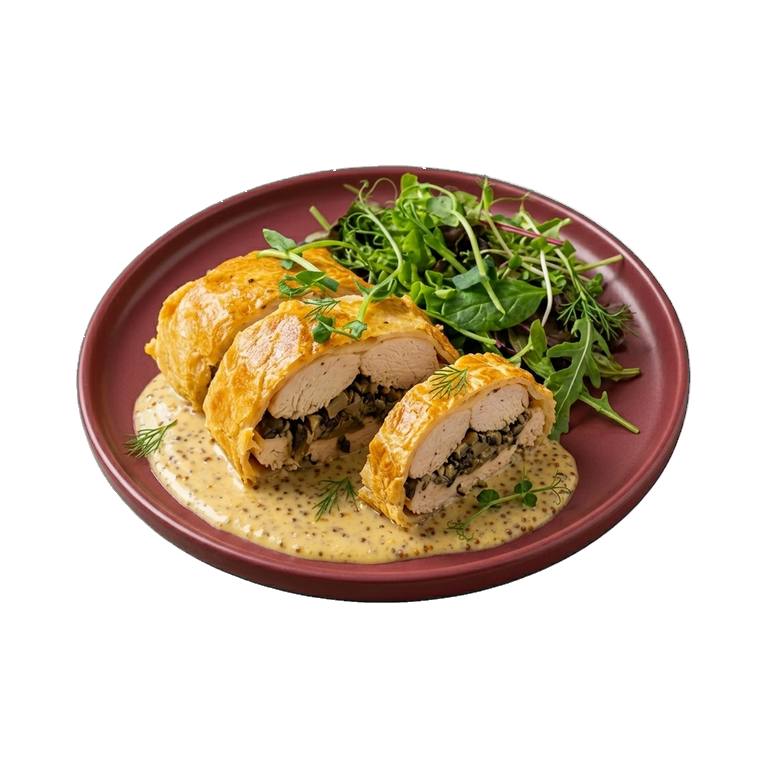
This dough is ideal for croissants, pastries with various fillings, vol-au-vents, pies and baked goods when you need a crispy, airy crust. It is used both as a base for tarts and for decorating dishes with cut strips. Thanks to the absence of yeast, the dough does not require long fermentation and is ready to use almost immediately.
Working with dough
The main rule: the butter must be cold, and the dough must be cool at all stages. If the dough or butter warms up, the layers won't form properly, and the baked goods will turn out dense instead of airy. Work quickly, keep the surface and tools cold, and if necessary, put the dough in the freezer for 15–20 minutes.
When rolling out the dough, apply even pressure so that the butter is distributed uniformly. If the butter breaks through the dough, dust it with flour and chill again. After rolling and folding (usually the dough is folded several times to increase the number of layers), let it rest in the cold before shaping.
Baking and Results
Bake at a high temperature — usually 200–220 degrees. High heat quickly turns moisture into steam, which lifts the layers upward, creating the desired structure. Baking time depends on the size of the product: small pastries are ready in 15–20 minutes, large pies — in 30–40 minutes.
Finished baked goods should be golden, crispy and break easily. If the top is browned but the inside is still wet, lower the temperature by 20 degrees and extend the baking time. Cooled dough keeps in an airtight container for several days and freezes well — this is convenient for pre-prepared blanks.
Selection and storage of ready-made dough
Ready-made yeast-free puff pastry is sold chilled or frozen. When purchasing, check the date and package integrity. Use chilled pastry within a few days; frozen pastry keeps for months. Thaw it slowly in the refrigerator, not at room temperature, to prevent the butter from melting prematurely.
If you're making the dough yourself, store it in the freezer in parchment paper or plastic wrap, divided into portions. Before using, allow it 10–15 minutes to thaw in the refrigerator — the dough should be cold but pliable, so it rolls out easily. Don't throw away the dough scraps: you can collect them, chill, and roll them out again for small baked goods.
Nutrition
per 100 g
- Calories
- 298 kcal
- Protein
- 7.2 g
- Fat
- 15.8 g
- Carbs
- 34.5 g
Measures and weight
- 1 pcs
- 500 g
Measure calculator
- Weight
- 100 g
- Calories
- 298 kcal