Usuba
Usuba
Fried sesame
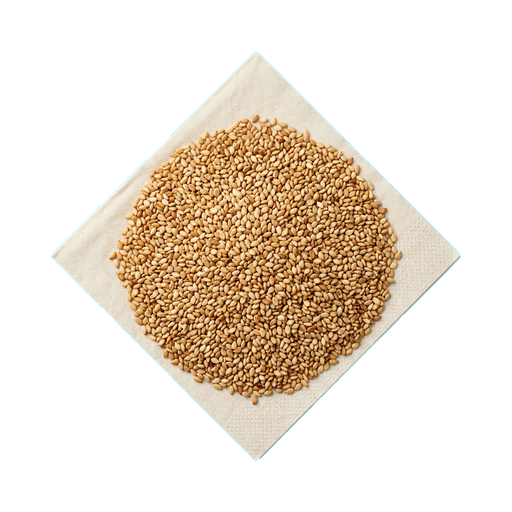
Roasted sesame seeds are sesame seeds processed at high temperature until they turn golden brown and develop a characteristic nutty aroma. The grains become crispy and acquire a more intense flavor compared to raw seeds, while also better revealing their natural oiliness. Used as a topping for sushi, salads, baked goods, and Asian dishes; with prolonged storage, it loses its crispness, so it is best added just before serving or at the end of cooking.
About
Roasted sesame is seeds that have undergone heat treatment and acquired a deep nutty flavor and crispy texture. Unlike raw seeds, roasted ones become more aromatic and better reveal their potential in dishes. It is not just an ingredient, but a way to add character and depth to food.
Aroma and Taste
Roasted sesame has a rich aroma — the fragrance reveals notes of roasted nuts, slightly sweet and earthy. The taste is crispy with a soft, buttery aftertaste. The intensity of flavor depends on the degree of roasting: light seeds are more delicate, dark seeds are more pronounced and slightly bitter.
Where and how to use
Toasted sesame seeds work everywhere you need a crispy texture and nutty accent. Sprinkle them on salads to add contrast; add to sushi and Asian dishes; use as a final touch for noodles or rice. It holds its shape well and doesn't soften, so you can add it to hot dishes at the very last moment.
Successful Pairings
- With soy sauce, ginger and garlic — a classic of Asian cuisine
- With lemon and olive oil — for light vegetable salads
- With avocado and nori — the perfect duo for sushi bowls
- With hot spices and coconut milk — for Thai soups
- With sesame oil — enhances the nutty profile
Selection and Storage
When purchasing, pay attention to the color — it should be uniform, without dark spots or signs of mold. Seeds should smell pleasantly of nuts, without any mustiness. Roasted sesame is best stored in a tightly closed container in a cool dark place or in the refrigerator — the oils in the seeds oxidize over time, so freshness is important.
If you buy a large quantity, it makes sense to store part of it in the freezer. Fried sesame seeds freeze well and do not lose their crunchiness. Before use, there is no need to thaw it — just add it directly from the freezer to the finished dish.
Nutrition
per 100 g
- Calories
- 573 kcal
- Protein
- 17.7 g
- Fat
- 49.7 g
- Carbs
- 23.4 g
Measures and weight
- 1 tbsp
- 9 g
- 1 tsp
- 3 g
- 1 cup
- 150 g
Measure calculator
- Weight
- 100 g
- Calories
- 573 kcal