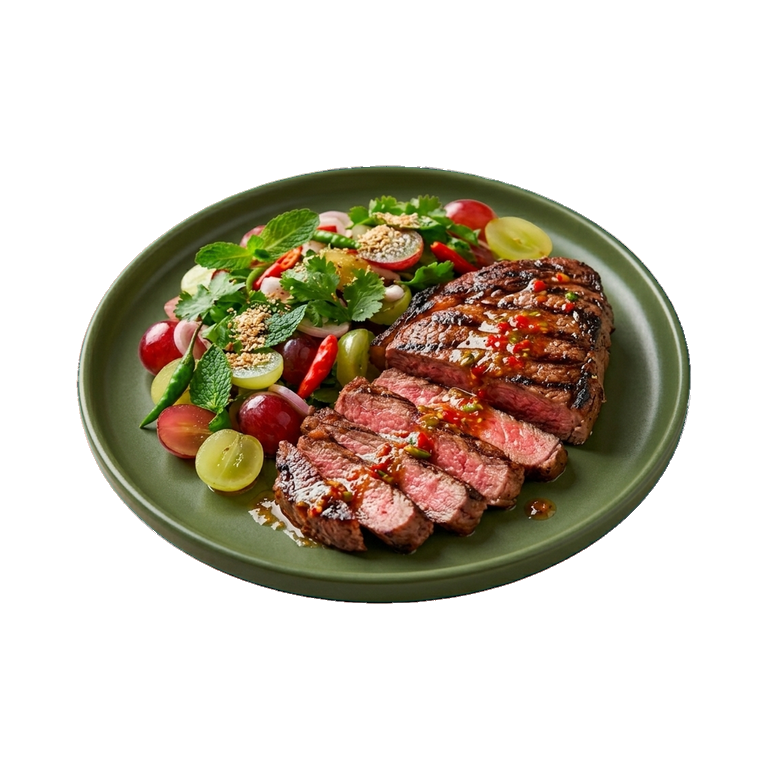
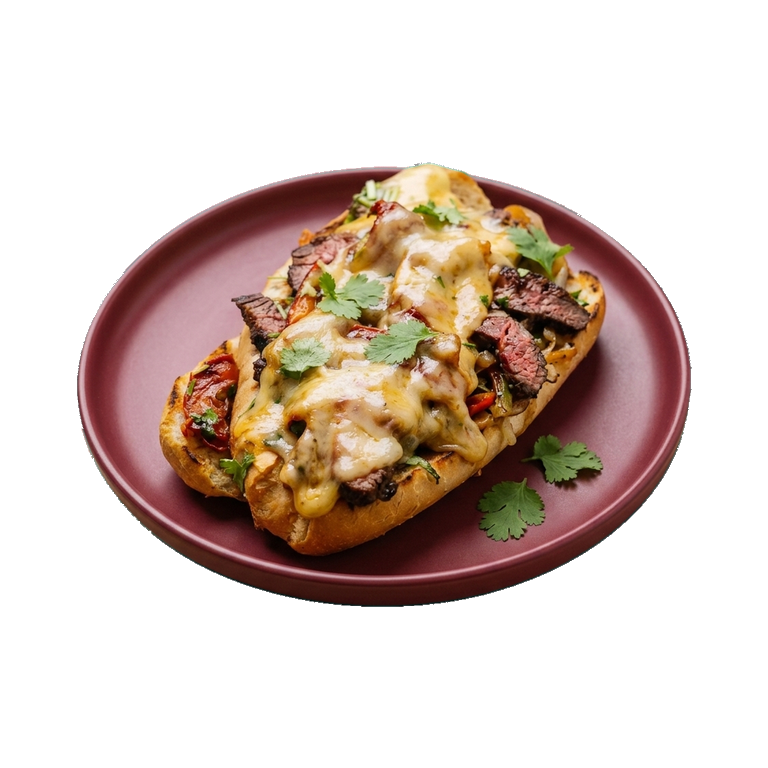
Usuba
Usuba
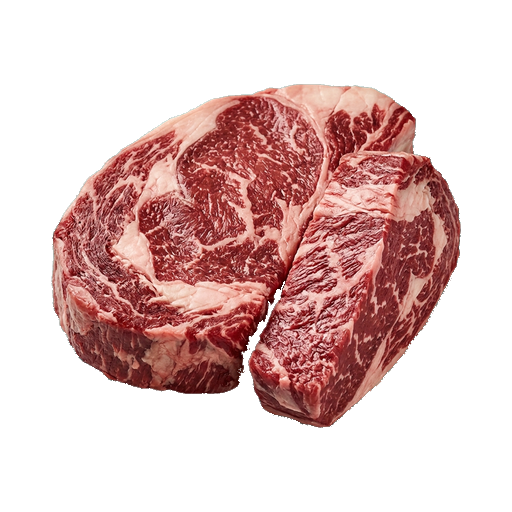
Beef steak
Beef steak is a thick cut of meat carved from the finest parts of a beef carcass, usually 2–5 centimeters thick. The meat has a dense structure with fat layers that create an appetizing crust when fried over high heat and retain juiciness inside. When choosing a steak, pay attention to marbling — white lines of fat within the meat guarantee the best flavor and tenderness of the finished dish.
About
Beef steak is not just a piece of meat, but an entire cooking philosophy. A thick slice of quality beef, properly prepared, becomes the foundation of a dish where every component plays a role: the crust, the juice, the texture. Steak requires a minimum of ingredients, but maximum attention to detail—from choosing the cut to cooking temperature.
Which parts to choose
- Ribeye — marbled beef with fat marbling, tender and juicy, forgiving of minor cooking mistakes
- Filet Mignon — the most tender cut, but less juicy; ideal for those who prefer a delicate flavor
- New York Strip — a balance between marbling and tenderness, with pronounced meaty flavor
- Tomahawk — a thick bone-in steak with an impressive appearance; the bone adds extra aroma
- Sirloin — a more affordable option with good flavor, but requires care during cooking to avoid drying out
Steak thickness is a critical parameter. Optimal thickness of 3–5 centimeters allows you to achieve a beautiful crust on the outside while maintaining a pink center. Thin pieces (up to 2 cm) cook too quickly, making it harder to control the degree of doneness.
Temperature and technique
Steak is cooked over high heat — the pan or grill should be heated until smoking. Meat is placed without oil (it adds complexity and may burn) and left untouched for the first 2–3 minutes until a crust forms. Flip once. Internal temperature determines the level of doneness: 50–55 °C for rare, 55–60 °C for medium-rare, 60–65 °C for medium.
After frying, the steak must rest for 5–10 minutes under foil. During this time, the muscle fibers relax and the juices distribute evenly. If you slice it immediately — all the juice will run out onto the cutting board.
Seasonings and Toppings
The best seasoning for steak is coarse sea salt and freshly ground black pepper, added 40 minutes before cooking or right before frying. Salt draws out moisture if applied 15–30 minutes before heat, so either apply it 40+ minutes ahead (the moisture will return), or at the last moment.
- Butter with garlic and fresh herbs is placed on a hot steak at the end of cooking — it melts and soaks in
- Soy sauce, oyster sauce, or balsamic vinegar add depth and saltiness
- Rosemary, thyme, or bay leaf are placed in the pan at the end — the aroma permeates the meat
How to choose and store
When purchasing, pay attention to the color — bright red or dark red, without gray spots. Marbling (white fat streaks) is a sign of quality and taste. The meat should smell fresh, without a musty odor. If you have purchased a frozen steak, thaw it in the refrigerator for 12–24 hours, not at room temperature.
Fresh steak is stored in the refrigerator for 3–4 days on the bottom shelf, preferably in vacuum packaging or an airtight container. Before cooking, take it out of the refrigerator 30–40 minutes in advance — the meat should be at room temperature to cook evenly.
What to serve with
Steak is good on its own, but side dishes make the dish more complete. Potatoes (mashed, fried, baked), grilled vegetables (eggplant, zucchini, bell pepper), fresh salads with acidity (lemon, vinegar) balance the richness of the meat. Red wine or strong tea enhance the meaty flavor.
Nutrition
per 100 g
- Calories
- 180 kcal
- Protein
- 26 g
- Fat
- 8 g
- Carbs
- 0 g
Measures and weight
- 1 pcs
- 250 g
Measure calculator
- Weight
- 100 g
- Calories
- 180 kcal