Usuba
Usuba
Bun
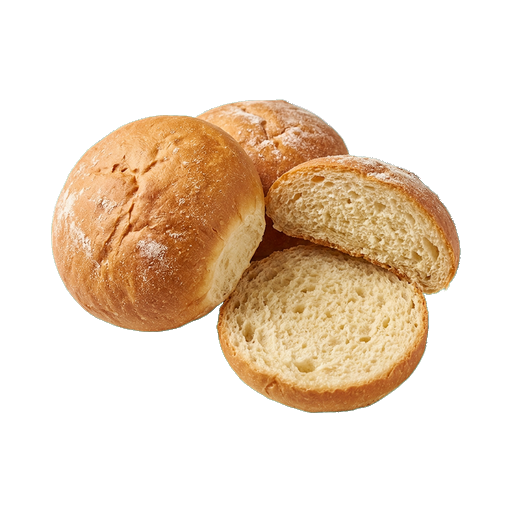
A sweet bun is a soft baked product made from yeast dough with the addition of eggs, butter, and sugar, which gives it a delicate texture and slightly sweet taste. Buns are used as a standalone dish for breakfast or afternoon tea, as well as a base for sweet fillings — jam, cottage cheese, dried fruits, or glaze. When choosing, pay attention to the elasticity and moisture of the crumb, and when baking at home, it's important not to overcomplicate the fillings so that the bun retains its airiness.
About
A bun is a versatile baked product that works equally well for breakfast, afternoon snack, or as a base for a sweet dish. Soft crumb, thin crust, and neutral flavor make a bun a convenient tool in the cook's hands: it absorbs aromas, combines with salt and sweetness, holds its shape under filling, and doesn't compete with other ingredients.
Varieties and Texture
- Classic sweet bun — made with eggs, butter and sugar, soft and slightly sweet, perfect for jam or cream
- Plain dough bun — more neutral in taste, absorbs sauces well and suits savory options
- Filled bun — with raisins, poppy seeds, cottage cheese or chocolate inside, ready to eat without additional toppings
- Kefir or yogurt bun — has a more crumbly and airy texture, softens quickly in coffee or tea
How a bun works in dishes
A bun is convenient because it easily adapts to different contexts. A fresh bun can be broken apart and served with butter and cheese, cut in half and used as a base for a sandwich, or crumbled into milk and sugar for a simple breakfast. A slightly stale bun absorbs liquid well — it can be added to fruit compote, kissel, or soaked in milk with cocoa.
Pairings and Complements
- With sweet: jam, honey, condensed milk, cottage cheese paste, chocolate spread
- With dairy products: butter, cottage cheese, sour cream, milk, kefir
- With hot drinks: a bun is a classic companion to tea, coffee, or hot milk
- In savory dishes: a bun is used as a side dish for soup, a base for an open sandwich, or bread for a meat dish
Selection and Storage
When choosing a bun, look at the color of the crust — it should be uniformly golden, without dark spots. The crumb should be light and elastic, without large voids. Fresh buns are best used on the day of purchase, but they store well in a paper bag at room temperature for up to three days. If the bun has dried out, it can be easily refreshed in the oven with water spray or served softened in milk.
A bun works in the kitchen as a neutral canvas: it doesn't impose its own flavor and allows other ingredients to shine. This is why it is valued both in home cooking and in professional kitchens.
Nutrition
per 100 g
- Calories
- 280 kcal
- Protein
- 8 g
- Fat
- 4 g
- Carbs
- 50 g
Measures and weight
- 1 pcs
- 60 g
Measure calculator
- Weight
- 100 g
- Calories
- 280 kcal