Usuba
Usuba
French baguette
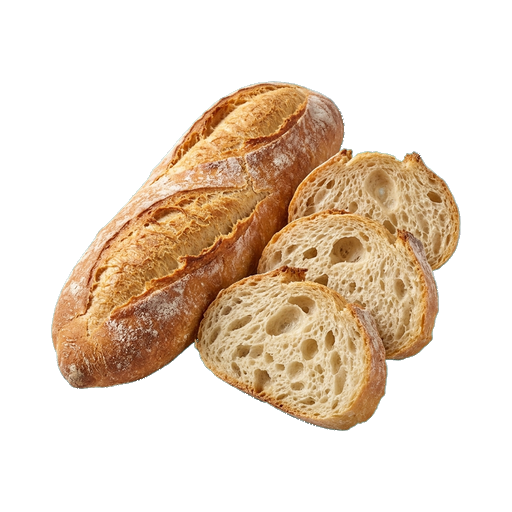
Crispy bread with a thin golden crust and airy crumb inside, made from flour, water, salt, and yeast. A classic French baguette is ideal for sandwiches, as a side to soups and salads, and for appetizers with butter, cheese, or cold cuts. When selecting, pay attention to the sharp crunch of the crust and the absence of mold; it keeps best in a paper bag and is best consumed on the day of purchase, as it stales quickly.
About
A small French baguette is a compromise between the classic long loaf and the practicality of a home table. It retains all the characteristic features of the original: a crispy crust, airy crumb with large pores, but is easier to fit on a refrigerator shelf and more convenient to slice for sandwiches. Such a baguette is ideal for small families or when you want fresh baked goods but don't want to deal with a meter-long loaf.
Structure and Taste
The main advantage of a small baguette is the contrast of textures. On the outside, a thin, almost crisp crust that rings when broken, with a slight sheen. Inside, a crumb with uneven porosity, dense in some places and with large air pockets in others. The taste is neutral, with barely noticeable sweetness and a pleasant tartness that appears thanks to the long fermentation of the dough. The bread does not overpower the fillings but complements them.
Where to use
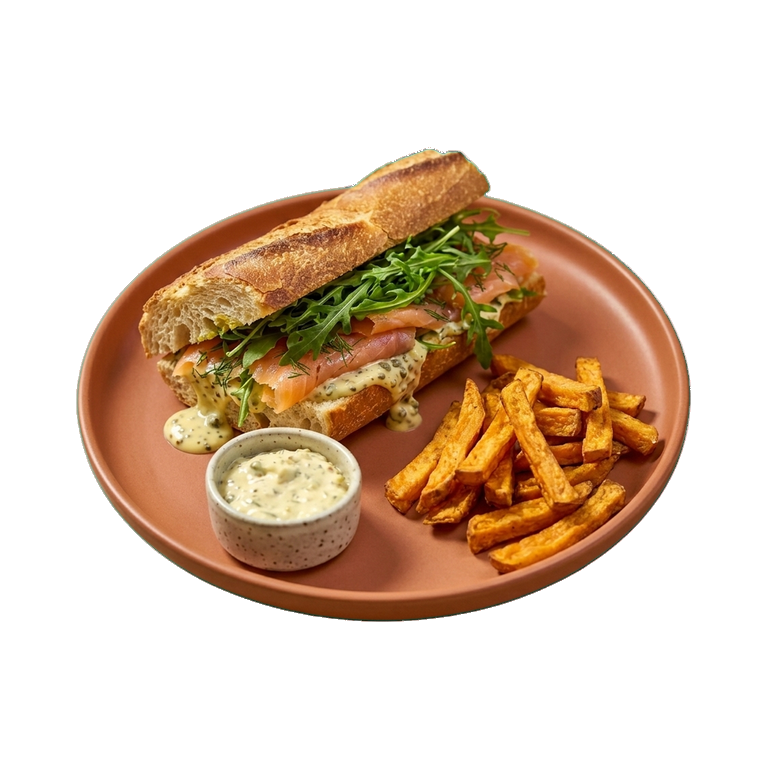
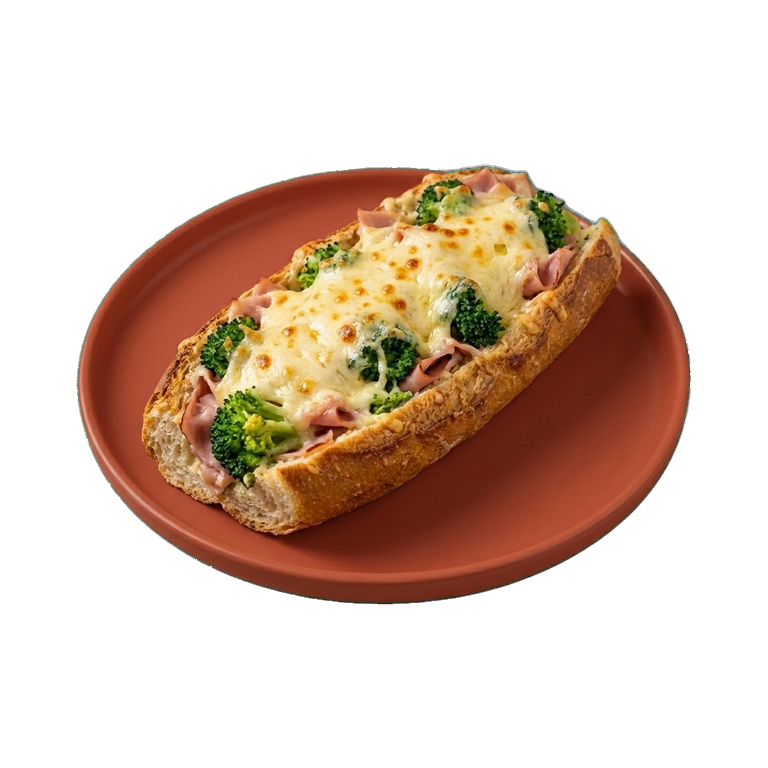
- Sandwiches with ham, cheese, vegetables — slice crosswise into thin slices and layer them
- Croutons for salads — cubes are dried in the oven and become crispy
- Base for canapés — dense crumb holds light toppings well
- Garnish for soups and stews — a piece of bread will absorb the sauce and won't fall apart
- Breading for cutlets and fish — dried and grated
Product Pairings
A small baguette is versatile. It works well with soft cheeses, where its neutrality allows creamy and complex aromas to shine. It contrasts with sharp sausages and pâtés thanks to its subtle tartness. It pairs excellently with butter and salt as a standalone dish, with olive oil and tomatoes, and with liver pâté. Don't forget the classic option — bread with good butter for breakfast.
Selection and Storage
- The crust should be golden, without dark burnt spots, but not pale either
- When pressed, the bread should spring back slightly, not compress
- The weight of the baguette will indicate proper porosity — it should not be heavy
- The smell should be fresh, bread-like, without sour or musty notes
A small baguette is best eaten on the day of purchase — that's when the crust is crunchiest. If you need to keep it longer, wrap the bread in paper and place it in a bread box at room temperature. After a day or two, the crust will soften, but the crumb will remain edible. For long-term storage, slice it, place the slices in a bag, and put it in the freezer — thaw at room temperature or toast it in a toaster.
If the crust has softened overnight, refresh the bread: spray it with water and heat it in the oven at 180°C for five minutes. The crust will become crispy again, though only temporarily.
Nutrition
per 100 g
- Calories
- 260 kcal
- Protein
- 8 g
- Fat
- 1.5 g
- Carbs
- 52 g
Measures and weight
- 1 pcs
- 125 g
Measure calculator
- Weight
- 100 g
- Calories
- 260 kcal