Usuba
Usuba
Salmon
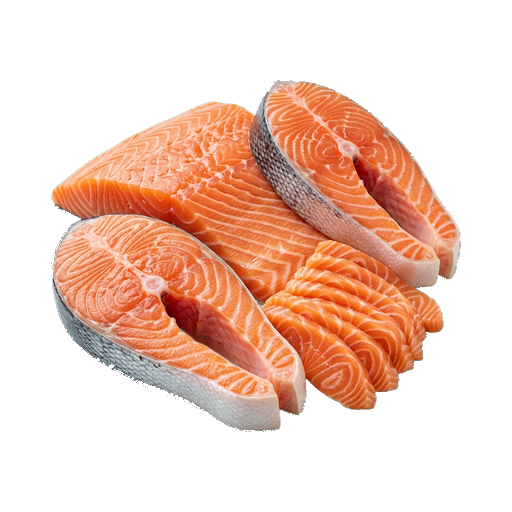
Salmon is a noble red fish with tender, slightly oily meat and a delicate flavor. The meat contains a high concentration of omega-3 fats, which gives it a characteristic taste and makes it ideal for baking, grilling, smoking, and raw consumption. When selecting salmon, pay attention to the firmness of the meat, bright color, and absence of a strong fishy smell; it's best to freeze salmon in vacuum packaging to prevent oxidation and preserve quality.
About
Aroma and Taste
Salmon is a fish with tender, oily meat and a characteristic rich flavor. Its flesh has a pinkish-orange hue thanks to natural pigments, and the texture is so delicate that it literally melts in your mouth. The aroma of fresh salmon is oceanic, clean, with a barely perceptible sweetness that manifests especially vividly with proper storage and handling.
The fattiness of salmon is its main advantage in the kitchen. High content of beneficial fats makes the meat juicy and allows it to remain moist even with intensive heat treatment. This means that it is more difficult to dry out salmon than white fish, which is especially valuable for beginner cooks.
Role in dishes
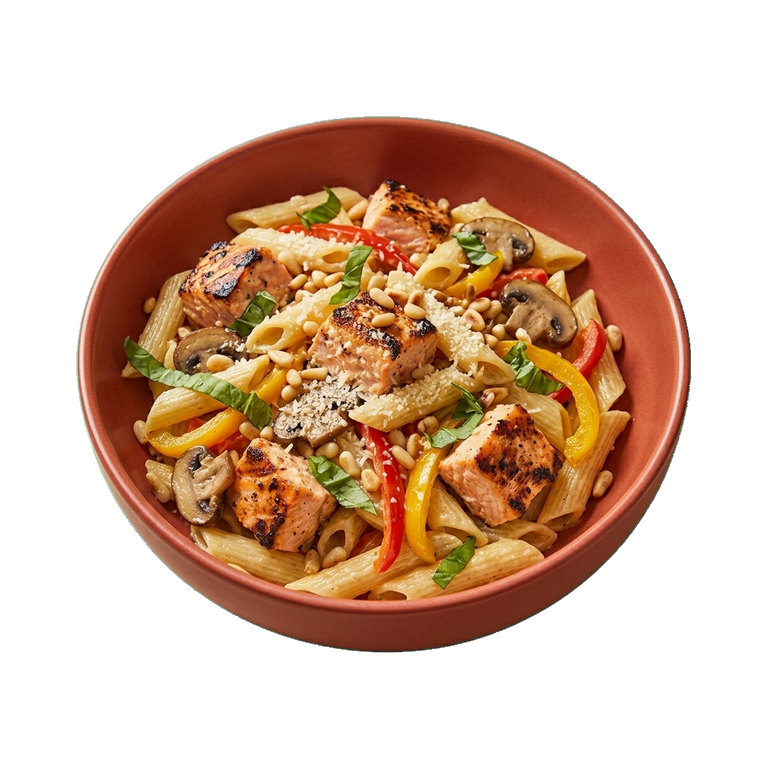
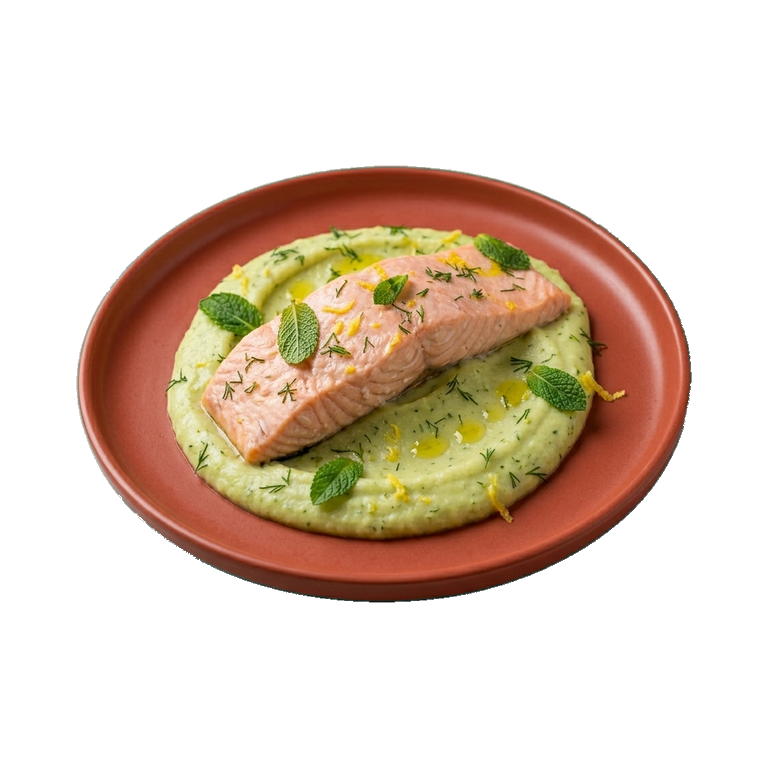
Salmon is versatile — it's equally good in hot and cold dishes. On the grill or in a pan with minimal seasoning, it reveals its natural flavor, steamed it remains tender and delicate, and in its raw form (as in sushi or ceviche) it demonstrates freshness and quality. The fillet is easy to cut, doesn't fall apart, and cooks quickly, making it an ideal choice for a weeknight dinner.
Thanks to its dense meat structure, salmon holds its shape well in soups and stews without falling apart into fibers. It can be braised with vegetables, baked in foil, smoked, or salted — the fish remains the star of the dish everywhere, not just a simple protein addition.
Pairings and Seasonings
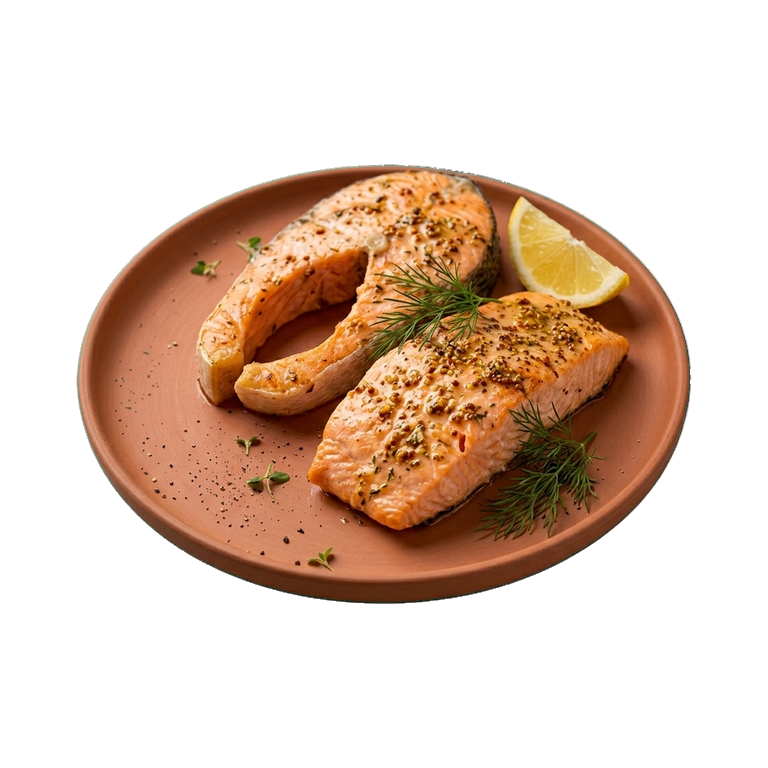
Salmon pairs well with acidic and bright flavors: lemon, lime, white wine, and vinegar highlight its freshness and slightly cut through the richness. Fresh herbs — dill, parsley, basil — become natural companions. Ginger and garlic add depth without overpowering the delicate seafood taste.
- Lemon and herbs — a classic combination for simple baking
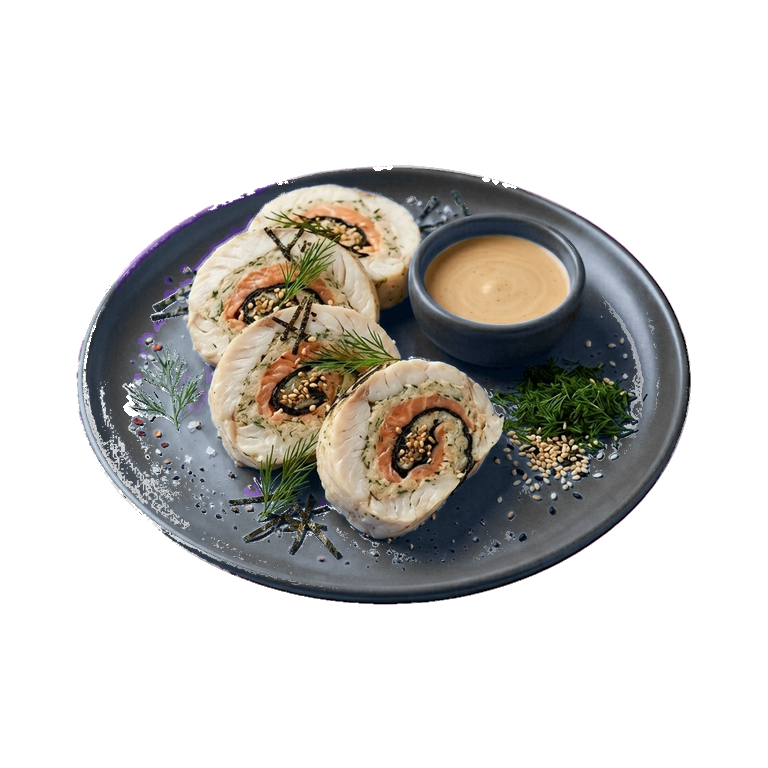
- Soy sauce and mirin — an Asian approach, especially for glazing
- Mustard and honey — create an interesting contrast of sweet and spicy
- Butter and capers — a classic for fillet in a pan
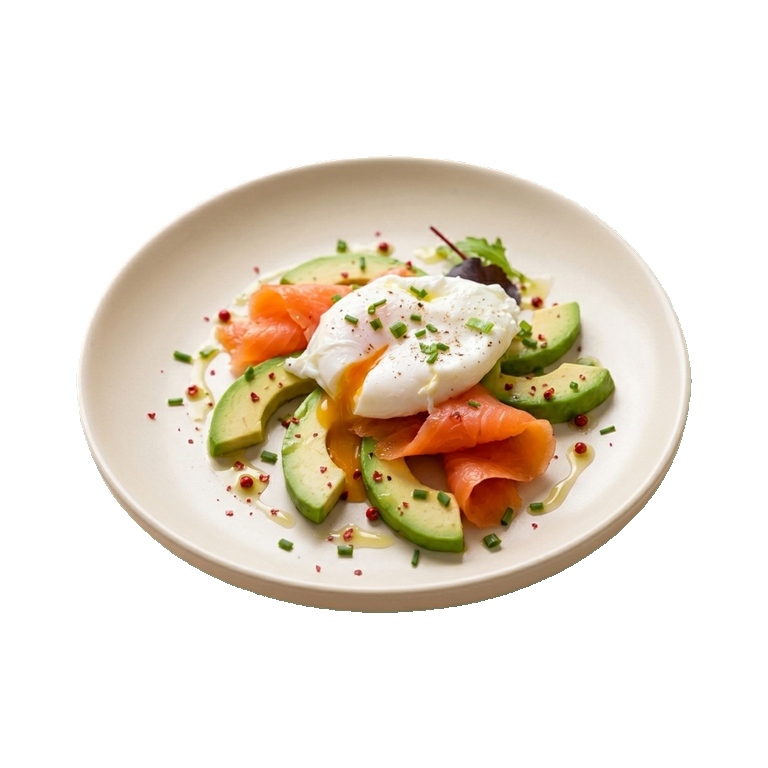
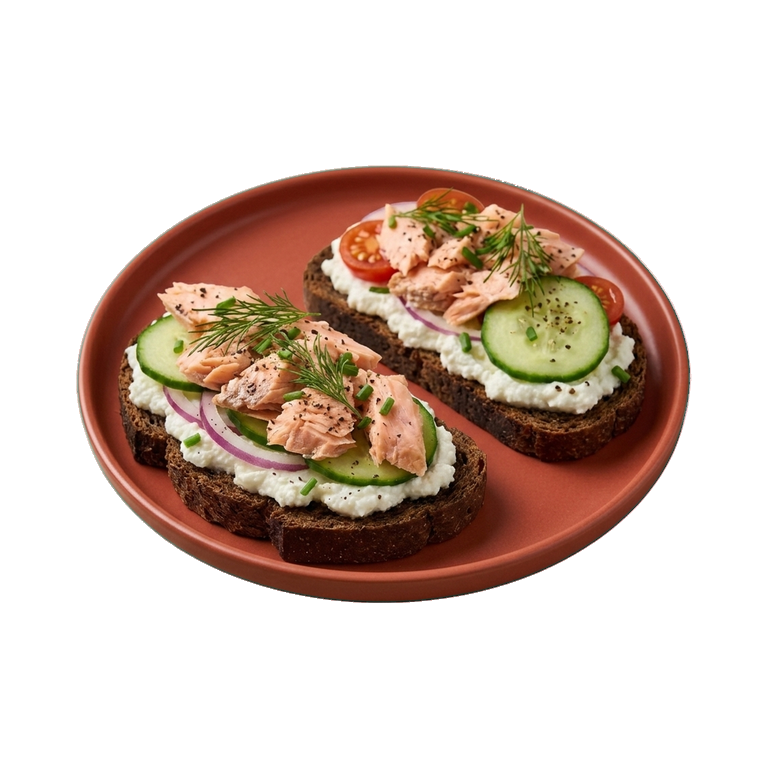
- Avocado and cucumber — light vegetable companions for cold dishes
Selection and Storage
When choosing salmon, pay attention to the color of the meat — it should be bright, uniform, without gray or brown spots. Fresh fish smells like the sea, not like fish in the classical sense. The fillet should be firm, without dents, with a glossy surface. If you're buying a whole fish, check the gills — they should be bright red or pink, and the eyes — clear and bulging.
Store salmon in the coldest part of the refrigerator — on the shelf above the freezer or in a special fish compartment. Fresh fillet keeps for 1–2 days in an airtight container. If you don't plan to cook it within the next few hours, it's better to freeze it immediately — properly frozen salmon maintains its quality for up to three months. Thaw on the lower shelf of the refrigerator, not at room temperature.
Salmon is an investment in dish quality. It doesn't need to be masked with complex sauces or lengthy preparation. Often the best cooking method is the simplest: a piece of fish, salt, pepper, and a little heat. The result is always impressive.
Nutrition
per 100 g
- Calories
- 208 kcal
- Protein
- 20 g
- Fat
- 13 g
- Carbs
- 0 g
Measures and weight
- 1 pcs
- 150 g
- 1 slice
- 60 g
Measure calculator
- Weight
- 100 g
- Calories
- 208 kcal