Usuba
Usuba
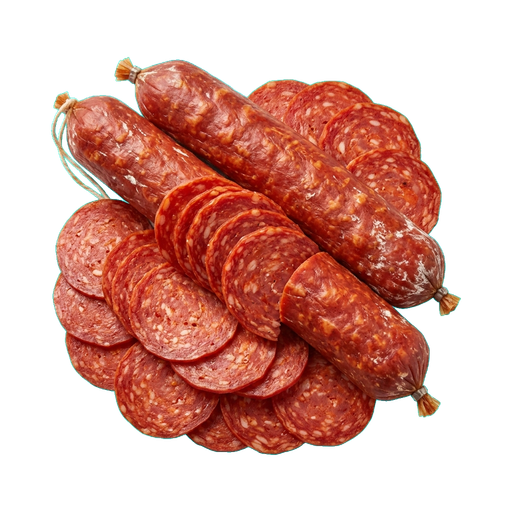
Pepperoni
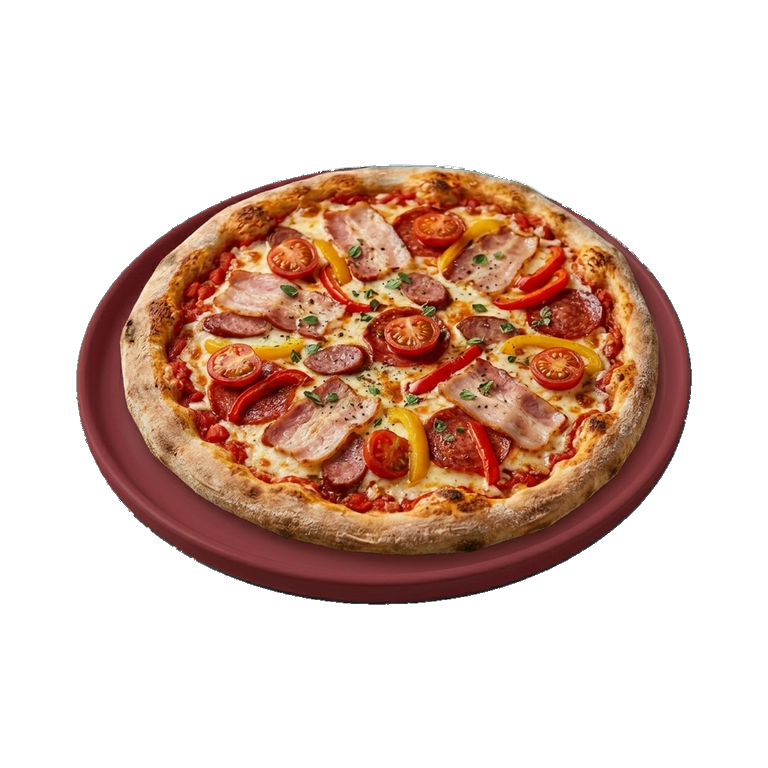
A spicy dry sausage of Italian origin with a characteristic red color and piquant taste, made from a blend of pork and beef with the addition of paprika and spices. In cooking, pepperoni is most often sliced thin and used as a pizza topping, where the slices curl slightly when heated and become crispy at the edges. When selecting, pay attention to an even red color and dense structure — quality pepperoni should not be sticky or have a white coating, and when substituting with another spicy sausage, keep in mind that the taste may differ in the intensity of spices.
Micronutrients
per 100 g
About
Pepperoni is a spicy sausage that has become synonymous with pizza, but its culinary possibilities are far broader. Thinly sliced pieces with characteristic red color and oily surface add spice, smokiness, and deep meaty flavor to dishes. Unlike other spicy sausages, pepperoni doesn't require pre-processing — you can use it straight from the package.
Aroma and Taste
Pepperoni has a distinctly sharp profile with notes of smoke and subtle sweetness. The spices — black pepper, red pepper, and garlic — create a multi-layered flavor that doesn't overpower but complements other ingredients. When heated, the edges of the slices curl slightly and become crispy, and the fat renders and is absorbed into the dough or other components of the dish.
Role in dishes
- Pizza — a classic application where pepperoni works as the main flavor accent
- Pasta dishes — adds spice and richness to tomato or cream-based sauces
- Sandwiches and appetizers — thin slices create a layer of flavor and texture
- Salads — sliced or torn pepperoni adds spice and a meat component to light vegetable compositions
- Soups and stews — a small amount enhances the depth of flavor
Combinations and Proportions
Pepperoni works well with cheese — mozzarella, parmesan, and feta enhance its saltiness and spiciness. On pizza, 30–50 grams of sliced sausage per standard portion is sufficient. Combined with tomatoes and olives, it creates a classic Southern European flavor triangle. If adding pepperoni to a hot dish, add it at the end of cooking to preserve its spiciness and texture.
Selection and Storage
When purchasing, pay attention to the color — it should be a rich red without gray spots or sticky coating. The packaging should be intact without any damage. Quality pepperoni has a distinct aroma of spices and garlic, without foreign or musty odors.
- Sliced pepperoni in the refrigerator is stored for 3–5 days in an airtight container or wrapped in parchment
- Whole sausage in vacuum packaging lasts 2–3 weeks
- It can be frozen, but after thawing the texture becomes less firm — it's better to use it immediately for cooking
- After opening the package, slice the amount you need and seal the remainder tightly so the sausage doesn't absorb odors from other products
If pepperoni seems too spicy, pre-scald the slices with hot water or place them in the oven for a minute at low temperature — some of the oil and spiciness will dissipate, but the flavor will remain.
Nutrition
per 100 g
- Calories
- 460 kcal
- Protein
- 20 g
- Fat
- 40 g
- Carbs
- 1 g
Micronutrients
per 100 g
Macronutrients
- Saturated fat
- 15.84 g
- Monounsaturated fat
- 18.01 g
- Polyunsaturated fat
- 4.628 g
- Water
- 30.3 g
Vitamins
- Vitamin B2 (riboflavin)
- 0.34 mg
- Vitamin B6
- 0.23 mg
- Vitamin B12
- 0.5 mcg
Measures and weight
- 1 slice
- 5 g
Measure calculator
- Weight
- 100 g
- Calories
- 460 kcal