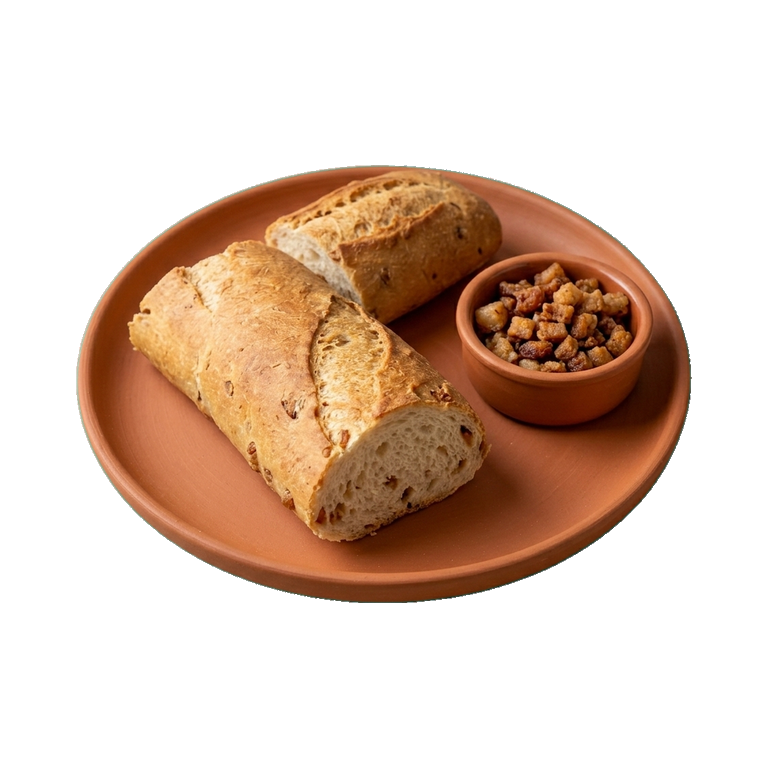
Usuba
Usuba
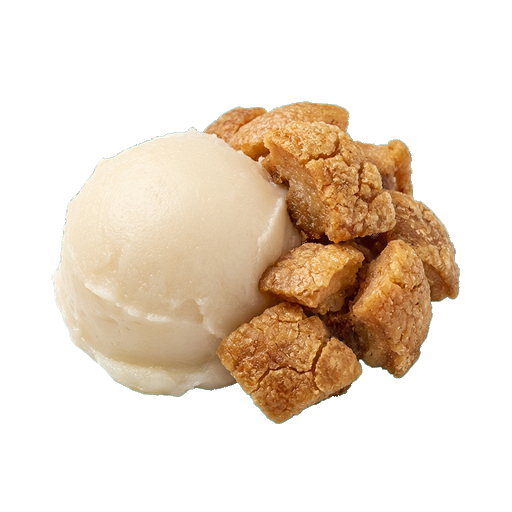
Lard
Lard is rendered pork fat obtained by slowly heating fat until completely liquefied. It has a mild, slightly sweet taste with a pronounced aroma and serves as a classic base for frying, baking, and preparing traditional Slavic dishes. When choosing, look for a light creamy color and the absence of a rancid smell. When stored in the refrigerator, lard retains its properties for several months.
Micronutrients
per 100 g
About
Lard is rendered pork fat that has remained one of the most practical and delicious ingredients in the kitchen for centuries. It is valued not just for its versatility, but for its ability to impart depth and richness to dishes in a way that is difficult to achieve by other means. Unlike butter, lard is stable at high temperatures and keeps for a long time, making it an indispensable cooking aid.
Aroma and taste
Quality lard smells delicate and pleasant — like clarified butter with a slight meaty note. The taste is delicate, buttery, without sharpness. If you notice an unpleasant smell or bitterness, this is a sign of improper storage or low product quality — it's better not to use such lard.
Lard varies depending on which part of the carcass it was rendered from. Soft, white lard from caul fat is suitable for baking. Denser and yellower lard from meat works better for frying and gives dishes a more pronounced flavor.
Role in dishes
Lard in a skillet is the ideal medium for frying potatoes, meat, and vegetables. It heats evenly, doesn't burn, and each piece acquires a crispy crust and rich flavor. Potatoes fried in lard become a legend that people remember for years.
In baking, lard creates an incredible texture — cookies turn out crumbly and tender, pastries become flaky. Traditional recipes for bread, buns, and pies often require it specifically, because it works differently than butter or margarine.
Lard is also used for preservation — it covers pâtés, terrines, and sausages, protecting them from air and extending shelf life. A thin layer of lard on a finished dish not only preserves it but also adds aroma.
Pairings
- With potatoes — a classic that always works: fried potatoes, mashed potatoes, baked in lard
- With garlic and onions — the base for aromatic gravy or meat sauce
- With cabbage — cabbage stewed in lard becomes more tender and delicious
- With mushrooms — lard emphasizes their earthy flavor, especially in soups and stews
- With herbs and spices — dill, parsley, black pepper, and caraway shine brighter in lard
Selection and Storage
Good lard should be clean, without foreign odors and impurities. The color can range from white to light yellow — this is normal. If dark inclusions are visible or it smells rancid, this is a sign of oxidation.
- At room temperature, lard keeps for several weeks if it is clean and stored in a tightly closed container
- In the refrigerator — for several months, in the freezer — for up to a year
- Keep it in a glass or ceramic container, away from light and strong odors
- If mold appears on the surface or the smell has spoiled, the entire lard should be discarded — it is not worth saving
Lard freezes well and does not lose its properties. It is convenient to store it in portions in ice cube trays — this way you always have the right amount for one dish on hand.
Nutrition
per 100 g
- Calories
- 897 kcal
- Protein
- 0.1 g
- Fat
- 99.5 g
- Carbs
- 0.1 g
Micronutrients
per 100 g
Macronutrients
- Fiber
- 0 g
- Sugars
- 0 g
- Saturated fat
- 39.2 g
- Monounsaturated fat
- 45.1 g
- Polyunsaturated fat
- 11.2 g
- Omega-3 (EPA + DHA)
- 0 g
- Cholesterol
- 95 mg
- Water
- 0 g
Minerals
- Sodium
- 0 mg
- Potassium
- 0 mg
- Calcium
- 0 mg
- Magnesium
- 0 mg
- Phosphorus
- 0 mg
- Iron
- 0 mg
- Zinc
- 0.11 mg
- Copper
- 0 mg
- Manganese
- 0 mg
- Selenium
- 0.2 mcg
Vitamins
- Vitamin A (RAE)
- 0 mcg
- Vitamin D
- 2.5 mcg
- Vitamin E
- 0.6 mg
- Vitamin K
- 0 mcg
- Vitamin C
- 0 mg
- Vitamin B1 (thiamin)
- 0 mg
- Vitamin B2 (riboflavin)
- 0 mg
- Vitamin B3 (niacin)
- 0 mg
- Vitamin B5 (pantothenic acid)
- 0 mg
- Vitamin B6
- 0 mg
- Vitamin B9 (folate, DFE)
- 0 mcg
- Vitamin B12
- 0 mcg
Measures and weight
- 1 tbsp
- 13.8 g
- 1 tsp
- 4.6 g
- 1 cup
- 230 g
Measure calculator
- Weight
- 100 g
- Calories
- 897 kcal