Usuba
Usuba
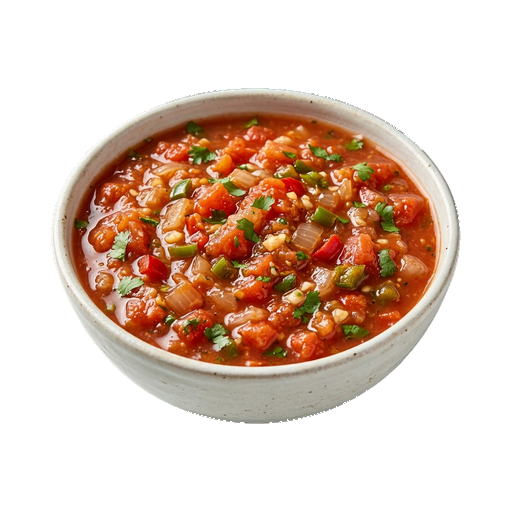
Salsa
A spicy Mexican sauce made with tomatoes, onions, garlic, and fresh chili peppers, seasoned with lime juice and cilantro. Served as a dip for chips, added to tacos, burritos, and other Mexican dishes, and also pairs well with meat and fish. When choosing store-bought salsa, pay attention to consistency and heat level, as different brands offer options ranging from mild to fiery, and remember that homemade salsa keeps in the refrigerator for no more than a week.
About
Salsa is not just a sauce, but an entire language of flavors spoken by chefs around the world. Its foundation is simple: tomatoes, onions, chili peppers, cilantro, and lemon juice. But within this simplicity lies a huge field for experimentation. Each chef adds their own accent, their own intonation — and the sauce becomes completely different.
Taste and Aroma
Fresh salsa smells like summer: bright tomato aroma mixes with the sharpness of pepper and aromatic herbs. On the tongue, you feel a lively balance of lemon acidity, tomato sweetness, and chili heat. The spiciness can be mild or aggressive — it all depends on the amount of pepper and its variety. A good sauce should not be monotonous: you can hear the individual voices of each ingredient in it.
Varieties
- Classic — with tomatoes, onions, cilantro and lemon. The most versatile.
- Rojo (red) — thicker, often with added garlic and hot pepper.
- Verde (green) — based on green tomatoes or tomatillos, fresher and more tart.
- Pico de gallo — roughly chopped, with visible pieces of ingredients, very fresh.
- With mango or pineapple — sweet, fruity, works great with fish and seafood.
Where and how to use
Salsa works everywhere you need brightness and freshness. Serve it with corn chips, spread it on tacos, add it to guacamole, put a spoonful on grilled fish or in soup. It works great both as a sauce and as a marinade — tomatoes and acid will help soften the meat. Try adding salsa to an omelet, to boiled potatoes, or even to plain cottage cheese with vegetables.
Successful Combinations
- With avocado and cream cheese — a contrast of acidity and softness.
- With fried fish and seafood — refreshes and balances richness.
- With black beans and corn — a classic trio of flavors.
- With grilled chicken — spiciness and freshness highlight the smokiness.
- With creamy sauces and butter — creates a contrast.
Selection and Storage
If you're buying ready-made sauce, pay attention to the ingredient list — the shorter it is, the better. Avoid options with thickeners and preservatives. Good sauce should be fresh, with visible pieces of vegetables. But it's best to make salsa yourself: it takes five minutes, and the result is incomparable to store-bought versions.
Fresh homemade salsa keeps in the refrigerator for three to four days in a tightly sealed jar. Over time, it becomes softer and the flavors mellow out — this is normal. If you want to preserve the sauce longer, freeze it in ice cube trays: the cubes are convenient to remove and use as needed. Thawed salsa will lose its freshness but will remain useful for preparing hot dishes.
The main secret of good salsa is balance. If the sauce is too spicy, add sour cream or avocado. If it's too sour, add a pinch of sugar. If it's bland, add more cilantro and garlic. Salsa forgives mistakes and loves experiments.
Nutrition
per 100 g
- Calories
- 43 kcal
- Protein
- 1.5 g
- Fat
- 0.3 g
- Carbs
- 8.5 g
Measures and weight
- 1 tbsp
- 15.8 g
- 1 tsp
- 5.3 g
- 1 cup
- 262.5 g
Measure calculator
- Weight
- 100 g
- Calories
- 43 kcal