Usuba
Usuba
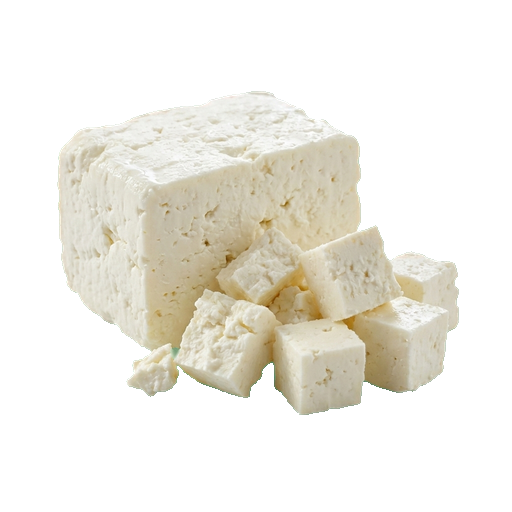
Brynza cheese
A crumbly white cheese made from sheep's milk with a sharp, slightly salty taste and characteristic tangy aroma. Brynza holds its shape well in finished dishes thanks to its high melting point, which is why it's often added to salads, casseroles, and pan-fried. When choosing, pay attention to the consistency — quality cheese should be dense and uniform, without excess moisture. Before use, it's often soaked in water to reduce saltiness.
About
Feta is a brined cheese that you instantly recognize by its white color, crumbly texture, and characteristic salty taste. Unlike hard cheeses, it doesn't require long maturation and is ready for consumption almost immediately after production. Its main property is the ability to hold its shape when sliced, while remaining tender and crumbly on the tongue.
Taste and Texture
Brynza has a pronounced salty taste with sour milk notes. The texture is dense but not rubbery, with a pleasant crumbly structure. Fresh brynza is softer and more tender than aged brynza; over time it becomes denser and acquires a sharper taste. The aroma is simple, milky, without any harsh foreign odors.
How to use in the kitchen
Feta cheese is versatile: you can eat it plain with bread, add it to salads, crumble it over hot dishes. It works well as a filling for pies, especially when mixed with herbs. You can top the cheese with tomatoes and cucumbers, or make sandwiches with it. The main thing is to remember its saltiness and, if necessary, soak it in water before use if you want to reduce the saltiness.
Successful Pairings
- Fresh vegetables: tomatoes, cucumbers, radishes, bell peppers
- Herbs: dill, parsley, green onions, mint
- Bread and baked goods: lavash, pita, rye bread
- Hot dishes: porridge, potatoes, eggs
- Olives and black olives
Selection and Storage
When buying, pay attention to the color — it should be white or slightly creamy, without dark spots. The cheese should not be too soft or, conversely, rock hard. Smell the package: the aroma should be pleasant, milky, without mold or sourness.
Feta cheese is stored in brine in the refrigerator for up to two weeks. If the cheese is sold without brine, transfer it to a container with salted water (approximately one tablespoon of salt per liter). Before using, take it out of the refrigerator 15–20 minutes in advance so the cheese warms up — this way the flavor will reveal itself more fully.
If feta cheese seems too salty, soak it in cold water for 20–30 minutes, changing the water every 10 minutes. This will help reduce the saltiness without damaging the cheese's structure.
Nutrition
per 100 g
- Calories
- 260 kcal
- Protein
- 17.2 g
- Fat
- 20.7 g
- Carbs
- 3.6 g
Measures and weight
- 1 tbsp
- 15.8 g
- 1 tsp
- 5.3 g
- 1 cup
- 262.5 g
- 1 slice
- 30 g
Measure calculator
- Weight
- 100 g
- Calories
- 260 kcal