Usuba
Usuba
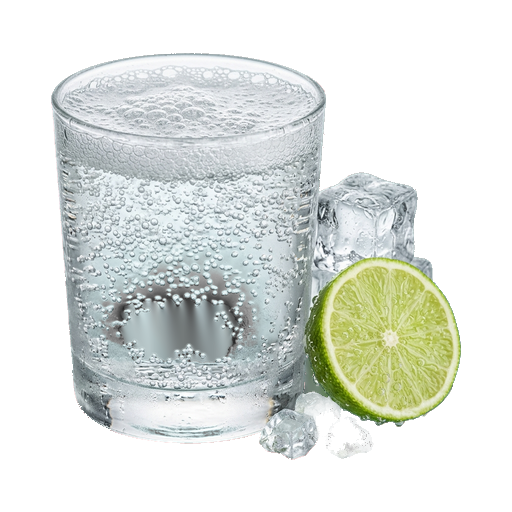
Soda water
Soda water is carbonated water saturated with carbon dioxide under pressure, without added sugar, flavorings, or other substances. It provides a slight tartness and refreshing effect, used as a standalone beverage or as a component in cocktails, desserts, and certain sauces. When selecting, pay attention to the carbonation level — the fresher the bottle, the more intense the carbonation, and during storage the gas gradually dissipates.
Micronutrients
per 100 ml
About
Soda water is carbonated water without additives, obtained by saturating ordinary water with carbon dioxide under pressure. In cooking, it is valued not so much as a beverage, but as an active ingredient that changes the texture and structure of dishes. CO₂ bubbles work as a leavening agent, lift the dough, make baked goods airier, and cocktails more lively.
Neutral taste — universal helper
The main property of soda water is its complete taste neutrality. It does not introduce any foreign notes, only a slight acidity from carbon dioxide and a sensation of freshness on the tongue. This makes it possible to use it in both sweet and savory dishes without the risk of spoiling the flavor balance.
Where soda water works in cooking
- Batter for pancakes, fritters and breading — gas creates tiny bubbles, the structure becomes porous and light
- Batter for deep frying — soda water makes it crispy and airy, prevents it from absorbing oil
- Cocktails and long drinks — adds effervescence and a refreshing effect without changing the taste of the main components
- Dough for cookies and sponge cakes — helps rise without excess leavening agent
- Marinades and sauces — light carbonation gives dishes lightness and freshness
Practical tips for working
Carbonated water should be used immediately after opening — the gas begins to escape within minutes. If you're making dough, add it at the last moment before frying or baking to maximize the preservation of bubbles. The water temperature is not critical, but cold water carbonates better.
Soda water can be replaced with regular water mixed with baking powder or baking soda, but the result will be less airy. If you specifically need carbonation and lightness — soda water is irreplaceable. In recipes, its volume is usually equal to the volume of regular water it replaces.
Selection and Storage
Choose soda water in airtight packaging — plastic bottles or cans. Make sure the label lists only two ingredients: water and carbon dioxide. No sweeteners, flavorings, or mineral additives. Store in a cool place, away from direct sunlight. After opening, the gas escapes quickly, so use the soda water within the day.
Nutrition
per 100 ml
- Calories
- 0 kcal
- Protein
- 0 g
- Fat
- 0 g
- Carbs
- 0 g
Micronutrients
per 100 ml
Macronutrients
- Fiber
- 0 g
- Sugars
- 0 g
- Saturated fat
- 0 g
- Monounsaturated fat
- 0 g
- Polyunsaturated fat
- 0 g
- Omega-3 (EPA + DHA)
- 0 g
- Cholesterol
- 0 mg
- Water
- 99.9 g
Minerals
- Sodium
- 21 mg
- Potassium
- 2 mg
- Calcium
- 5 mg
- Magnesium
- 1 mg
- Phosphorus
- 0 mg
- Iron
- 0.01 mg
- Zinc
- 0.1 mg
- Copper
- 0.01 mg
- Manganese
- 0 mg
- Selenium
- 0 mcg
Vitamins
- Vitamin A (RAE)
- 0 mcg
- Vitamin D
- 0 mcg
- Vitamin E
- 0 mg
- Vitamin K
- 0 mcg
- Vitamin C
- 0 mg
- Vitamin B1 (thiamin)
- 0 mg
- Vitamin B2 (riboflavin)
- 0 mg
- Vitamin B3 (niacin)
- 0 mg
- Vitamin B5 (pantothenic acid)
- 0 mg
- Vitamin B6
- 0 mg
- Vitamin B9 (folate, DFE)
- 0 mcg
- Vitamin B12
- 0 mcg
Measures and weight
- 1 tbsp
- 15 g
- 1 tsp
- 5 g
- 1 cup
- 250 g
Measure calculator
- Weight
- 100 g
- Calories
- 0 kcal