Usuba
Usuba
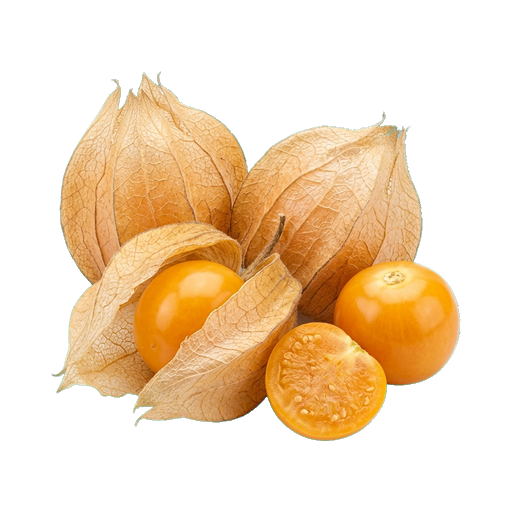
Physalis
Physalis is a small round fruit similar to a tomato, enclosed in a thin delicate husk. It has a sweet-sour taste with a slight bitterness and an aroma reminiscent of both pineapple and tomato at once. It is used in desserts, compotes, jams, and as a dish garnish thanks to its beautiful husk; when selecting, prefer fruits with a yellow-orange color and a dry husk, and ripe physalis can be eaten fresh or subjected to heat treatment.
Micronutrients
per 100 g
About
Physalis is a berry in a paper husk that looks like a small lantern. Beneath the thin netted calyx hides a sweet, slightly tart berry of yellow or orange color. It's easy to spot in the store: the characteristic papery "packaging" protects the fruit and makes it convenient for storage and transportation. The taste of physalis reminds one of a mix of pineapple, strawberry, and tomato — unusual and fresh.
Aroma and Flavor
Ripe physalis has a herbaceous and sweet aroma at the same time, with a light pineapple hint. The taste is sweet, but with a pleasant tartness that doesn't bite the tongue, but rather refreshes. Unripe berries are more sour and astringent — they are used mainly for preservation. Ripe fruits are eaten fresh: they are soft, juicy, with small edible seeds inside.
Selection and Storage
Choose physalis with yellow or orange skin — this is a sign of ripeness. The paper husk should be dry and light-colored, without dark spots or damage. Gently squeeze the berry with your fingers: it should be soft, but not mushy. Green fruits will not ripen after harvesting, so don't pick unripe specimens.
Thanks to its protective husk, physalis keeps longer than most berries. Ripe fruits will last 2–3 weeks in the refrigerator. You can leave them in their paper covering — this way they will retain moisture and won't crush each other. At room temperature, physalis lasts 5–7 days, but it's still better to store it in a cool place.
Where to use it
Physalis is versatile. Ripe berries are delicious on their own — as a healthy snack or garnish for desserts. They look great on cakes and pastries, adding an interesting flavor to green salads. Physalis is used to make jam, compotes, and fruit drinks. Unripe fruits are used for pickling — they turn out crispy and sour, like little tomatoes.
Successful Pairings
- With cream cheese and honey in desserts
- With chocolate — physalis adds freshness to chocolate candies
- With herbs: mint, basil, coriander in salads
- With seafood — light acidity highlights the taste of oysters and shrimp
- With citrus in compotes and beverages
Practical tips
Before eating, remove the paper husk — it is not edible. If physalis is too sour for your taste, sprinkle it with sugar or add it to a compote with sweeter berries. For jam, choose slightly underripe fruits: they hold their shape better and contain more pectin. If you are preparing pickled physalis, choose the greenest specimens — they will remain firm after processing.
Nutrition
per 100 g
- Calories
- 53 kcal
- Protein
- 1.9 g
- Fat
- 0.3 g
- Carbs
- 11.2 g
Micronutrients
per 100 g
Macronutrients
- Cholesterol
- 0 mg
- Water
- 85.4 g
Minerals
- Calcium
- 9 mg
- Phosphorus
- 40 mg
- Iron
- 1 mg
Vitamins
- Vitamin A (RAE)
- 36 mcg
- Vitamin C
- 11 mg
- Vitamin B1 (thiamin)
- 0.11 mg
- Vitamin B2 (riboflavin)
- 0.04 mg
- Vitamin B3 (niacin)
- 2.8 mg
- Vitamin B12
- 0 mcg
Measures and weight
- 1 pcs
- 8 g
Measure calculator
- Weight
- 100 g
- Calories
- 53 kcal