Usuba
Usuba
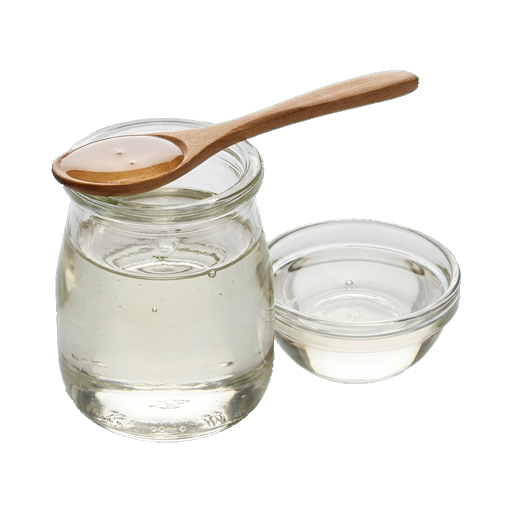
Light corn syrup
Light corn syrup is a sweetener made from corn starch with a mild, almost neutral flavor and liquid consistency. It is used in baking, confectionery, and beverages to add moisture, create a soft texture, and prevent sugar crystallization. When substituting with other syrups or sugar, keep in mind that light corn syrup is hygroscopic and affects the consistency of dough and finished dishes differently than regular sugar.
Micronutrients
per 100 g
About
Light corn syrup is a sweet sweetener that is commonly found in American baking and confectionery. Its main feature is that it does not crystallize, which keeps candies, frostings, and fillings smooth and glossy. The syrup has a neutral flavor and does not compete with other ingredients, allowing them to fully shine through.
Texture and role in dishes
The syrup has a liquid, transparent consistency and mixes easily with other ingredients. In confectionery, it works as a stabilizer — preventing crystallization of caramel, fondant, and sugar pastes. In cookies and pastries, it adds softness and moisture, prolonging the freshness of baked goods. Due to its hygroscopicity (ability to retain moisture), products remain tender longer and do not dry out.
The syrup is versatile: it is used in caramel and toffee, in cake glazes, in fillings for candies and cookies. It works well in sweet sauces that are drizzled over desserts, and in some types of jam where a uniform texture without crystals is needed.
Selection and Storage
When choosing, pay attention to the transparency of the syrup — it should be light, without cloudiness or sediment. Check the label: a quality product contains corn syrup and glucose, without unnecessary additives. Syrup is sold in plastic bottles, and it is convenient to dispense it directly from them.
Store the syrup in a cool, dry place at room temperature. A tightly sealed bottle retains its properties for years. If the syrup has thickened or crystallized, it can be carefully warmed in a water bath — it will return to its original consistency. Keep the opened bottle away from moisture and direct sunlight.
Practical Tips
- If the recipe calls for light corn syrup, do not replace it with honey or regular sugar syrup — the result may differ due to different properties.
- For ease of measurement, lightly coat the spoon with oil — the syrup will not stick and will slide more easily into the bowl.
- Recipes often specify exact quantities — stick to them, as syrup affects the consistency and sweetness of the final dish.
- Syrup pairs well with butter, vanilla, and spices in fillings and glazes, enhancing their aroma.
Nutrition
per 100 g
- Calories
- 316 kcal
- Protein
- 0 g
- Fat
- 0 g
- Carbs
- 79 g
Micronutrients
per 100 g
Macronutrients
- Fiber
- 0 g
- Sugars
- 76.77 g
- Saturated fat
- 0 g
- Monounsaturated fat
- 0 g
- Polyunsaturated fat
- 0 g
- Omega-3 (EPA + DHA)
- 0 g
- Cholesterol
- 0 mg
- Water
- 22.81 g
Minerals
- Sodium
- 62 mg
- Potassium
- 1 mg
- Calcium
- 13 mg
- Magnesium
- 1 mg
- Phosphorus
- 0 mg
- Iron
- 0 mg
- Zinc
- 0.44 mg
- Copper
- 0 mg
- Manganese
- 0 mg
- Selenium
- 0.7 mcg
Vitamins
- Vitamin A (RAE)
- 0 mcg
- Vitamin D
- 0 mcg
- Vitamin E
- 0 mg
- Vitamin K
- 0 mcg
- Vitamin C
- 0 mg
- Vitamin B1 (thiamin)
- 0.06 mg
- Vitamin B2 (riboflavin)
- 0 mg
- Vitamin B3 (niacin)
- 0 mg
- Vitamin B5 (pantothenic acid)
- 0 mg
- Vitamin B6
- 0 mg
- Vitamin B9 (folate, DFE)
- 0 mcg
- Vitamin B12
- 0 mcg
Measures and weight
- 1 tbsp
- 21 g
- 1 tsp
- 7 g
- 1 cup
- 350 g
Measure calculator
- Weight
- 100 g
- Calories
- 316 kcal