Usuba
Usuba
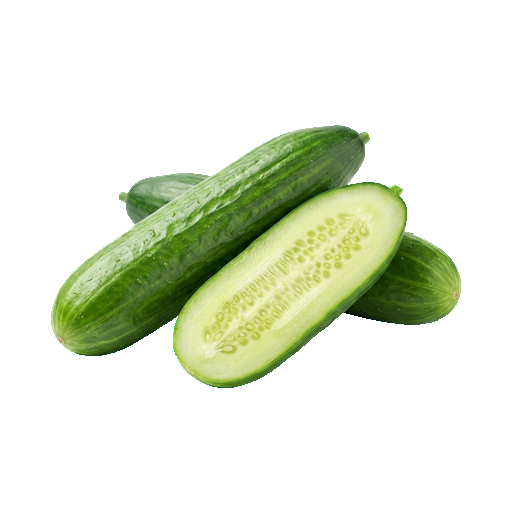
English cucumbers
Long slender cucumbers with smooth skin and minimal seeds, grown in greenhouses. They feature tender, crispy flesh with a delicate, slightly sweet flavor and are virtually non-bitter. Ideal for salads, slicing, and appetizers thanks to their attractive appearance and pleasant texture, though for pickling it's better to choose firmer varieties with thick skin.
Micronutrients
per 100 g
About
English cucumbers are long, thin vegetables with smooth dark green skin and almost no seeds inside. Unlike regular salad cucumbers, they are grown in greenhouses and are distinguished by their tender, crispy flesh. Such cucumbers are often sold in plastic wrap — this is not just packaging, but a way to retain moisture and protect the delicate skin from damage.
Taste and Texture
English cucumber flesh is more tender and juicy than regular cucumbers. The taste is more delicate, without the bitterness that sometimes appears in salad varieties. The skin is thin and edible, requiring no peeling. Thanks to the minimal number of seeds, cucumbers are ideal for those who don't like crunchy seeds in every bite.
Where to use
- Fresh salads — slice into rings or lengthwise without peeling the skin
- Cold soups and gazpacho — tender texture dissolves well into puree
- Sandwiches and appetizers — long shape is convenient for slicing into strips
- Pickling — thanks to the dense flesh, cucumbers remain crispy
- Smoothies and juices — soft texture is easy to squeeze
Pairings and Techniques
English cucumbers work well with light dressings based on olive oil, lemon juice, and herbs. They don't overpower the taste of other ingredients, so they pair beautifully with delicate cheeses, smoked fish, and fresh herbs. Thanks to their high water content, these cucumbers refresh heavy dishes and look great on summer menus.
How to Choose and Store
Choose cucumbers with smooth, shiny skin without dark spots or soft patches. They should be firm to the touch. The film they're sold in is not just marketing—it really does help preserve freshness. Store cucumbers in the refrigerator in the vegetable compartment, preferably in film, for 7–10 days. Don't place them near fruits that release ethylene—this will accelerate spoilage.
If a cucumber has started to turn yellow — use it immediately in a salad or for preservation. The yellow color indicates overripeness, and the taste will no longer be as fresh.
Nutrition
per 100 g
- Calories
- 16 kcal
- Protein
- 0.7 g
- Fat
- 0.1 g
- Carbs
- 3.6 g
Micronutrients
per 100 g
Macronutrients
- Water
- 95.87 g
Minerals
- Sodium
- 1.52 mg
- Potassium
- 169.6 mg
- Calcium
- 16.34 mg
- Magnesium
- 10.11 mg
- Phosphorus
- 23.23 mg
- Iron
- 0 mg
- Zinc
- 0.2 mg
- Copper
- 0.06 mg
- Manganese
- 0.08 mg
Vitamins
- Vitamin K
- 24 mcg
Measures and weight
- 1 pcs
- 300 g
Measure calculator
- Weight
- 100 g
- Calories
- 16 kcal