Usuba
Usuba
Marinara sauce
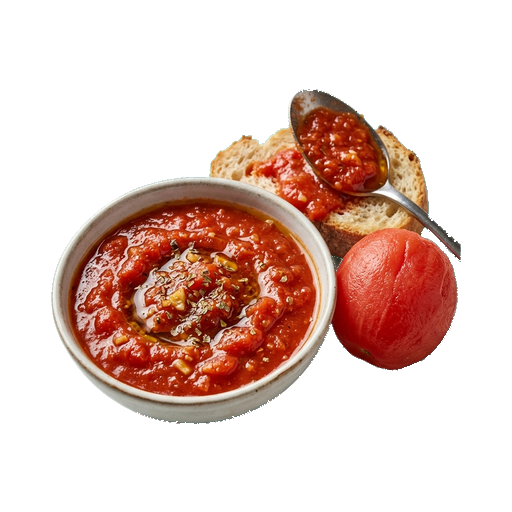
A classic Italian sauce made from tomatoes, garlic, olive oil, and oregano, prepared without meat or cream. It stands out with its pure tomato flavor with subtle acidity and garlic aroma, creating a simple yet rich base for pasta, pizza, and other dishes. When choosing a ready-made sauce, pay attention to the ingredients — quality marinara contains a minimum of components without added sugar and preservatives.
Micronutrients
per 100 g
About
Marinara is one of the simplest and most versatile tomato sauces that is easy to prepare at home and serves as the foundation for dozens of dishes. Its main strength is that it doesn't require complex manipulations, and the taste turns out bright and clean. If you haven't made it yourself yet, it's time to start.
Taste and Aroma
Marinara smells of fresh tomatoes, garlic, and herbs — primarily oregano and basil. It tastes bright with the acidity of tomatoes, softened by olive oil, and the sharpness of garlic. No meat, no cream, no complex layers of flavor. It is precisely this minimalism that makes the sauce so convenient: it doesn't overpower the main ingredients of the dish, but rather supports them.
Where to use it
- Pasta — a classic application. Spaghetti, penne, fusilli — marinara goes well with all shapes.
- Pizza — a thin layer of sauce under cheese and toppings.
- Seafood — shrimp, mussels, fish look great in marinara.
- Vegetables — eggplant, zucchini, bell pepper get a new life in this sauce.
- Bread and appetizers — dip crispy bread or serve with meatballs.
How to cook
The basic recipe requires only tomatoes (fresh or canned), garlic, olive oil, salt, and herbs. Garlic is usually fried in oil until golden, then tomatoes are added and simmered for 15–20 minutes over medium heat. The key is not to overcook it in order to preserve the freshness of the flavor. If you use fresh tomatoes, it's best to choose ripe and aromatic ones: the entire result depends on them.
Variations of marinara can include red pepper, a little sugar to balance acidity, fresh basil at the end of cooking, or even a splash of white wine. But if you're just starting out, stick with the classic version — it will teach you to appreciate the quality of the basic ingredients.
Selection and Storage
- Ready-made sauce keeps in the refrigerator for up to 5 days in a closed container or glass jar.
- Freezes well — divide into portions in containers or ice cube trays, and it will be ready for several months.
- If you buy ready-made sauce, look for a simple ingredient list: tomatoes, oil, garlic, herbs. No thickeners or preservatives needed.
- Canned tomatoes (whole or crushed) — a reliable choice for marinara if fresh ones are not available.
Marinara is a sauce that everyone who cooks should learn to make. It's quick, cheap, delicious, and versatile. Once you make it at home, you'll realize how much better it is than many store-bought options, and you'll keep making it again and again.
Nutrition
per 100 g
- Calories
- 50 kcal
- Protein
- 1.5 g
- Fat
- 2.5 g
- Carbs
- 5 g
Micronutrients
per 100 g
Macronutrients
- Fiber
- 1.8 g
- Saturated fat
- 0.17 g
- Monounsaturated fat
- 0.376 g
- Polyunsaturated fat
- 0.504 g
- Omega-3 (EPA + DHA)
- 0 g
- Water
- 87.4 g
Minerals
- Sodium
- 419 mg
- Potassium
- 319 mg
- Calcium
- 27 mg
- Magnesium
- 18.5 mg
- Phosphorus
- 34 mg
- Iron
- 0.78 mg
- Zinc
- 0.2 mg
- Copper
- 0.08 mg
- Manganese
- 0.14 mg
Vitamins
- Vitamin A (RAE)
- 32 mcg
Measures and weight
- 1 tbsp
- 15.5 g
- 1 tsp
- 5.2 g
- 1 cup
- 257.5 g
Measure calculator
- Weight
- 100 g
- Calories
- 50 kcal