Usuba
Usuba
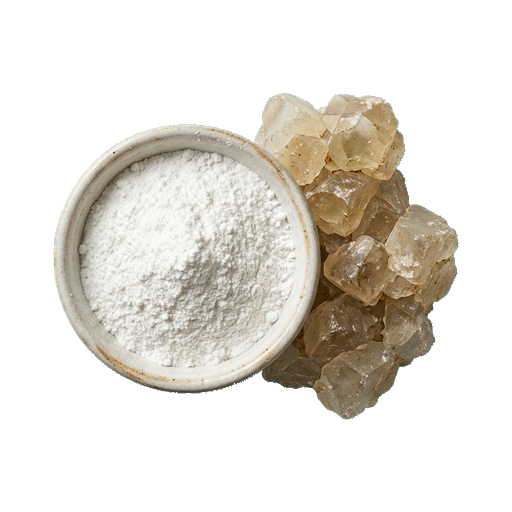
Cream of tartar
Cream of tartar is an acidic salt of tartaric acid that forms during wine fermentation and aging. In cooking, it is used as a leavening agent, stabilizer, and acidity regulator, often combined with baking soda to create the effect of baking powder. When selecting it, it is important to ensure that it is pure cream of tartar without impurities, and to remember that it increases dough volume, so its dosage must be followed precisely.
Micronutrients
per 100 g
About
Cream of tartar is a crystalline sediment that forms at the bottom of barrels during wine production. In cooking, it is valued not for its history, but for its practical benefits: it stabilizes proteins in meringue, prevents sugar crystallization in syrups, and helps preserve vibrant color when cooking vegetables. It is one of the few ingredients that works simultaneously as a chemical helper and a natural product.
How it works in dough and creams
When you whip egg whites into foam, cream of tartar acts as a stabilizer — it helps the foam hold its shape longer and become denser. Add a quarter teaspoon per three egg whites, and you'll notice how the mixture whips faster and becomes more elastic. This is especially important for meringue, soufflé, and meringue, where structure is everything.
In sugar syrups and caramel, cream of tartar prevents crystal formation — add a pinch to hot syrup and it will remain smooth and transparent. This saves glazes, frostings, and any sweet sauces that should be glossy rather than grainy.
In vegetables and canning
If you're cooking green vegetables — asparagus, broccoli, green beans — add a pinch of cream of tartar to the water. Chlorophyll, which is responsible for the bright color, will be preserved much better. The acid in cream of tartar protects the pigment from degradation, and the vegetables remain vibrant green instead of a grayish-olive shade.
When canning and pickling, cream of tartar helps vegetables stay crispy — it strengthens cell walls. Add half a teaspoon per liter of brine, and your cucumbers, tomatoes, or mixed vegetables won't soften even after several months.
Selection and Storage
Cream of tartar is sold as a white or cream-colored powder in the spices and baking sections. Look for a pure product without additives — the package should only show the name or "cream of tartar." The price is affordable, and one jar lasts a long time because it's used in small amounts.
Store in an airtight jar in a dark, cool place — moisture is its enemy. When stored properly, cream of tartar retains its properties for years. Before using, check that the powder hasn't clumped; if it has, break it up with a fork or sift it.
Typical Dosages
- For whipping egg whites: 1/4 teaspoon per 3 egg whites
- For syrups and caramel: a pinch (on the tip of a knife) per cup of sugar
- When cooking green vegetables: 1/2 teaspoon per liter of water
- In marinade: 1/2 teaspoon per liter of liquid
Cream of tartar is not an exotic ingredient, but a working tool. If you often make meringue, cook jam, or pickle vegetables, it will become your helper. One jar solves several culinary problems at once, and it's worth always keeping it on hand.
Nutrition
per 100 g
- Calories
- 250 kcal
- Protein
- 0 g
- Fat
- 0 g
- Carbs
- 60 g
Micronutrients
per 100 g
Macronutrients
- Fiber
- 0.2 g
- Sugars
- 0 g
- Saturated fat
- 0 g
- Monounsaturated fat
- 0 g
- Polyunsaturated fat
- 0 g
- Omega-3 (EPA + DHA)
- 0 g
- Cholesterol
- 0 mg
- Water
- 1.7 g
Minerals
- Sodium
- 52 mg
- Potassium
- 16500 mg
- Calcium
- 8 mg
- Magnesium
- 2 mg
- Phosphorus
- 5 mg
- Iron
- 3.72 mg
- Zinc
- 0.42 mg
- Copper
- 0.2 mg
- Manganese
- 0.21 mg
- Selenium
- 0.2 mcg
Vitamins
- Vitamin A (RAE)
- 0 mcg
- Vitamin D
- 0 mcg
- Vitamin E
- 0 mg
- Vitamin K
- 0 mcg
- Vitamin C
- 0 mg
- Vitamin B1 (thiamin)
- 0 mg
- Vitamin B2 (riboflavin)
- 0 mg
- Vitamin B3 (niacin)
- 0 mg
- Vitamin B5 (pantothenic acid)
- 0 mg
- Vitamin B6
- 0 mg
- Vitamin B9 (folate, DFE)
- 0 mcg
- Vitamin B12
- 0 mcg
Measures and weight
- 1 tbsp
- 13.5 g
- 1 tsp
- 4.5 g
- 1 cup
- 225 g
Measure calculator
- Weight
- 100 g
- Calories
- 250 kcal