Usuba
Usuba
Salted anchovies in oil
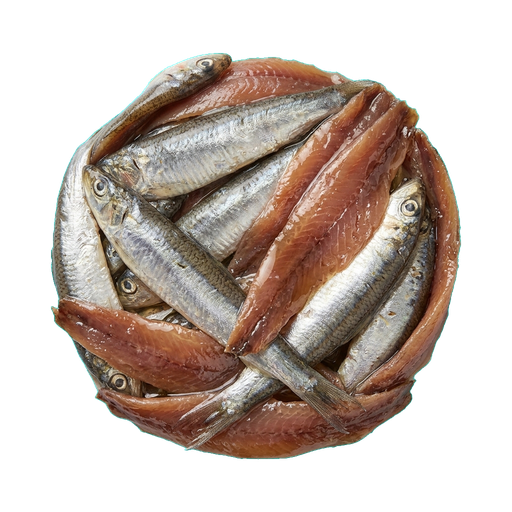
Canned small fish with intense salty and umami flavor, used to add depth and sharpness to dishes. Anchovies dissolve in sauces, enhancing other ingredients, or serve as a pungent accent in salads, pastas, and appetizers — they are not eaten as a main ingredient but added in small amounts. When selecting, pay attention to the integrity of the fish and the quality of the oil; suitable substitutes are anchovy paste or fish sauce, though the taste will differ.
Micronutrients
per 100 g
About
Salted anchovies in oil are not just canned fish, but a concentrated flavor bombard that transforms the simplest dishes. Small silvery fillets are saturated with salt and swim in oil, creating the perfect balance between piquancy and tenderness. This is one of those ingredients that works not for itself, but for the entire flavor profile of the dish.
Aroma and Taste
Anchovies provide an intense, deep umami — that very fifth taste that makes food more expressive and full-bodied. Salt amplifies the effect, while oil softens the sharpness, coating the fish and protecting it from oxidation. When you open a can, you feel a sharp sea smell with notes of iodine and fermentation — this is normal and even desirable. The taste is sharp, salty, with a barely perceptible sweetness and a light bitterness.
Where and how to use
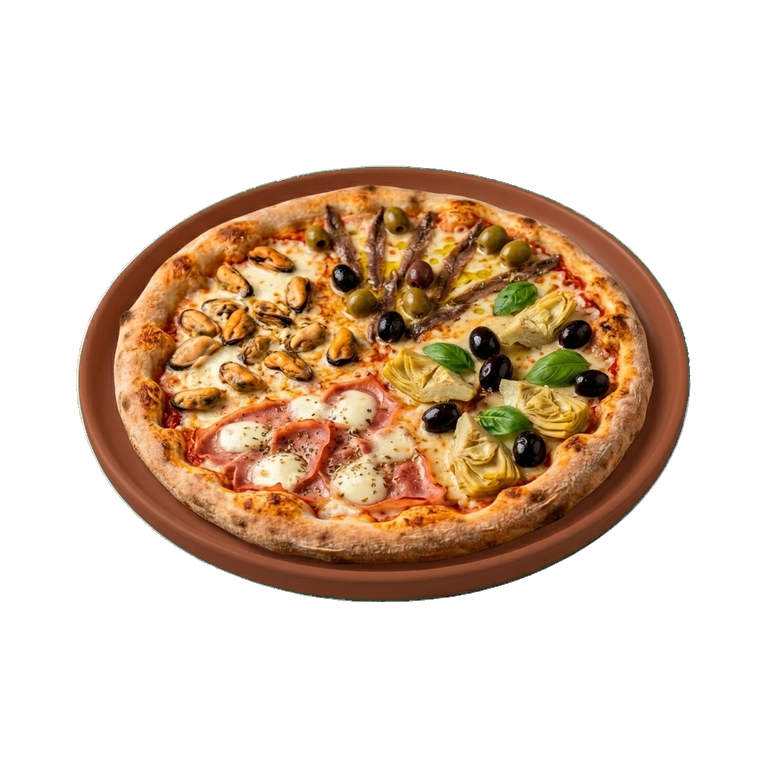
Anchovies work in two modes: as a background flavor enhancer or as the star of the show. In sauces, dressings, and marinades, they dissolve, imparting their umami and saltiness while remaining invisible. A classic example is Caesar with anchovy sauce or vinaigrette with anchovy dressing. But they can also be a star: whole fillets on buttered bread, on pizza, in salads, or as an appetizer with wine and beer.
Perfect Pairings
- Lemon and olive oil — a classic trio that refreshes and balances salt
- Tomatoes and basil — tomatoes soften the heat, basil adds a herbal undertone
- Garlic and chili pepper — enhance piquancy, create a complex flavor layer
- Egg and cheese — anchovies emphasize their richness and fattiness
- Potatoes and cabbage — work well in salads and appetizers thanks to the contrast of textures
How to Choose and Store
Look for anchovies in glass jars or tin cans — this way you can see the quality of the fillets. They should be whole, silvery, without darkening or cracks. The oil should be clear, without cloudiness. Pay attention to the packaging date: fresh cans are better, although anchovies keep well for many years thanks to salt and oil.
After opening the can, transfer the remainder to a glass container, make sure all the fillets are covered with oil, and close the lid. It keeps in the refrigerator for several weeks. If the oil has thickened in the cold — this is normal, at room temperature it will return to a liquid state. Do not pour out the oil from under the anchovies: it has absorbed all their flavor and is perfect for dressings and sauces.
Main secret: don't be afraid of anchovies. Even if you think you don't like them, try them as part of a sauce or dressing. Most likely, you've already eaten them hundreds of times without even knowing it.
Nutrition
per 100 g
- Calories
- 210 kcal
- Protein
- 29 g
- Fat
- 10 g
- Carbs
- 0 g
Micronutrients
per 100 g
Macronutrients
- Water
- 44.43 g
Minerals
- Sodium
- 5403 mg
- Potassium
- 297.8 mg
- Calcium
- 239.8 mg
- Magnesium
- 227.6 mg
- Phosphorus
- 225.7 mg
- Iron
- 2.69 mg
- Zinc
- 2.54 mg
- Copper
- 0.24 mg
- Manganese
- 0.14 mg
- Selenium
- 48.2 mcg
Vitamins
- Vitamin B12
- 12.7 mcg
Measures and weight
- 1 pcs
- 5 g
Measure calculator
- Weight
- 100 g
- Calories
- 210 kcal