Usuba
Usuba
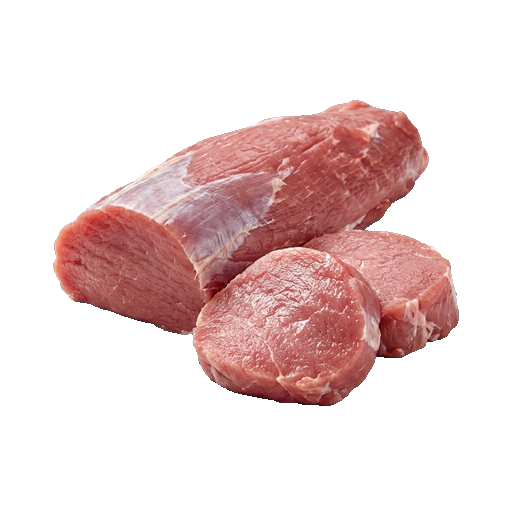
Pork fillet
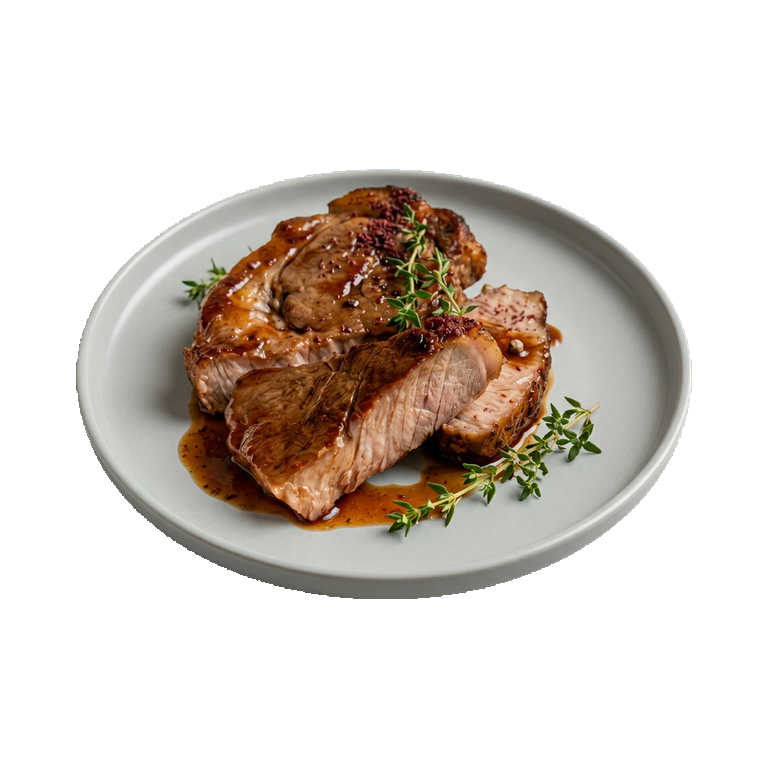
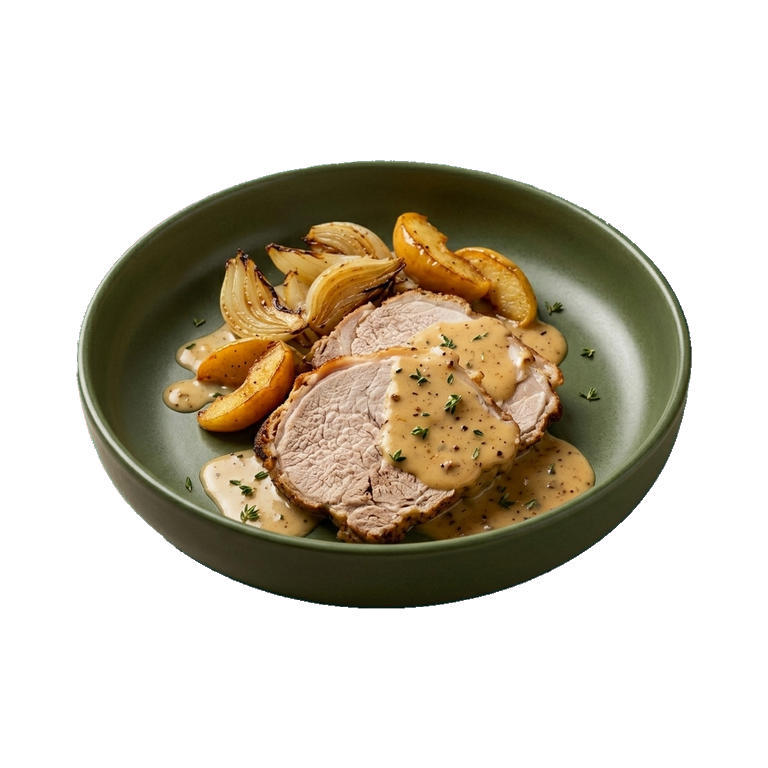
Tender meat with minimal fat that cooks quickly and absorbs marinades and spices well. Fillet requires care during heat treatment, as it easily becomes dry when temperature is exceeded, so it's best cooked to medium or medium-rare. This cut is ideal for frying, baking, stewing, and slicing thin for quick dishes, and pairs well with acidic and spicy sauces that compensate for its neutral flavor.
Micronutrients
per 100 g
About
Pork tenderloin is a cut considered one of the most tender and versatile parts of the carcass. The meat here contains virtually no fat layers, so it cooks quickly and is suitable for any cooking method. If you're looking for meat that doesn't require long marinating and gives beautiful results, tenderloin is your choice.
Taste and Texture
Pork tenderloin has a delicate, subtle flavor without a pronounced "meatiness." The texture is fibrous, but when cooked properly, it remains juicy. The meat is light, almost white, with minimal myoglobin content. This means it doesn't require prolonged cooking and readily absorbs marinades and spices, taking on their aromas.
Role in dishes and cooking methods
- Pan frying or grilling — meat cooks for 4–6 minutes on each side depending on thickness
- Baking in the oven — cooks evenly at 180–200 °C for 15–20 minutes
- Slow braising — becomes even more tender at low temperature, although it takes more time
- Slicing for stir-fry or Asian dishes — quickly cooked on high heat
Combinations and Seasonings
Pork tenderloin works well with acidic components — lemon, vinegar, white wine. It is not afraid of bold spices: black pepper, paprika, ginger, garlic. Classic herbs — rosemary, thyme, sage — reveal its delicate flavor. The meat excellently absorbs marinades based on soy sauce, mustard, or olive oil with herbs.
Selection and Storage
- Color — light pink, without gray spots and darkening
- Surface — slightly moist, but not wet; meat should be firm
- Smell — fresh, without foreign or sour notes
- Refrigerator storage — 2–3 days in the coldest part
- Freezer — up to 3 months in airtight packaging
Main rule: do not overcook the fillet. It loses juiciness at temperatures above 65 °C inside. It's better to remove the meat from the pan a little earlier and let it rest for 3–5 minutes under foil.
Nutrition
per 100 g
- Calories
- 142 kcal
- Protein
- 27.3 g
- Fat
- 3.1 g
- Carbs
- 0 g
Micronutrients
per 100 g
Macronutrients
- Saturated fat
- 0.866 g
- Monounsaturated fat
- 0.863 g
- Polyunsaturated fat
- 0.418 g
- Cholesterol
- 59.58 mg
- Water
- 73.93 g
Minerals
- Sodium
- 41.39 mg
- Potassium
- 397.4 mg
- Calcium
- 4.53 mg
- Magnesium
- 24.66 mg
- Phosphorus
- 217.4 mg
- Iron
- 0.93 mg
- Zinc
- 1.77 mg
- Copper
- 0.08 mg
- Manganese
- 0 mg
Measures and weight
- 1 pcs
- 500 g
Measure calculator
- Weight
- 100 g
- Calories
- 142 kcal