Usuba
Usuba
Watermelon
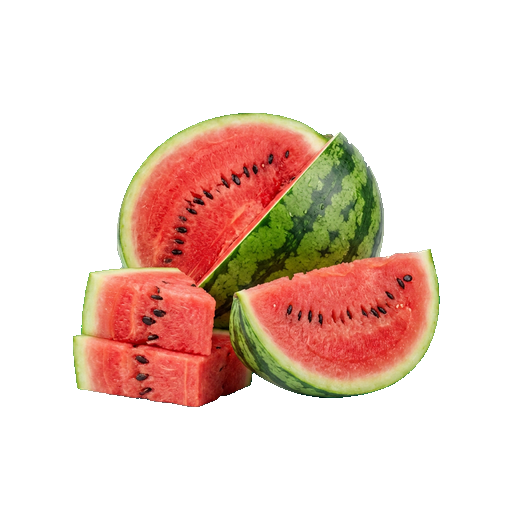
A sweet berry with a firm green rind and juicy pink or yellow flesh containing black seeds. Watermelon refreshes due to its high water content and is used in desserts, drinks, salads, and as a standalone summer snack. When choosing, pay attention to even coloring, a hollow sound when tapped, and a dry stem — these are signs of ripeness and sweetness.
Micronutrients
per 100 g
About
Sweetness and freshness in one berry
Watermelon is not just a dessert, it's a lifesaver in the heat. A ripe fruit is 92% water, so it perfectly quenches thirst while simultaneously nourishing the body with lycopene and vitamins. The flesh can be bright red, pink, or even yellow depending on the variety, but the essence is the same: refreshing sweetness without cloying or excess calories.
The taste of ripe watermelon is simple and harmonious — sweet, but not cloying, with a light herbaceous note. The aroma is barely perceptible, but very recognizable. The texture of the flesh should be juicy and crumbly, without dense fibers that indicate immaturity or improper storage.
Where to use and how to choose
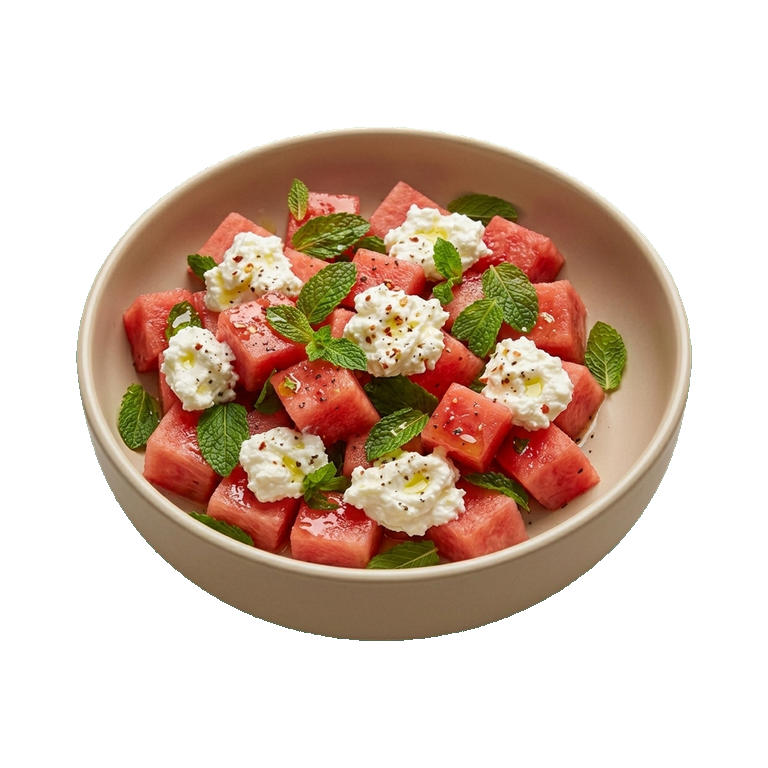
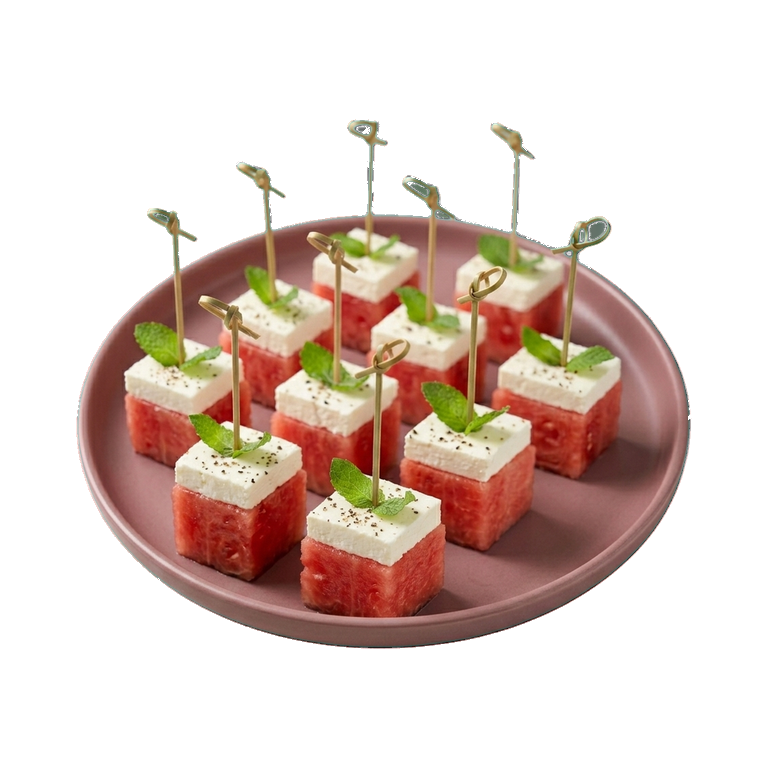
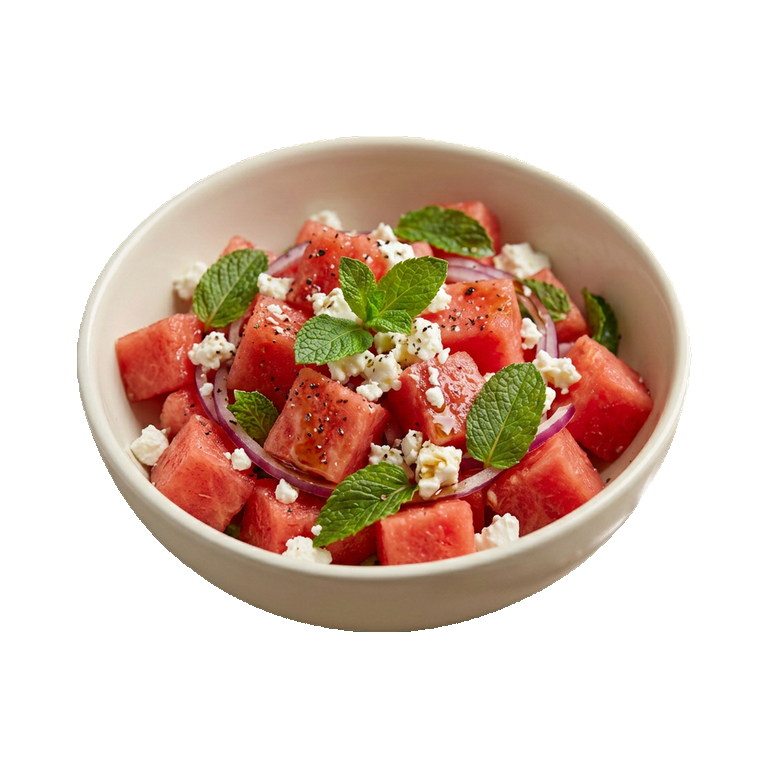
Watermelon works everywhere you need freshness. Dice it for summer salads with feta and mint, make a side dish for spicy meals, add it to smoothies, or simply eat it with a spoon straight from the half. Don't throw away the seeds — they are edible and healthy. Watermelon juice is great in cocktail mixes, and frozen pulp will become the base for sorbet.
How to choose a ripe fruit
- Tap the watermelon — the sound should be ringing and deep, almost hollow, not dull
- Check the weight: a ripe watermelon is heavy for its size, which is a sign of juiciness
- Look for a yellow spot on the side — the place where the fruit lay on the ground. It should be creamy or orange, not white
- The skin should be shiny and firm, without dents or cracks
- The stem (fruit stalk) should be dry — this is a sign of ripeness
Storage and preparation
A whole watermelon can be stored safely in a cool place for two weeks, or three weeks in the refrigerator. A cut watermelon should be covered with plastic wrap and consumed within three days. Before serving, chill the watermelon in the refrigerator for at least two hours — the cold will enhance its sweetness and make the flesh even more refreshing.
Cut the watermelon with a sharp knife on a cutting board — it's safer and more convenient that way. If you're making a drink or smoothie, you don't need to remove the skin completely, just cut off the top layer and dice the flesh into cubes. For children, cut it into small pieces to avoid problems with seeds.
Nutrition
per 100 g
- Calories
- 27 kcal
- Protein
- 0.6 g
- Fat
- 0.1 g
- Carbs
- 6.2 g
Micronutrients
per 100 g
Macronutrients
- Water
- 90.91 g
Minerals
- Sodium
- 0 mg
- Potassium
- 117.3 mg
- Calcium
- 7.86 mg
- Magnesium
- 11.45 mg
- Phosphorus
- 17.08 mg
- Iron
- 0.02 mg
- Zinc
- 0.1 mg
- Copper
- 0.05 mg
- Manganese
- 0.07 mg
Vitamins
- Vitamin C
- 6.46 mg
Measures and weight
- 1 pcs
- 5000 g
Measure calculator
- Weight
- 100 g
- Calories
- 27 kcal