Usuba
Usuba
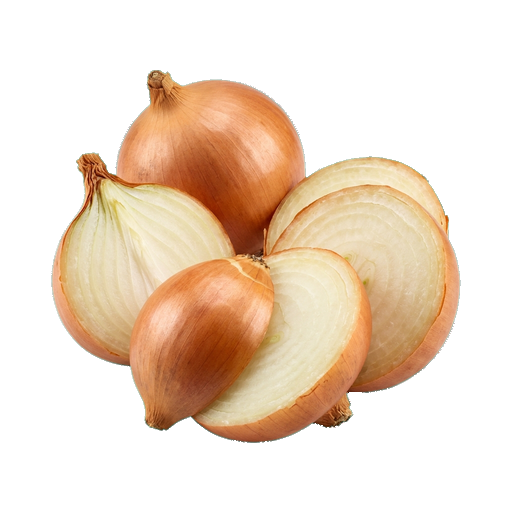
Yellow onion
Yellow onion is a versatile vegetable with a dense golden skin and a slightly sweet taste that becomes milder when cooked. Thanks to its high sugar and dry matter content, it is ideal for caramelizing, stewing, and long-term storage. When selecting, prefer bulbs without soft spots and sprouts, and when substituting with white or red onions, keep in mind that they are sharper and more watery.
Micronutrients
per 100 g
About
Yellow onion is the workhorse of any kitchen. It's neither the sharpest nor the sweetest member of the onion family, but rather the ideal compromise: versatile, stores well, and works almost everywhere. When a recipe simply says "onion," it usually means this one.
Aroma and flavor
Yellow onion has a balanced sharp taste with a subtle sweetness. Raw, it is piquant and can slightly burn, but once stewed or fried, the sharpness softens and the sweetness comes to the forefront. The aroma is pronounced but not overpowering, with characteristic onion notes.
Role in dishes
This is the foundation of mirepoix, a trio of vegetables for sauces and broths. Yellow onion works well in soups, stews, gravies, and braised dishes. It creates a deep flavor foundation without overpowering other ingredients. Caramelized onion becomes a delicacy — sweet, tender, almost jam-like.
Combinations and Uses
- Raw — salads and marinades, especially if you pre-soak sliced onions in cold water to soften the sharpness
- Sautéed — ideal as a base for meat, mushrooms, potatoes and vegetable dishes
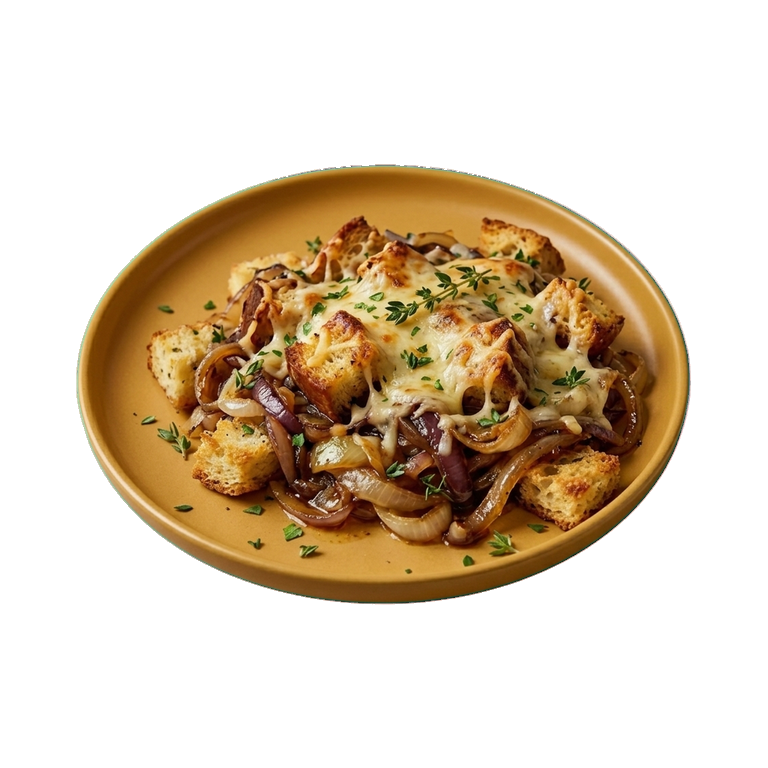
- Caramelized — garnish, pie filling, component of sauces and soups
- In broths and soups — adds aroma and creates body without harshness
Selection and Storage
Choose bulbs that are firm, without soft spots or signs of rot. The skin should be dry and crispy. Avoid sprouted onions — this is a sign of improper storage. Size is not critical: small bulbs are more tender, large ones are easier to peel.
Yellow onions can be stored for months in a cool, dry, well-ventilated place. Ideally, in a mesh bag or wooden box at a temperature of 10–15 degrees Celsius. Do not place them in plastic: condensation will cause rotting. Keep peeled onions in the refrigerator in an airtight container, but use them quickly — they lose their freshness.
If you prefer a milder taste, use yellow onion. If you need a sharp flavor, use white or red onion. Yellow onion is the universal choice when you're unsure.
Nutrition
per 100 g
- Calories
- 40 kcal
- Protein
- 1.1 g
- Fat
- 0.1 g
- Carbs
- 9.3 g
Micronutrients
per 100 g
Macronutrients
- Fiber
- 1.9 g
- Water
- 90.1 g
Minerals
- Sodium
- 1 mg
- Potassium
- 182 mg
- Calcium
- 15 mg
- Magnesium
- 9 mg
- Phosphorus
- 34 mg
- Iron
- 0.28 mg
- Zinc
- 0.2 mg
- Copper
- 0.04 mg
- Manganese
- 0.14 mg
- Selenium
- 0 mcg
- Iodine
- 0 mcg
Vitamins
- Vitamin C
- 8.2 mg
Measures and weight
- 1 pcs
- 150 g
- 1 head
- 150 g
Measure calculator
- Weight
- 100 g
- Calories
- 40 kcal