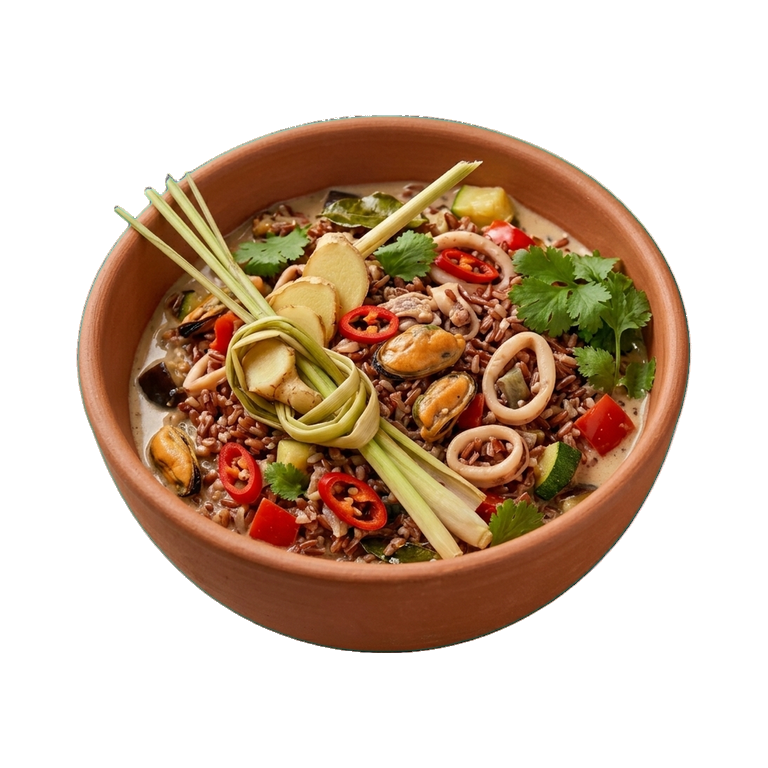
Usuba
Usuba
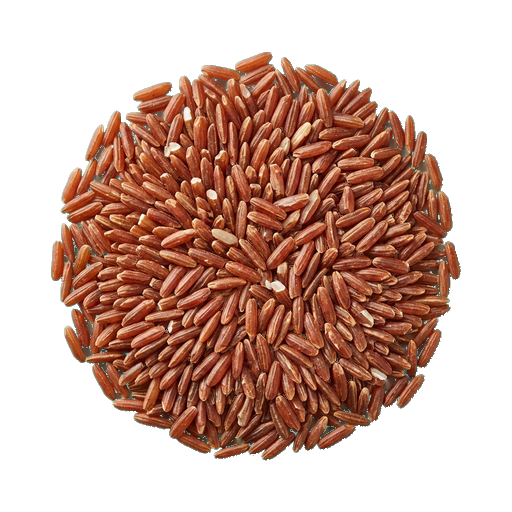
Red Rice
Red rice is a whole grain variety with a red bran layer that gives it its characteristic color and nutty flavor with a subtle sweetness. The grains are denser than white rice, so they take longer to cook (about 30–40 minutes) and hold their shape better without breaking down. It's used in side dishes, salads, and pilaf thanks to its interesting appearance and higher fiber content; when substituting white rice, keep in mind the increased cooking time and greater liquid requirements.
Micronutrients
per 100 g
About
What kind of rice is this and what makes it different
Red rice is not an exotic variety, but ordinary rice with a reddish husk that remains on the grains after processing. It is this husk that gives the characteristic color and makes the grains denser than white rice. When cooked, red rice does not fall apart, holds its shape and remains slightly firm, which is very convenient for salads, side dishes and dishes where structure is needed.
Red rice has a slightly nutty taste with a light sweetness. It's not a bold flavor, but it's well-noticeable against neutral components. The aroma is also pleasant, slightly earthy, without sharp notes. Thanks to this, rice easily fits into different cuisines and doesn't overpower the main ingredients of the dish.
How to cook and what to pair with
Red rice takes longer to cook than white rice — usually 30–40 minutes depending on the variety. It's beneficial to rinse it before cooking to remove dust and excess starch. The proportion is simple: one part rice to two parts liquid. If you're cooking in a multicooker or rice cooker, select the mode for brown or wild rice — the regular mode may not be suitable for the cooking time.
Red rice is great in salads — it doesn't stick together and holds its shape. It's suitable as a side dish for meat and fish, especially if you want something more interesting than white rice. It works well in risotto, although it requires more liquid and attention. You can add it to soups, but it's better to do this at the end of cooking so the rice doesn't become overcooked.
Red rice is versatile in combinations. It pairs well with vegetables — tomatoes, peppers, carrots, and onions. It works excellently with mushrooms, especially white or button mushrooms. Meat and poultry are classics. It also combines with fish, but white and fatty varieties are preferable. Spices: turmeric, cumin, pepper, thyme, basil — they all highlight the nutty background of the rice.
Selection and Storage
When buying, pay attention to the color — it should be uniform, without gray or black specks. The grains should not be broken or cloudy. If rice is sold in transparent packaging, it's easier to assess the quality. The smell should be neutral, without mustiness or mold.
Red rice is best stored in an airtight container in a dark, cool place. Moisture is rice's enemy, so keep it away from the sink and stove. With proper storage, rice remains suitable for a year or two, but it's better to use it within a year before it absorbs unwanted kitchen odors. After opening the package, transfer the rice to a container or jar with a lid.
Nutrition
per 100 g
- Calories
- 330 kcal
- Protein
- 7 g
- Fat
- 2 g
- Carbs
- 70 g
Micronutrients
per 100 g
Macronutrients
- Fiber
- 4.198 g
- Water
- 10.51 g
Minerals
- Sodium
- 0.44 mg
- Potassium
- 245.1 mg
- Calcium
- 9.22 mg
- Magnesium
- 125.5 mg
- Phosphorus
- 313.9 mg
- Iron
- 1.2 mg
- Zinc
- 2.56 mg
- Copper
- 0.27 mg
- Manganese
- 2.63 mg
Vitamins
- Vitamin B1 (thiamin)
- 0.34 mg
- Vitamin B3 (niacin)
- 6.68 mg
- Vitamin B6
- 0.14 mg
Measures and weight
- 1 tbsp
- 12.8 g
- 1 tsp
- 4.3 g
- 1 cup
- 212.5 g
Measure calculator
- Weight
- 100 g
- Calories
- 330 kcal