Usuba
Usuba
Rhubarb
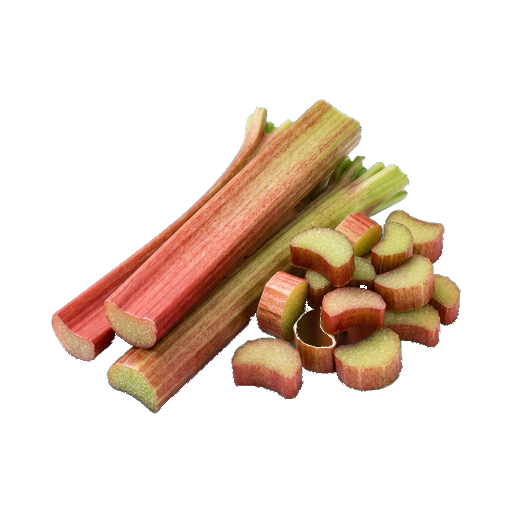
Rhubarb is a perennial plant with edible fleshy stalks that have a distinctly sour taste with a slight bitterness. In cooking, only the petioles (stalks) are used, as the leaves contain toxins and are inedible. Rhubarb works well in compotes, jams, pies, and fermented dairy desserts, as its acidity perfectly balances the sweetness of sugar and gives dishes a refreshing flavor.
Micronutrients
per 100 g
Minerals
About
Rhubarb is a plant that is valued in the kitchen for its long, meaty stalks with a pronounced sour taste. It is often confused with a fruit, but it is actually a vegetable and should be prepared quite differently. Rhubarb stalks are used in compotes, jams, pies, and desserts, where its natural acidity creates an interesting contrast with sweetness.
Taste and Aroma
Rhubarb has an intense acidity with a subtle herbaceous note. Young stems are more tender and less acidic, while more mature ones become tough and require preprocessing. The aroma is barely perceptible, but when heated, it reveals freshness with fruity hints. Important note: rhubarb leaves contain oxalic acid in a dangerous concentration and should not be eaten — work only with the stems.
Role in dishes
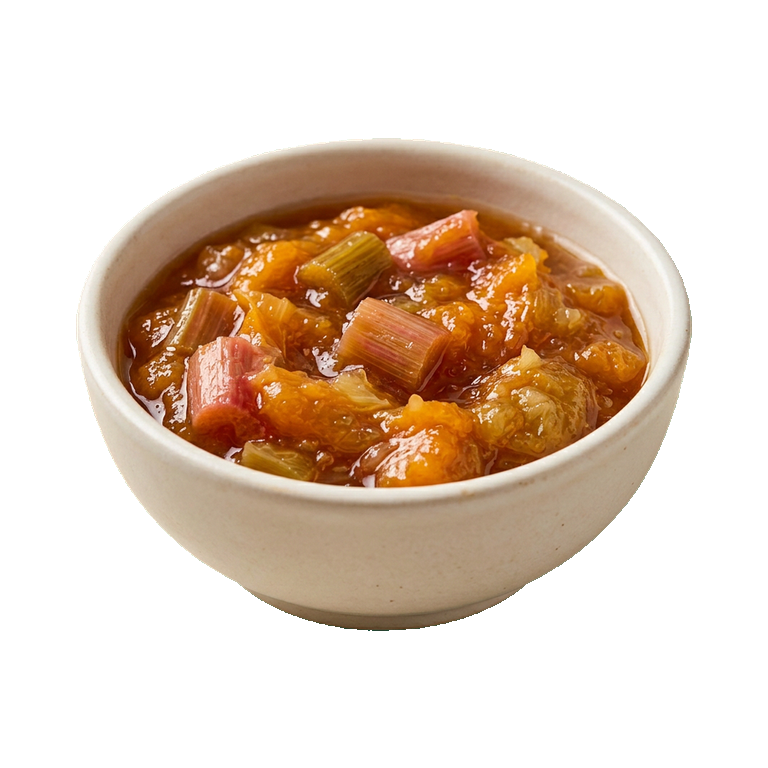
Rhubarb rarely serves as the main component — it is rather used as a supporting ingredient that adds acidity and structure. In compotes and fruit drinks, it creates a rich pinkish hue and pleasant flavor profile. In pies and crisps, rhubarb works well with large amounts of sugar, which neutralizes its aggressive acidity. Rhubarb jam turns out dense and long-lasting thanks to its high pectin content.
Successful Pairings
- Berries (strawberries, raspberries, currants) — soften acidity and create a harmonious taste
- Ginger and cinnamon — add warmth and spice, effectively mask herbaceous notes
- Orange and lemon — enhance citrus acidity, suitable for compotes
- Vanilla and almond — soften sharpness, work well in pies and creams
- Honey and brown sugar — add depth and caramel notes
Selection and Storage
Choose young rhubarb with firm stalks, without wilting or dark spots. The color can vary from light green to bright red — both options are equally good, the difference is only in the intensity of the color of the finished dish. Thick stalks need to be cleaned of the fibrous layer, thin ones can be used whole. Rhubarb is stored in the refrigerator in a plastic bag for no more than a week. For longer storage, it is sliced and frozen — this way it retains its shape and taste for up to six months.
Preparation for cooking
- Cut off both ends of the stem — they are tough and tasteless
- If the stem is thick, remove the fibrous layer by pulling it from the base to the top
- Cut into pieces 1–2 centimeters in size — this way it cooks evenly
- When cooking, add sugar or other sweetener immediately so the rhubarb doesn't fall apart
Rhubarb does not require prolonged heat treatment — 10–15 minutes of cooking is enough for it to soften while maintaining its shape. Overcooking turns it into mush.
Nutrition
per 100 g
- Calories
- 21 kcal
- Protein
- 0.9 g
- Fat
- 0.2 g
- Carbs
- 3.2 g
Micronutrients
per 100 g
Macronutrients
- Fiber
- 1.428 g
- Water
- 94.58 g
Minerals
- Sodium
- 0 mg
- Potassium
- 265.3 mg
- Calcium
- 32.93 mg
- Magnesium
- 12.7 mg
- Phosphorus
- 24.93 mg
- Iron
- 0 mg
- Zinc
- 0.18 mg
- Copper
- 0.03 mg
- Manganese
- 0.1 mg
Vitamins
- Vitamin C
- 6.93 mg
- Vitamin B1 (thiamin)
- 0.02 mg
- Vitamin B2 (riboflavin)
- 0.14 mg
- Vitamin B3 (niacin)
- 0.23 mg
- Vitamin B6
- 0.04 mg
Measures and weight
- 1 stalk
- 50 g
Measure calculator
- Weight
- 100 g
- Calories
- 21 kcal