 Usuba
Usuba
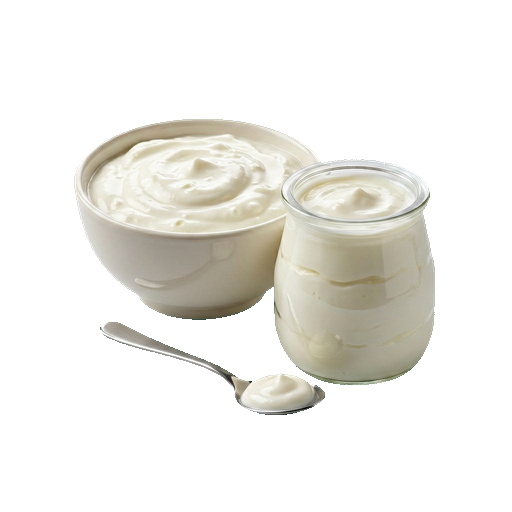
Natural yogurt
Natural yogurt is a fermented dairy product with a soft consistency and delicate tangy flavor, obtained through the fermentation of milk using special bacterial cultures. In cooking, it is used as a base for sauces, dressings, and desserts, as well as an ingredient in marinades for meat and fish due to its tenderizing properties. When choosing yogurt, it is important to pay attention to the ingredients — quality yogurt contains only milk and starter culture without additives or thickeners, which ensures better results in cooking.
Micronutrients
per 100 ml
Minerals
About
Natural yogurt is one of the most versatile ingredients in the kitchen. It's not just a fermented dairy product, but a true helper that works simultaneously as a base, sauce, marinade, and even a dessert. Unlike yogurts with additives, the natural version is a clean canvas on which you yourself create the taste of the dish.
Taste and Consistency
Natural yogurt has a soft, slightly tangy taste with milky notes. The acidity depends on the fermentation time — the longer the yogurt matures, the more pronounced flavor it acquires. The consistency can vary: from liquid drinking yogurt to dense, almost creamy. Choose depending on how you plan to use it.
Where to Use Natural Yogurt
- In sauces and dips — mix with herbs, garlic and spices for a versatile sauce for vegetables, meat or fish
- In marinades — yogurt softens meat fibers and adds tenderness thanks to lactic acids
- In baking — replaces some of the liquid in the dough, making it more moist and airy
- In cold soups — base for okroshka, tarator or other summer first courses
- In desserts — component for cheesecakes, mousses, panna cotta or simply as a base for fruit parfait
- In breakfasts — with muesli, nuts, berries or honey
Perfect Pairings
Natural yogurt works well with bright flavors — add fresh dill and cucumber for a classic sauce. With lemon and olive oil, it becomes the base for Middle Eastern dishes. Spices like turmeric, cumin, and paprika shine particularly well in yogurt. Don't forget about honey, berries, and nuts — they complement the delicate dairy flavor without competition.
How to Choose and Store
When choosing, check the ingredients — it should contain only milk and starter culture, without starch, thickeners, or preservatives. Check the production date: fresh yogurt always tastes better. The consistency should be uniform, without separation or lumps.
- Store in the refrigerator at a temperature of 2-6°C
- Use within 7-10 days after opening the package
- Do not freeze if you need a creamy consistency — yogurt separates when thawed
- Keep away from products with strong odors — yogurt easily absorbs foreign aromas
Practical tip
If the yogurt is too liquid for the sauce, strain it through cheesecloth for several hours — you'll get a denser mass similar to sour cream. If you need a thinner consistency, simply dilute it with milk or water. Natural yogurt easily adapts to your needs, the main thing is to start with a quality product without additives.
Nutrition
per 100 ml
- Calories
- 59 kcal
- Protein
- 3.5 g
- Fat
- 0.4 g
- Carbs
- 4.7 g
Micronutrients
per 100 ml
Macronutrients
- Saturated fat
- 2.339 g
- Monounsaturated fat
- 0.883 g
- Cholesterol
- 14.31 mg
- Water
- 86.123 g
Minerals
- Sodium
- 42.2 mg
- Potassium
- 165.74 mg
- Calcium
- 128.07 mg
- Magnesium
- 11.56 mg
- Phosphorus
- 102.21 mg
- Iron
- 0 mg
- Zinc
- 0.43 mg
- Copper
- 0 mg
- Manganese
- 0 mg
- Iodine
- 32.7 mcg
Vitamins
- Vitamin D
- 0.8 mcg
- Vitamin K
- 0.2 mcg
- Vitamin B1 (thiamin)
- 0.06 mg
- Vitamin B2 (riboflavin)
- 0.25 mg
- Vitamin B3 (niacin)
- 0.14 mg
- Vitamin B6
- 0.05 mg
Measures and weight
- 1 tbsp
- 15.2 g
- 1 tsp
- 5 g
- 1 cup
- 252.5 g
Measure calculator
- Weight
- 100 g
- Calories
- 58 kcal
