Usuba
Usuba
Tapioca
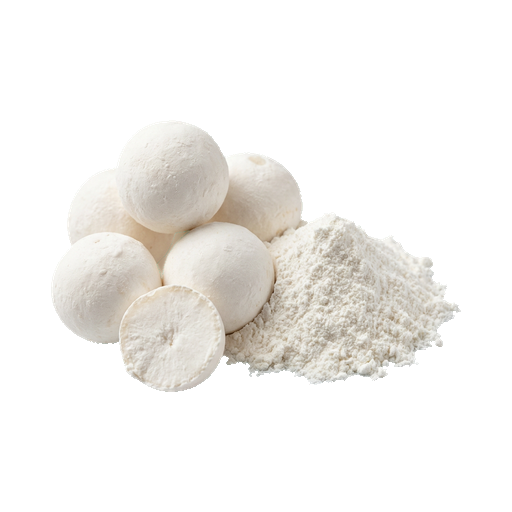
Starch derived from cassava rhizomes, obtained through processing and drying. Comes in the form of white pearls or flour, which become transparent during cooking and acquire a delicate, slightly viscous consistency. In cooking, it is used for thickening desserts, beverages, and porridges, as well as a base for puddings — tapioca has virtually no distinct flavor of its own, making it easy to absorb the aromas of added ingredients.
Micronutrients
per 100 g
Minerals
About
Tapioca is a starch from cassava roots that transforms into white pearls or flour. In the kitchen, it works like magic: it has no flavor of its own, but perfectly absorbs the aromas of neighboring ingredients and creates the desired texture. It is valued for its versatility and reliability in a wide variety of dishes.
Texture and behavior in the dish
Pearl tapioca becomes translucent with a chewy center when cooked — this distinctive quality has made it a star ingredient in Asian beverages. In baking, tapioca creates a delicate, slightly viscous texture. The starch thickens sauces and soups well, giving them a silky consistency without lumps, if properly diluted.
Where tapioca works best
- Drinks with bubbles — milk tea, fruit cocktails, where pearls provide a pleasant chewing sensation
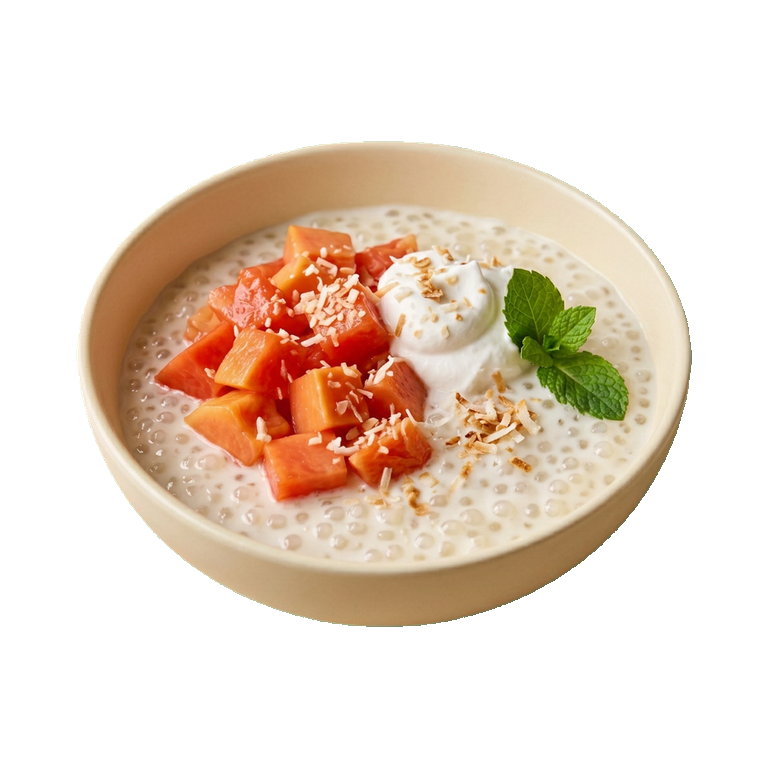
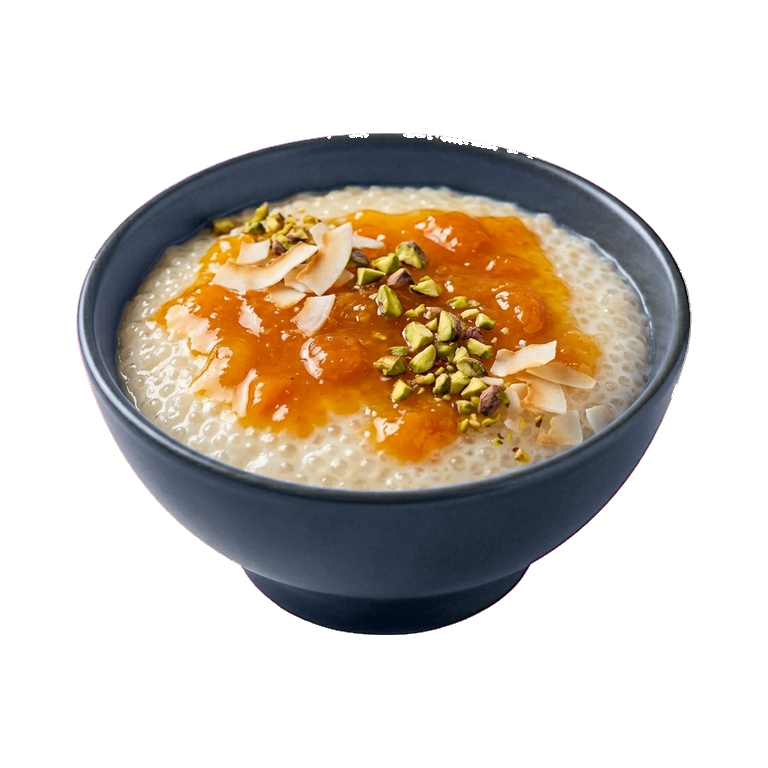
- Puddings and desserts — tapioca makes them creamy and delicate
- Soups and sauces — thickens without changing the taste, maintaining transparency
- Baked goods — adds softness and moisture, especially in cookies and buns
- Porridges and breakfasts — instant tapioca porridge cooks in minutes
Selection and Storage
There are three main types found in stores: pearl (large spheres), small pearl (smaller, cooks faster), and flour. Choose undamaged packages and check the date. Tapioca can be stored in a dry place in an airtight container for years — it practically doesn't spoil thanks to its low moisture content.
Practical Tips
- Pearl tapioca should be soaked in cold water for 30 minutes before cooking — this helps it cook more evenly
- Cook in a large amount of water so the pearls don't stick together
- After cooking, immediately transfer to cold water — this stops the cooking process and preserves elasticity
- Tapioca flour should be dissolved in cold liquid before adding to a hot dish
Pairs well with
Tapioca is a universal companion. It pairs well with milk and cream in sweet dishes, with spicy seasonings in Asian soups, and with fruit purees in desserts. Its neutral flavor allows it not to compete with main ingredients, but rather to support and enhance them. It is especially excellent when combined with coconut milk, black tea, vanilla, and citrus.
Nutrition
per 100 g
- Calories
- 358 kcal
- Protein
- 0.2 g
- Fat
- 0.3 g
- Carbs
- 88.7 g
Micronutrients
per 100 g
Macronutrients
- Fiber
- 0.9 g
- Sugars
- 3.35 g
- Saturated fat
- 0.005 g
- Monounsaturated fat
- 0.005 g
- Polyunsaturated fat
- 0.003 g
- Omega-3 (EPA + DHA)
- 0 g
- Cholesterol
- 0 mg
- Water
- 10.99 g
Minerals
- Sodium
- 1 mg
- Potassium
- 11 mg
- Calcium
- 20 mg
- Magnesium
- 1 mg
- Phosphorus
- 7 mg
- Iron
- 1.58 mg
- Zinc
- 0.12 mg
- Copper
- 0.02 mg
- Manganese
- 0.11 mg
- Selenium
- 0.8 mcg
Vitamins
- Vitamin A (RAE)
- 0 mcg
- Vitamin D
- 0 mcg
- Vitamin E
- 0 mg
- Vitamin K
- 0 mcg
- Vitamin C
- 0 mg
- Vitamin B1 (thiamin)
- 0 mg
- Vitamin B2 (riboflavin)
- 0 mg
- Vitamin B3 (niacin)
- 0 mg
- Vitamin B5 (pantothenic acid)
- 0.14 mg
- Vitamin B6
- 0.01 mg
- Vitamin B9 (folate, DFE)
- 4 mcg
- Vitamin B12
- 0 mcg
Measures and weight
- 1 tbsp
- 12 g
- 1 tsp
- 4 g
- 1 cup
- 200 g
Measure calculator
- Weight
- 100 g
- Calories
- 358 kcal