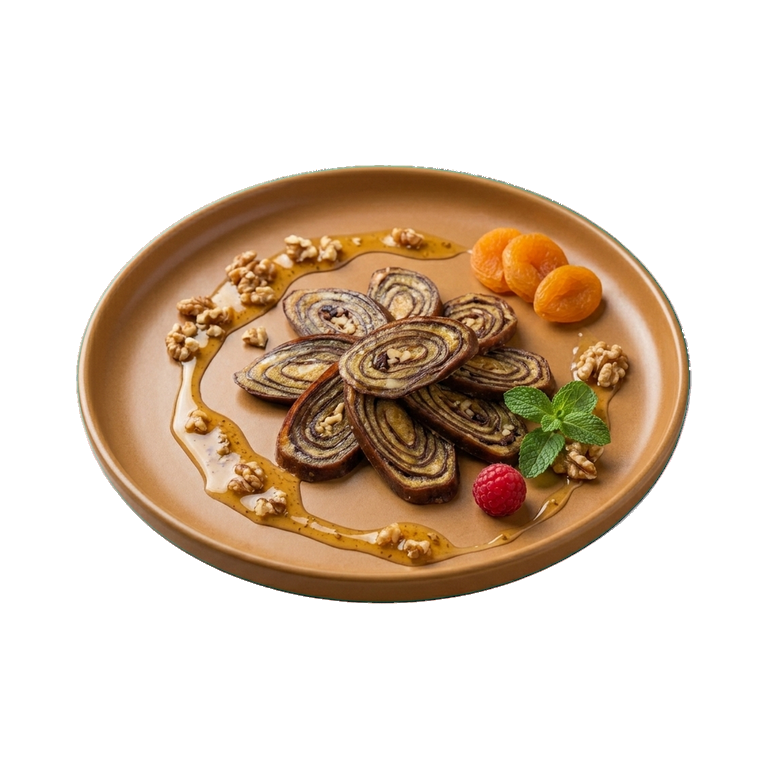
Usuba
Usuba
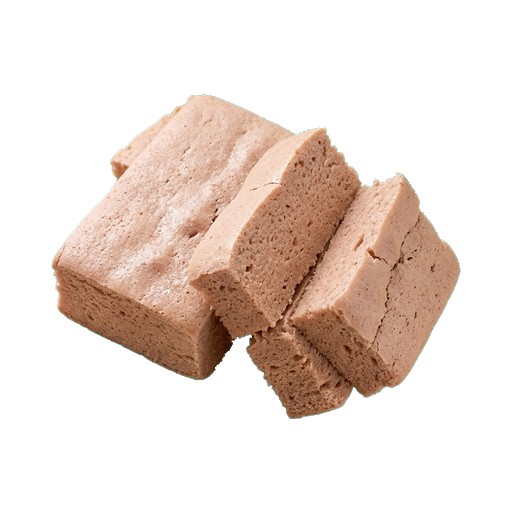
Marshmallow
Pastila is a delicate fruit and berry confection made from puree with the addition of sugar and egg white, which are whipped into an airy mass and baked at low temperature. The finished product has a porous, melt-in-your-mouth consistency with a rich fruity flavor and a light tartness. In cooking, pastila is used as a standalone dessert, and can also be added to baked goods, mousse, or compote to enhance flavor and texture.
Micronutrients
per 100 g
Minerals
About
Pastila is an airy dessert made from fruit puree, sugar, and egg whites. Its main characteristic is its structure: dense yet literally melting in your mouth thanks to numerous air bubbles. When you take a bite, it requires almost no chewing — it simply dissolves on your tongue.
Taste and Aroma
The flavor of pastille depends on the fruits used to make it. Apple pastille provides a soft, slightly tart base, apricot delivers a more saturated and sweet profile, and berry offers bright tartness. The aroma is concentrated: a single piece smells as if you've just bitten into a whole ripe fruit. The sweetness is balanced by the natural acidity of the fruits, so the pastille is not cloying, even if it contains a lot of sugar.
How to use in cooking
- A standalone dessert with tea or coffee — the most obvious way. Pastila is great as breakfast or an afternoon snack.
- An addition to baking: crumble pastila into dough for cookies, pies, or cupcakes to give them fruity flavor and airiness.
- A component of mousse or soufflé: sliced pastila dissolves in cream or yogurt, creating texture and taste.
- A decoration for cakes and desserts: pieces of pastila add visual contrast and a light fruity accent.
- Compote or fruit drink: dissolve pastila in hot water, and you'll get a fragrant drink with natural sweetness.
Successful Pairings
Marshmallow pairs well with dairy products: cream cheese, sour cream, and yogurt. It goes nicely with chocolate — the contrast between fruity acidity and cocoa bitterness works perfectly. Try marshmallow with nuts (almonds, pistachios) or with gingerbread cookies. If you're preparing hot dishes, marshmallow can balance fatty sauces thanks to its lightness and acidity.
Selection and Storage
When choosing pastille, look at its structure: it should be uniform, without lumps or damp spots. Color depends on the fruits — this is normal. Smell it: the aroma should be bright, fruity, without foreign notes. Avoid pastille that sticks to the packaging or crumbles into dust — this is a sign of improper storage or age.
- Store the pastille in an airtight box or jar at room temperature, away from moisture and direct sunlight.
- It easily absorbs odors, so keep it separate from aromatic products.
- Shelf life is usually 2–3 months, but check the date on the packaging.
- If the pastille has dried out, don't rush to throw it away: place a piece of apple or orange in the box overnight — moisture will restore its softness.
Pastila is not just a sweet treat, but a tool for creating fruity notes in your culinary creations. Its airy texture and concentrated flavor allow you to use it in various ways: both as a standalone dessert and as an ingredient for culinary experiments.
Nutrition
per 100 g
- Calories
- 310 kcal
- Protein
- 1 g
- Fat
- 0.5 g
- Carbs
- 75 g
Micronutrients
per 100 g
Macronutrients
- Fiber
- 0.1 g
- Sugars
- 57.56 g
- Saturated fat
- 0.056 g
- Monounsaturated fat
- 0.08 g
- Polyunsaturated fat
- 0.047 g
- Omega-3 (EPA + DHA)
- 0 g
- Cholesterol
- 0 mg
- Water
- 16.4 g
Minerals
- Sodium
- 80 mg
- Potassium
- 5 mg
- Calcium
- 3 mg
- Magnesium
- 2 mg
- Phosphorus
- 8 mg
- Iron
- 0.23 mg
- Zinc
- 0.04 mg
- Copper
- 0.1 mg
- Manganese
- 0.01 mg
- Selenium
- 1.7 mcg
Vitamins
- Vitamin A (RAE)
- 0 mcg
- Vitamin D
- 0 mcg
- Vitamin E
- 0 mg
- Vitamin K
- 0 mcg
- Vitamin C
- 0 mg
- Vitamin B1 (thiamin)
- 0 mg
- Vitamin B2 (riboflavin)
- 0 mg
- Vitamin B3 (niacin)
- 0.08 mg
- Vitamin B5 (pantothenic acid)
- 0.01 mg
- Vitamin B6
- 0 mg
- Vitamin B9 (folate, DFE)
- 1 mcg
- Vitamin B12
- 0 mcg
Measures and weight
- 1 pcs
- 25 g
Measure calculator
- Weight
- 100 g
- Calories
- 310 kcal