Usuba
Usuba
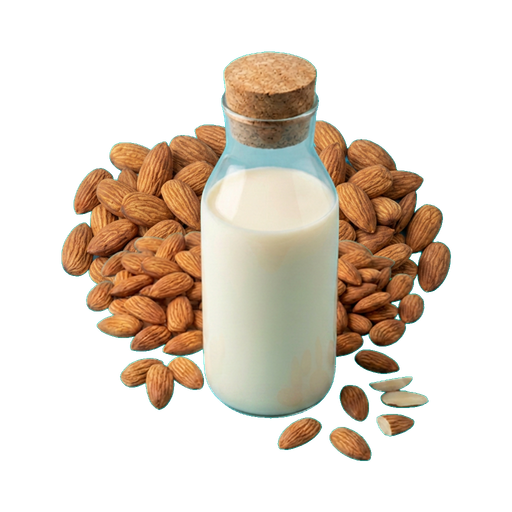
Almond milk
Almond milk is a beverage made from ground almonds and water with a neutral, slightly nutty flavor and creamy texture. It is used as an alternative to cow's milk in drinks, desserts, sauces, and baked goods, particularly in vegan and lactose-free cooking. When choosing almond milk, pay attention to the sugar content and the presence of thickeners — homemade almond milk is more liquid than store-bought varieties and requires thorough stirring before use.
Micronutrients
per 100 ml
Minerals
About
Almond milk is a beverage made from ground almonds and water. It is valued for its delicate taste, low calorie content, and versatility in the kitchen. Unlike cow's milk, it contains no lactose or cholesterol, making it a popular choice for those seeking an alternative or simply wanting to diversify their diet.
Aroma and Taste
Almond milk has a mild, slightly sweet taste with delicate nutty notes. The aroma is pleasant and unobtrusive — a light almond scent can be detected, but without any sharpness. The consistency is usually creamy and homogeneous, although this depends on the concentration of almonds and the production method. Homemade milk often seems richer than store-bought varieties.
Role in Dishes
Almond milk works well in beverages: it is added to coffee, cocoa, smoothies, and cocktails. It is suitable for cereals and muesli, giving them creaminess and a subtle flavor. In baking and desserts, milk helps make the dough more tender, and creams and mousses — airier. It is used in sauces and cream soups, where it adds softness without strong flavor notes.
Successful Combinations
- Vanilla, cinnamon and cardamom — a classic trio for beverages and desserts
- Honey and dates — natural sweeteners that highlight the almond flavor
- Cocoa and chocolate — create a rich, deep flavor profile
- Berries and fruits — in smoothies milk becomes the base, allowing berries to shine brighter
- Coconut — both ingredients enhance the tropical character of the dish
Selection and Storage
When purchasing, pay attention to the composition: the higher the percentage of almonds, the richer the taste and the higher the nutritional value. Check the production date and expiration date. Store an open package in the refrigerator — milk usually stays fresh for 7–10 days. Shake before use, as components may separate. Homemade milk can be frozen in ice cubes for later use in drinks and desserts.
Practical Tips
- For a denser consistency in coffee, choose milk with high almond or cream content
- If preparing at home, soak almonds overnight — the milk will be more delicate and better absorbed
- For lattes and cappuccinos, heat the milk gently, without bringing it to a boil, to preserve the delicate flavor
- In cold drinks, milk reveals its taste more brightly than in hot ones — keep this in mind when choosing the concentration
Nutrition
per 100 ml
- Calories
- 30 kcal
- Protein
- 1.1 g
- Fat
- 2.5 g
- Carbs
- 1.3 g
Micronutrients
per 100 ml
Macronutrients
- Fiber
- 0 g
- Water
- 96.52 g
Minerals
- Sodium
- 59.22 mg
- Potassium
- 49.27 mg
- Calcium
- 157.5 mg
- Magnesium
- 8.25 mg
- Phosphorus
- 19.08 mg
- Iron
- 0.12 mg
- Zinc
- 0.08 mg
- Copper
- 0.03 mg
- Manganese
- 0.06 mg
Vitamins
- Vitamin D
- 1.6 mcg
- Vitamin K
- 0 mcg
- Vitamin B1 (thiamin)
- 0.01 mg
- Vitamin B2 (riboflavin)
- 0.08 mg
- Vitamin B3 (niacin)
- 0.09 mg
- Vitamin B6
- 0 mg
- Vitamin B12
- 0.4 mcg
Measures and weight
- 1 tbsp
- 15 g
- 1 tsp
- 5 g
- 1 cup
- 250 g
Measure calculator
- Weight
- 100 g
- Calories
- 30 kcal