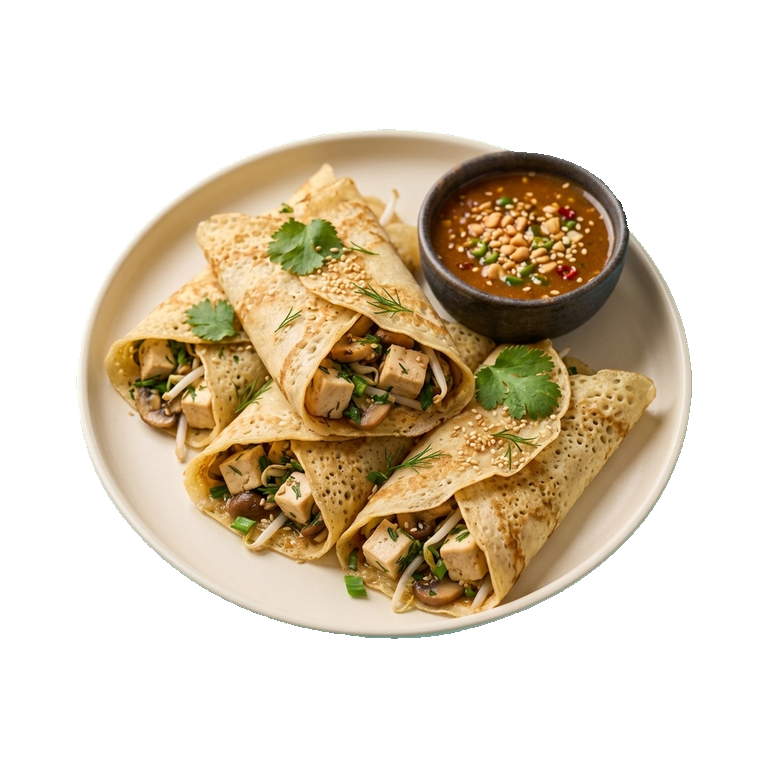
Usuba
Usuba
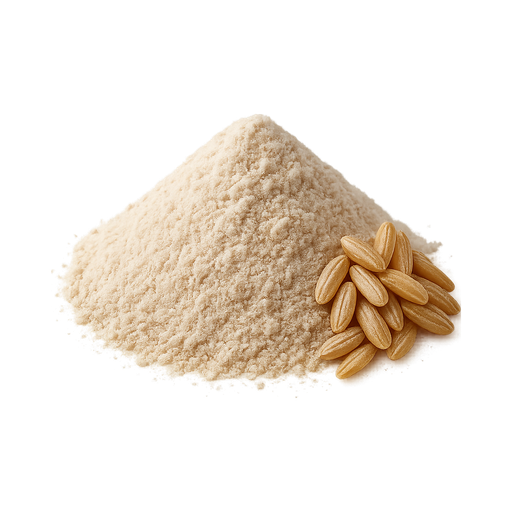
Brown rice flour
Brown rice flour is obtained by grinding unpolished rice and retains its bran layer, which gives it a more pronounced nutty flavor and dark color compared to white rice flour. It is rich in fiber and minerals, but absorbs more liquid during baking, so it requires adjustment of proportions in recipes. This flour is used for making gluten-free products, breading, and thickening sauces, although it produces a denser, less airy dough structure.
Micronutrients
per 100 g
Minerals
About
Brown rice flour is ground grain with a preserved bran layer that gives it a characteristic beige-brown color and rich nutty flavor. Unlike white rice flour, it retains all the beneficial layers of the grain, making it denser, more nutritious, and behaving quite differently in dough. This is not just a substitute for wheat flour — it's an ingredient with its own character that deserves respect and understanding.
Taste and Aroma
Brown rice flour has a subtle aroma — warm, grainy, with a slightly nutty note. To the taste, it is softer than its color might suggest, with a pleasant earthy undertone and a light sweetness. When heated, the aroma becomes more pronounced, especially if the flour is pre-roasted in a dry pan. This characteristic is often used in Asian cuisine to enhance the depth of flavor.
How it works in the test
Brown rice flour does not contain gluten, so dough made from it does not become elastic and springy. However, it absorbs moisture well — the dough becomes denser and may seem drier than wheat dough. Baked goods made from such flour often turn out more crumbly, with a delicate crumb, but less leavened. This is ideal for cookies, pancakes, breading, and sauce thickeners, but for bread you need helpers — binding agents like eggs, starch, or xanthan gum.
Where to use it
- Breading for fish, chicken and vegetables — gives a crispy, golden crust
- Pancakes and fritters — mix with wheat flour in a 1:1 ratio for better consistency
- Cookies and cakes — especially good for shortbread dough, gives a crumbly structure
- Sauces and gravies — excellent thickener with a mild flavor
- Asian dishes — noodles, dumplings, gnocchi, where it is traditionally used
- Gluten-free baking — in flour blends for bread and muffins
Successful Pairings
The nutty flavor of this flour is well complemented by coconut milk, ginger, garlic, soy sauce, and sesame. It pairs well with eggs, butter, and honey. When making sweet dishes, add vanilla, cinnamon, or cardamom — they will enhance the natural sweetness of the grain. For savory dishes, try combining it with turmeric, black pepper, or paprika.
Selection and Storage
When purchasing, pay attention to color uniformity — the flour should be of an even beige-brown shade without lumps and foreign impurities. Smell the package: the aroma should be fresh, grainy, without mustiness or bitterness. Check the packaging date — freshness is important, as the oils in the bran oxidize over time.
Store flour in an airtight container in a cool, dark place or in the refrigerator — this will extend its shelf life. At room temperature, it keeps for 2–3 months, in the refrigerator — up to six months. Before using, let the flour warm up to room temperature to avoid condensation. If you notice a musty smell — the flour has spoiled, use it for compost.
Practical tip
If you're cooking with brown rice flour for the first time, start with dishes where it serves as a supporting ingredient — breading, sauces, or an addition to your main flour. This way you'll get a feel for its character and understand how it affects consistency and taste. For a complete replacement of wheat flour, you'll need experience and often — the help of other ingredients.
Nutrition
per 100 g
- Calories
- 366 kcal
- Protein
- 6 g
- Fat
- 2.9 g
- Carbs
- 77.2 g
Micronutrients
per 100 g
Macronutrients
- Water
- 12.1 g
Minerals
- Sodium
- 1 mg
- Potassium
- 265 mg
- Calcium
- 10 mg
- Magnesium
- 124 mg
- Phosphorus
- 319 mg
- Iron
- 1.5 mg
- Zinc
- 1.91 mg
- Copper
- 0.29 mg
- Manganese
- 2.84 mg
- Selenium
- 9.7 mcg
Vitamins
- Vitamin B1 (thiamin)
- 0.32 mg
- Vitamin B2 (riboflavin)
- 0.01 mg
- Vitamin B3 (niacin)
- 5.99 mg
- Vitamin B6
- 0.13 mg
Measures and weight
- 1 tbsp
- 11.3 g
- 1 tsp
- 3.8 g
- 1 cup
- 187.5 g
Measure calculator
- Weight
- 100 g
- Calories
- 366 kcal