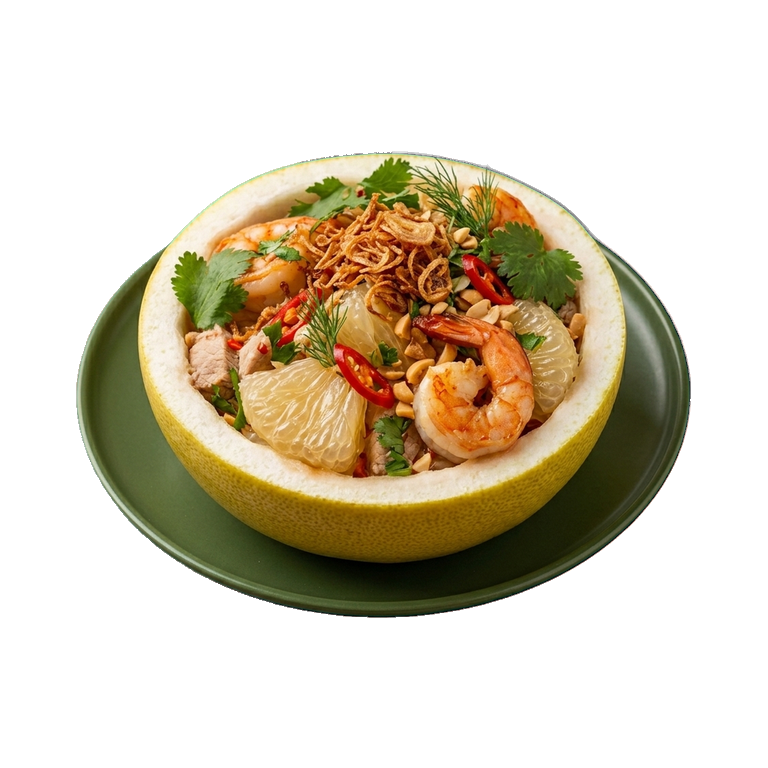
Usuba
Usuba
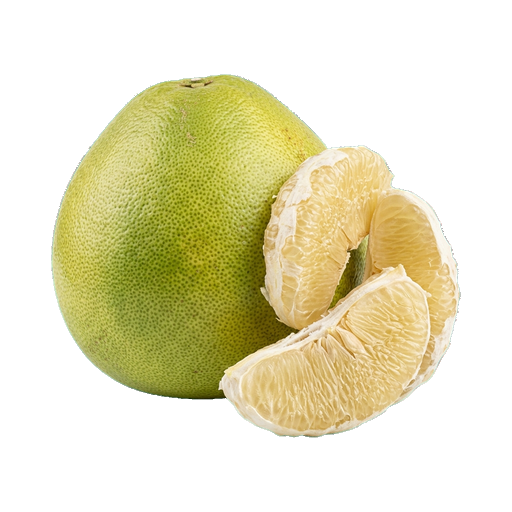
Pomelo
Pomelo is a large citrus fruit with a thick bumpy skin, inside which lies a sweet-bitter flesh in pale yellow or pinkish shades. The fruit has a light bitter taste with floral notes, less acidic than grapefruit, and drier in texture. In cooking, pomelo is used fresh for desserts and salads, added to sauces and drinks, and its segments pair well with spicy and aromatic Asian dishes.
Micronutrients
per 100 g
Minerals
About
Aroma and Flavor
Pomelo is a large citrus fruit with tender, slightly bitter flesh and a refreshing sweet taste. It differs from grapefruit in having a more delicate bitterness and less acidity. The flesh is pink, red, or white depending on the variety, with large segments and thick skin. The aroma is light, floral, without sharpness.
Role in dishes and pairings
Pomelo works both fresh and in cooking. The flesh is great in salads with seafood, spicy sauces and fresh herbs — its delicacy contrasts with sharp flavors. The juice is added to marinades for fish and seafood delicacies. Slices are placed in desserts, fruit salads, and used as a garnish for meat dishes.
Pomelo pairs well with ginger, lime, chili, mint, and coconut milk — these are classic combinations in Asian cuisine. The flesh maintains its texture when sliced, making it ideal for dishes where structure is needed.
Selection and Storage
Choose pomelo by weight — a good fruit should be heavy for its size, which is a sign of juiciness. The skin should not be damaged, light dents are acceptable. When pressed, the fruit springs back slightly. The skin color varies from yellow-green to light yellow — this does not affect the quality.
Pomelo keeps longer than other citrus fruits — up to three weeks at room temperature, and up to a month in the refrigerator. After cutting, cover the flesh with plastic wrap and keep it in the cold for no more than three days. The thick skin provides good protection for the contents, but it's best not to leave the cut fruit exposed to air.
Practical Tips
- Peel pomelo like an orange, but be prepared for a thick skin — you may need a sharp knife
- The white bitter pith between segments can be removed or left — it depends on personal taste
- The flesh easily separates from the membranes, so pomelo is convenient to break apart by hand without losing juice
- For salads, carefully extract whole segments so they don't fall apart when tossing
- If pomelo is too sweet, add lemon juice to the dish or use the white flesh with a bitter taste
Nutrition
per 100 g
- Calories
- 38 kcal
- Protein
- 0.8 g
- Fat
- 0 g
- Carbs
- 9.6 g
Micronutrients
per 100 g
Macronutrients
- Fiber
- 1 g
- Cholesterol
- 0 mg
- Water
- 89.1 g
Minerals
- Sodium
- 1 mg
- Potassium
- 216 mg
- Calcium
- 4 mg
- Magnesium
- 6 mg
- Phosphorus
- 17 mg
- Iron
- 0.11 mg
- Zinc
- 0.08 mg
- Copper
- 0.05 mg
- Manganese
- 0.02 mg
Vitamins
- Vitamin A (RAE)
- 0 mcg
- Vitamin C
- 61 mg
- Vitamin B1 (thiamin)
- 0.03 mg
- Vitamin B2 (riboflavin)
- 0.03 mg
- Vitamin B3 (niacin)
- 0.22 mg
- Vitamin B6
- 0.04 mg
- Vitamin B12
- 0 mcg
Measures and weight
- 1 pcs
- 800 g
Measure calculator
- Weight
- 100 g
- Calories
- 38 kcal