Usuba
Usuba
Almond Butter
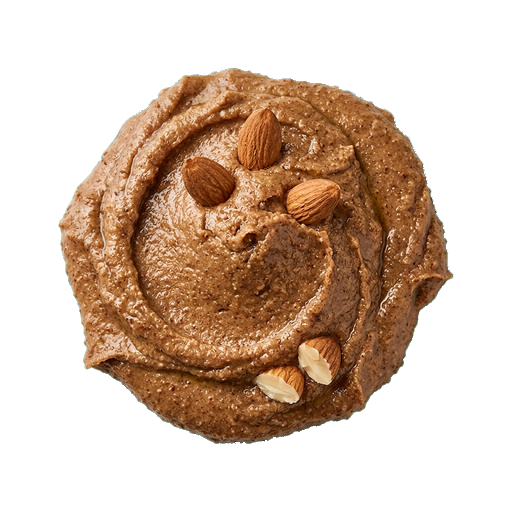
A paste made from ground almonds with an oily consistency and soft nutty flavor with a subtle sweetness. Used as a base for sauces, creams, and desserts, as well as added to baked goods, cereals, and beverages to enhance flavor and texture. When choosing, pay attention to the composition — quality paste contains only almonds and minimal salt, without added sugar and vegetable oils, which can compromise the dish's consistency.
Micronutrients
per 100 g
Minerals
About
Almond butter is simply ground almonds, but in cooking it works like magic. When almond kernels spin for a long time in the millstones, they release their own oil and transform into a smooth, creamy mass. No additives, just the nut and its natural fat. The result is an ingredient that is simultaneously nutritious, versatile, and capable of dramatically changing the taste of a dish.
Aroma and Taste
Almond butter smells fresh, slightly sweet with a delicate bitterness on the finish. The taste is mild, buttery, with nutty depth — not aggressive, but rather enveloping. If the butter is raw, cold-pressed, the aroma will be more delicate and floral. Roasted butter sounds louder: it gains caramel and roasted notes, becoming richer.
Where and how to use it
Almond butter easily fits into both sweet and savory dishes. For breakfast, it's spread on bread or added to cereals and smoothies. In baking, it works as a substitute for part of the butter or flour — cookies become moister with a softer texture. In sauces, the butter creates creaminess without cream: try it in Asian sauces, salad dressings, or sandwich spreads.
- Desserts and baked goods: cakes, cookies, pastries, energy bars
- Beverages: coffee additive, cocoa, milk shakes
- Main dishes: sauces for chicken, fish, vegetables
- Breakfast: bread spread, component of cereals and granola
- Soups and purees: for creamy consistency without dairy products
Delicious Combinations
Almond butter pairs well with acidity — lemon, lime, apple cider vinegar highlight its delicacy and prevent it from being cloying. Sweet companions — honey, dates, cocoa, cinnamon, vanilla — enhance comfort. With salt and spices (cumin, ginger, chili), the butter becomes more interesting and reveals new dimensions. Fruits — banana, pear, apricot — are natural partners, especially in smoothies and desserts.
How to Choose and Store
The label should contain only almonds — nothing else. Some manufacturers add oil, sugar, or salt, and that's fine if you know about it and want it. The paste color varies from light beige (raw) to brown (roasted) — choose depending on what flavor you need. The texture should be uniform, without lumps.
Almond butter should be stored in an airtight container at room temperature for several months. Over time, the oil may separate and rise to the top — this is normal, simply stir it. If the paste has thickened and becomes difficult to spread, place the jar in hot water for a minute or add a small amount of neutral oil. In the refrigerator, the paste lasts longer, but becomes very dense.
Almond butter is not just a healthy choice, it's a way to add depth, creaminess, and nutty richness to any dish. Start small: a spoonful in your morning oatmeal or in a sauce for dinner. You'll quickly understand why this paste has become an indispensable ingredient in modern kitchens.
Nutrition
per 100 g
- Calories
- 610 kcal
- Protein
- 21 g
- Fat
- 53 g
- Carbs
- 13 g
Micronutrients
per 100 g
Macronutrients
- Fiber
- 9.718 g
- Saturated fat
- 4.253 g
- Monounsaturated fat
- 34.69 g
- Polyunsaturated fat
- 12.61 g
- Water
- 1.751 g
Minerals
- Sodium
- 1 mg
- Potassium
- 745.4 mg
- Calcium
- 263.8 mg
- Magnesium
- 267.8 mg
- Phosphorus
- 506.9 mg
- Iron
- 4.11 mg
- Zinc
- 3.18 mg
- Copper
- 0.97 mg
- Manganese
- 2.13 mg
- Selenium
- 0.8 mcg
Vitamins
- Vitamin E
- 16.67 mg
- Vitamin K
- 0 mcg
- Vitamin B1 (thiamin)
- 0.09 mg
- Vitamin B3 (niacin)
- 3.91 mg
- Vitamin B6
- 0.08 mg
Measures and weight
- 1 tbsp
- 15 g
- 1 tsp
- 5 g
- 1 cup
- 250 g
Measure calculator
- Weight
- 100 g
- Calories
- 610 kcal