Usuba
Usuba
Red Lettuce
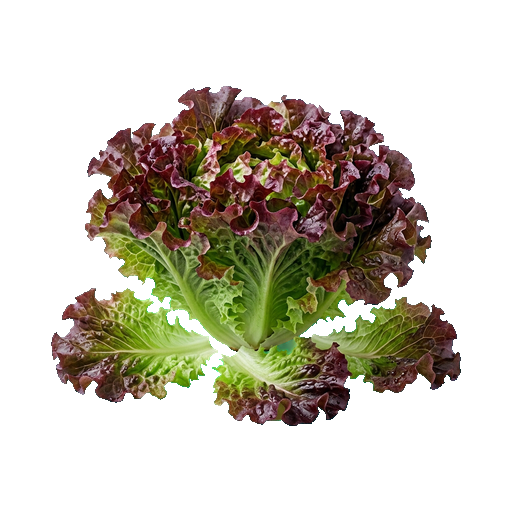
Leafy lettuce with soft, delicate leaves of dark red or burgundy hue and a slightly sweet, mild flavor. In dishes, it serves as a base for salads and adds decorative appeal thanks to its rich color, pairing well with acidic dressings that highlight its tender taste. When selecting, pay attention to the firmness of the leaves and the absence of dark spots — red lettuce is best stored in the refrigerator in an airtight container for no more than a week.
Micronutrients
per 100 g
Minerals
About
Red lettuce is not just a salad for plate decoration. Its burgundy leaves with a purple tint contain anthocyanins, which give it its characteristic color and make the taste slightly more rich than its green counterpart. The leaves are thin, delicate, and absorb dressing well, so the dish turns out tastier if you let it sit for a while.
Taste and aroma
Red lettuce has a milder taste than iceberg, but with a slight bitterness that is more pronounced in the outer leaves. The aroma is practically absent — lettuce has no smell, but it readily absorbs odors from neighboring products and dressings. The texture is crispy but not tough, and the leaf breaks easily by hand.
Where and how to cook it
Red lettuce works everywhere you need a salad base. It holds its shape well in cold dishes and doesn't lose its crunch for an hour after dressing, if the leaves are thick enough. Use it in mixed salads for color contrast, in sandwiches instead of regular lettuce, as a base under appetizers and hot dishes.
Pairings and Dressings
- Oil-based dressings (olive oil, nut oil) emphasize the delicacy of leaves
- Acidic sauces (vinegar, lemon, yogurt) contrast with a light bitterness
- Pairs well with soft cheeses, nuts, dried fruits, and citrus
- Red lettuce is not afraid of sharp spices and savory sauces
Selection and Storage
When purchasing, pay attention to the brightness of the color — a rich burgundy-purple shade indicates freshness. The leaves should be firm, without brown spots or slime. The head should not be too dense — this is a sign of overripeness.
- Store in the refrigerator in the vegetable compartment, wrapped in paper towels or in a plastic container
- Storage time — 5–7 days at a temperature of 2–4 degrees
- Do not wash before use to avoid excess moisture
- If the leaves start to wilt, soak the head in ice water for 15 minutes before serving
Red lettuce is a versatile choice for those who want to diversify their salads without unnecessary experiments. It's predictable in behavior, beautiful on the plate, and works well with most ingredients. Keep it on hand as a reliable base for everyday dishes.
Nutrition
per 100 g
- Calories
- 15 kcal
- Protein
- 1.2 g
- Fat
- 0.3 g
- Carbs
- 2.9 g
Micronutrients
per 100 g
Macronutrients
- Water
- 95.05 g
Minerals
- Sodium
- 24.89 mg
- Potassium
- 321.4 mg
- Calcium
- 42.59 mg
- Magnesium
- 12.4 mg
- Phosphorus
- 24.4 mg
- Iron
- 0.4 mg
- Zinc
- 0.3 mg
- Copper
- 0.04 mg
- Manganese
- 0.18 mg
Vitamins
- Vitamin K
- 73.2 mcg
- Vitamin C
- 9.34 mg
- Vitamin B1 (thiamin)
- 0.06 mg
- Vitamin B3 (niacin)
- 0.33 mg
- Vitamin B6
- 0.07 mg
Measures and weight
- 1 pcs
- 150 g
- 1 head
- 150 g
- 1 slice
- 20 g
Measure calculator
- Weight
- 100 g
- Calories
- 15 kcal