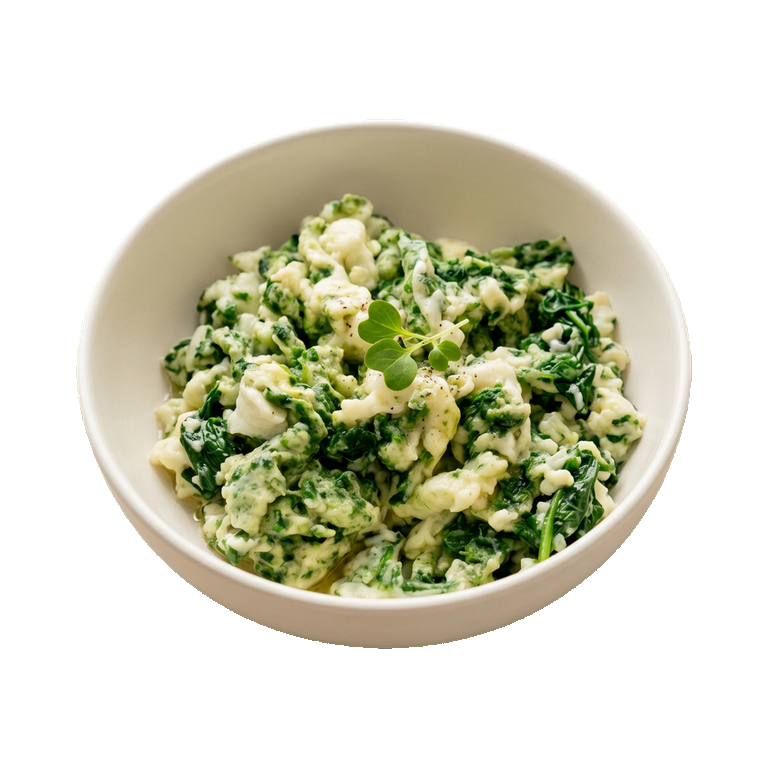
Usuba
Usuba
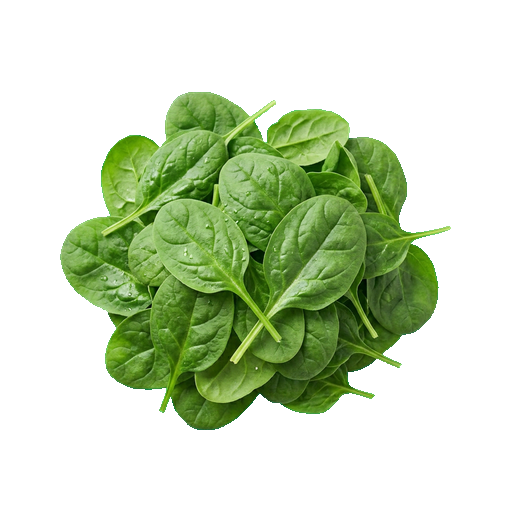
Baby Spinach
Young spinach with tender leaves and a soft, barely noticeable bitter taste that works well for fresh salads and delicate dishes. Thanks to the thin structure of the leaves, it cooks quickly and doesn't require lengthy processing, making it ideal for adding to hot dishes at the very end of cooking. When selecting, pay attention to the firmness of the leaves and their bright green color, and when storing, try to use spinach within a few days, as it quickly loses its freshness.
Micronutrients
per 100 g
Minerals
About
Baby spinach is young spinach leaves harvested at an early stage of growth. They are more tender and delicate than regular spinach, with a softer texture and subtle flavor. Such leaves require minimal processing: they can be used whole, without removing the stems, which saves time in the kitchen and minimizes waste.
Taste and Aroma
Young mini-spinach leaves have a slightly sweet, tender taste without the bitterness that is often present in mature spinach. The aroma is barely noticeable, herbaceous, and unobtrusive. This makes mini-spinach versatile: it does not overpower other ingredients and easily fits into different dishes.
The texture is crispy and airy. Leaves wilt quickly when heated, but remain firm and pleasant to the touch when raw. This is precisely why mini spinach is so popular in salads — it requires no preparation and looks appetizing on the plate.
Where to use
Raw baby spinach is an ideal base for salads. It pairs well with acidic dressings, creamy sauces, nuts, and cheese. The leaves look beautiful in a composition and don't require chopping.
Baby spinach quickly loses volume during heat treatment — this should be taken into account when calculating portions. It is added at the end of cooking soups, pasta, and risotto to preserve tenderness. The leaves are also suitable for fillings in pies, omelets, and casseroles.
Successful Pairings
- With lemon and olive oil — a classic dressing for a simple salad
- With soft cheeses (goat cheese, ricotta, mozzarella) — a contrast of textures and flavors
- With nuts and seeds — add crunch and nutrition
- With berries (strawberries, raspberries) — an interesting sweet and salty combination
- With bacon and egg — a classic warm salad
- With avocado and salmon — a hearty and elegant option
Selection and Storage
When shopping, pay attention to the color of the leaves — they should be bright green, without yellow or brown spots. The leaves should not be wilted or slimy. The packaging should be dry: moisture accelerates rotting.
Baby spinach should be stored in the refrigerator in the vegetable compartment for 3–5 days. It is best to keep it in its original packaging or in an airtight container with a paper towel that will absorb excess moisture. Before use, rinse and dry the leaves — moisture on them can spoil the taste and texture of the dish.
If the leaves have started to wilt, you can revive them by placing them in ice water for 15–20 minutes. However, this is a temporary measure — it's better to use mini spinach as soon as possible after purchase, while it is at its freshest and most firm.
Nutrition
per 100 g
- Calories
- 23 kcal
- Protein
- 2.7 g
- Fat
- 0.4 g
- Carbs
- 3.6 g
Micronutrients
per 100 g
Macronutrients
- Fiber
- 1.558 g
- Water
- 92.52 g
Minerals
- Sodium
- 111.4 mg
- Potassium
- 581.8 mg
- Calcium
- 68.35 mg
- Magnesium
- 92.86 mg
- Phosphorus
- 39.05 mg
- Iron
- 1.26 mg
- Zinc
- 0.45 mg
- Copper
- 0.08 mg
- Manganese
- 0.49 mg
- Selenium
- 0 mcg
Vitamins
- Vitamin A (RAE)
- 283.1 mcg
- Vitamin C
- 26.52 mg
- Vitamin B1 (thiamin)
- 0.08 mg
- Vitamin B2 (riboflavin)
- 0.19 mg
- Vitamin B3 (niacin)
- 0.55 mg
- Vitamin B6
- 0.19 mg
Measures and weight
- 1 bunch
- 150 g
- 1 sprig
- 5 g
Measure calculator
- Weight
- 100 g
- Calories
- 23 kcal