Usuba
Usuba
Sugar
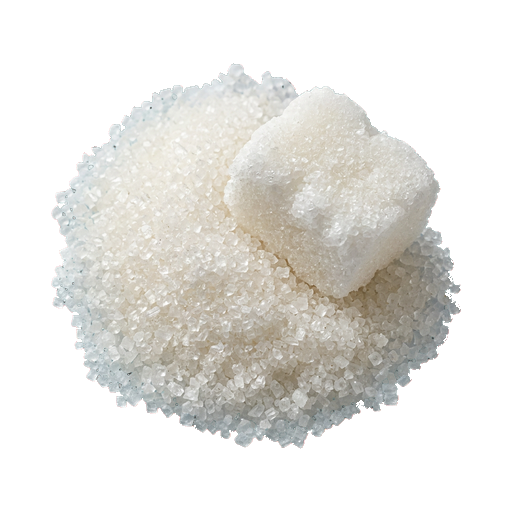
Sugar is a crystalline carbohydrate that dissolves in liquid and adds sweetness to dishes. In cooking, it is used for flavor balance, caramelization when heated, and as a preservative in jams and compotes. When choosing, it's important to note that white sugar is versatile for most recipes, while brown sugar adds a subtle caramel note and more moisture to dough.
Micronutrients
per 100 g
About
Sugar is one of the most versatile ingredients in the kitchen. It does more than just make dishes sweet: it enhances flavors, helps retain moisture in baked goods, caramelizes when heated, and balances acidity and bitterness. Understanding how sugar works in different situations helps you cook consciously and predictably.
Role in dishes and baking
In dough, sugar does more than just sweeten — it binds moisture, making baked goods softer and keeping them fresh longer. When beaten with butter, sugar creates an airy structure necessary for fluffy sponge cakes and cookies. When heated, sugar melts and caramelizes, giving dishes a deep, rich flavor and beautiful color.
In sauces and marinades, sugar balances the acidity of vinegar or lemon, softens the sharpness of spices, and creates smoothness of flavor. In beverages, it dissolves, making the liquid denser and more pleasant to the touch in the mouth. Even in non-sweet dishes, a small pinch of sugar can enhance the natural aromas of tomatoes, mushrooms, or meat.
Different types and their characteristics
White crystalline sugar is universal and suitable for almost everything. It dissolves quickly, does not affect the color of the dish, and works well in doughs and creams. Brown sugar contains molasses, which gives a subtle caramel flavor and makes baked goods slightly more moist. It is convenient to use in cookies, cupcakes, and sauces where you want to add depth.
- Cane sugar — large crystals with pronounced aroma, good for sprinkling and in beverages
- Powdered sugar — fine powder for glazes, creams and toppings; dissolves instantly
- Muscovado — moist, sticky sugar with intense caramel flavor for rich dishes
- Liquid sugar or syrup — ready to use, requires no dissolving, convenient for beverages and sauces
Selection and Storage
When purchasing, pay attention to the packaging — sugar should be dry and crumbly, without lumps or damp spots. If the crystals have stuck together, this is a sign of improper storage or high humidity. Choose packages without damage, where you can see the packaging date.
Sugar keeps well for a long time if stored in an airtight container in a dry, cool place protected from direct sunlight. Humidity is sugar's enemy: it absorbs it and turns into a hard lump. If this has already happened, place a piece of bread or apple in the container for a few hours — it will draw out the moisture, and the sugar will become crumbly again.
Practical Tips
- For caramel, heat sugar over medium heat and don't stir — just tilt the pan to ensure even heating
- In cold drinks, sugar dissolves more slowly; first dissolve it in hot water or syrup
- If the recipe calls for dissolved sugar, dissolve it in liquid before mixing with other dry ingredients
- Brown sugar is denser than white sugar, so when substituting, pack it down slightly when measuring
Sugar works not only for sweetness. It is an architect of texture, a flavor enhancer, and an assistant in caramelization. Once you learn how to use it, you will gain control over the taste and structure of almost any dish.
Nutrition
per 100 g
- Calories
- 387 kcal
- Protein
- 0 g
- Fat
- 0 g
- Carbs
- 99.8 g
Micronutrients
per 100 g
Macronutrients
- Fiber
- 0 g
- Sugars
- 99.8 g
- Saturated fat
- 0 g
- Monounsaturated fat
- 0 g
- Polyunsaturated fat
- 0 g
- Omega-3 (EPA + DHA)
- 0 g
- Cholesterol
- 0 mg
- Water
- 0.02 g
Minerals
- Sodium
- 1 mg
- Potassium
- 2 mg
- Calcium
- 1 mg
- Magnesium
- 0 mg
- Phosphorus
- 0 mg
- Iron
- 0.05 mg
- Zinc
- 0.01 mg
- Copper
- 0.01 mg
- Manganese
- 0 mg
- Selenium
- 0.6 mcg
Vitamins
- Vitamin A (RAE)
- 0 mcg
- Vitamin D
- 0 mcg
- Vitamin E
- 0 mg
- Vitamin K
- 0 mcg
- Vitamin C
- 0 mg
- Vitamin B1 (thiamin)
- 0 mg
- Vitamin B2 (riboflavin)
- 0.02 mg
- Vitamin B3 (niacin)
- 0 mg
- Vitamin B5 (pantothenic acid)
- 0 mg
- Vitamin B6
- 0 mg
- Vitamin B9 (folate, DFE)
- 0 mcg
- Vitamin B12
- 0 mcg
Measures and weight
- 1 tbsp
- 12 g
- 1 tsp
- 4 g
- 1 cup
- 200 g
Measure calculator
- Weight
- 100 g
- Calories
- 387 kcal