Usuba
Usuba
Eggs
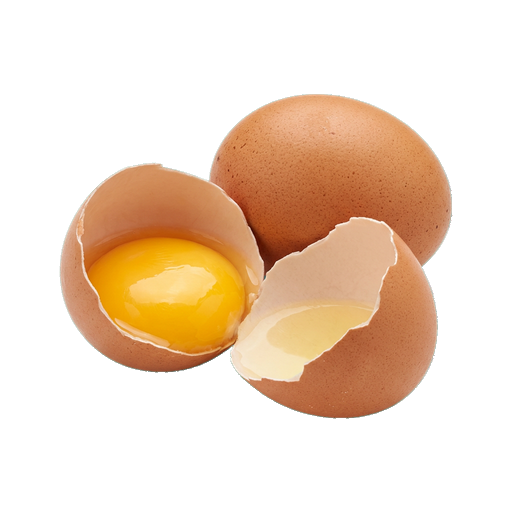
Chicken eggs are a versatile ingredient that serves as a binder in baking, a base for omelets and sauces, and a source of protein in any dish. Egg white and yolk have different properties: the white coagulates when heated and creates structure, while the yolk enriches the dish with fat and lecithin, helping to emulsify sauces. When choosing eggs, pay attention to freshness — older eggs whip poorly and lose the elasticity of the white, so the freshest eggs are needed for meringue or soufflé, while eggs a week old are suitable for boiling.
Micronutrients
per 100 g
Minerals
About
Egg is one of the most versatile ingredients in the kitchen. It works in both sweet and savory dishes, serves as a binder in dough, leavens baked goods, and creates airiness in mousses and soufflés. But most importantly, eggs require no processing to become a complete meal. Boil, fry, poach — and breakfast is ready.
Taste and Role in Dishes
Egg white is neutral in taste, but when heated it becomes dense and elastic — this is its main culinary superpower. The yolk is richer: buttery, with a subtle nutty note, it enriches sauces, creams, and dough. Together they create an emulsion — the foundation of mayonnaise, hollandaise sauce, and cake cream.
In baking, egg is a leavening agent if you whip the whites into foam. In omelets and frittatas, it becomes the base, absorbing the flavors of the filling. In pâtés and forcemeat, egg binds the ingredients together. For breading, the white turns into glue that holds the dry coating in place.
How to Choose and Store
- Check the shell integrity — cracks allow bacteria to pass through. If you place an egg in water, it should sink.
- Category and size are indicated on the package. Medium-sized eggs are suitable for baking, large eggs can be used for omelets.
- A fresh egg has a dense white and a convex yolk. Over time, the white becomes liquid, the yolk spreads — such eggs are only suitable for baking or omelets.
- Store eggs in the refrigerator in a separate compartment or in cardboard packaging — the shell absorbs odors. With proper storage, they last 3–4 weeks.
- Before using in dough or sauces, take eggs out of the refrigerator 15–20 minutes before — they emulsify better at room temperature.
Practical Tips
If you need to separate the egg white from the yolk, crack the egg over a bowl and roll the yolk between the eggshell halves — the white will drip down. The key point: not a single drop of yolk should get into the white, otherwise it won't whip up into foam.
To boil eggs hard, immerse them in boiling water for 9–10 minutes. For a soft yolk, 6–7 minutes is enough. Immediately transfer to ice water — this will prevent the yolk from darkening and make it easier to peel.
When whisking egg whites, use clean dishes with no traces of fat — even a drop of oil will prevent foam formation. A pinch of salt or lemon juice will speed up the process. Egg yolks are whisked with sugar until pale — this will take 2–3 minutes, but the result is worth it.
Pairings and Uses
- Eggs + butter + lemon = hollandaise sauce for vegetables and fish.
- Eggs + milk + sugar = custard cream for cakes and eclairs.
- Eggs + vegetable oil + mustard = mayonnaise for salads and appetizers.
- Eggs + flour + milk = pancake batter, breading, batter.
- Eggs + vegetables + cheese = frittata, omelet, casserole.
- Eggs + sugar + flour = sponge cake, cookies, meringue.
An egg is not just an ingredient, it's a culinary tool. It binds, rises, thickens, decorates. Learn to prepare and combine it correctly — and half of the recipes will open up to you in a new way.
Nutrition
per 100 g
- Calories
- 155 kcal
- Protein
- 13 g
- Fat
- 11 g
- Carbs
- 1.1 g
Micronutrients
per 100 g
Macronutrients
- Fiber
- 0 g
- Saturated fat
- 3.2 g
- Monounsaturated fat
- 3.63 g
- Polyunsaturated fat
- 1.82 g
- Cholesterol
- 411 mg
- Water
- 75.8 g
Minerals
- Sodium
- 129 mg
- Potassium
- 132 mg
- Calcium
- 48 mg
- Magnesium
- 11.4 mg
- Phosphorus
- 184 mg
- Iron
- 1.67 mg
- Zinc
- 1.24 mg
- Copper
- 0 mg
- Manganese
- 0 mg
- Selenium
- 31.1 mcg
- Iodine
- 49.1 mcg
Vitamins
- Vitamin A (RAE)
- 180 mcg
- Vitamin D
- 2.5 mcg
- Vitamin B1 (thiamin)
- 0.08 mg
- Vitamin B2 (riboflavin)
- 0.42 mg
- Vitamin B3 (niacin)
- 0 mg
- Vitamin B6
- 0.06 mg
- Vitamin B12
- 1 mcg
Measures and weight
- 1 pcs
- 50 g
Measure calculator
- Weight
- 100 g
- Calories
- 155 kcal