Usuba
Usuba
Oat milk
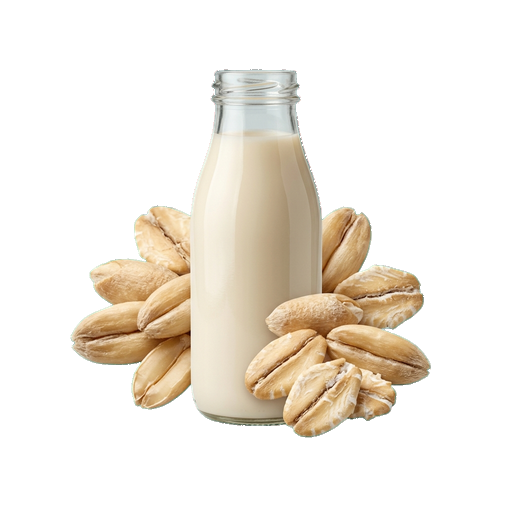
A drink made from oats with a mild, slightly sweet taste and creamy consistency, produced by soaking and grinding grains. Used as an alternative to cow's milk in coffee, porridge, baking, and sauces; froths well and does not curdle when heated. When choosing, pay attention to the content of additives and sugar — natural oat milk contains a minimum of ingredients. When substituting in recipes, keep in mind that it is less nutritious in protein and may slightly affect dough consistency.
Micronutrients
per 100 ml
Minerals
About
Oat milk is a drink made from oats or oat flour diluted in water. It has become a popular alternative to cow's milk not only for those who avoid animal products, but also for anyone who values lightness and neutral taste. Unlike many plant-based drinks, oat milk has a naturally creamy consistency and mild sweetness that doesn't require a long list of additives.
Taste and Aroma
Oat milk has a delicate, slightly sweet taste with barely noticeable grain notes. The aroma is calm, grainy, without sharp undertones. This makes it versatile — it doesn't overpower the taste of coffee, tea, or cocoa, but complements them. The consistency is usually smooth and homogeneous; the drink easily mixes with hot beverages without separating.
Where to use
Oat milk works everywhere that requires milk or a milk alternative. It performs well in hot beverages — coffee, lattes, hot chocolate. In cold cocktails and smoothies, it adds creaminess without heaviness. In baking and desserts, it can replace cow's milk, although it's important to keep in mind that the dough structure may change slightly due to the absence of milk fat.
Food Pairings
- With coffee and cocoa — a classic combination for beverages
- With cinnamon and vanilla — naturally harmonize with grain flavor
- In porridge and muesli — enhances the grain character of the dish
- In cream soups — adds soft creaminess without oiliness
- In panna cotta and creamy desserts — works if you add a thickener
Selection and Storage
When choosing, pay attention to the composition — the fewer additives, the purer the taste. Check if the drink contains thickeners and stabilizers; their presence is normal, but unnecessary components are not needed. Shake the package before use — oat milk may produce a slight sediment.
- Keep sealed packaging in a cool place at room temperature as indicated on the label
- After opening, keep in the refrigerator and use within 7–10 days
- Homemade oat milk keeps in the refrigerator for a maximum of 3–4 days
Oat milk is an excellent choice if you need a beverage that doesn't compete with the main flavor of your dish, but gently complements it. It's neutral enough for both sweet and savory dishes, while carrying a light, pleasant grain base.
Nutrition
per 100 ml
- Calories
- 45 kcal
- Protein
- 0.8 g
- Fat
- 1.5 g
- Carbs
- 6.5 g
Micronutrients
per 100 ml
Macronutrients
- Fiber
- 0 g
- Water
- 93.277 g
Minerals
- Sodium
- 43.24 mg
- Potassium
- 152.85 mg
- Calcium
- 152.96 mg
- Magnesium
- 6.09 mg
- Phosphorus
- 91.86 mg
- Iron
- 0.27 mg
- Zinc
- 0.09 mg
- Copper
- 0.03 mg
- Manganese
- 0.13 mg
- Selenium
- 0 mcg
Vitamins
- Vitamin D
- 1.8 mcg
- Vitamin K
- 0.4 mcg
- Vitamin B1 (thiamin)
- 0.04 mg
- Vitamin B2 (riboflavin)
- 0.29 mg
- Vitamin B3 (niacin)
- 0.1 mg
- Vitamin B6
- 0.01 mg
- Vitamin B12
- 0.5 mcg
Measures and weight
- 1 tbsp
- 15.5 g
- 1 tsp
- 5.2 g
- 1 cup
- 257.5 g
Measure calculator
- Weight
- 100 g
- Calories
- 44 kcal