Usuba
Usuba
Tamari sauce
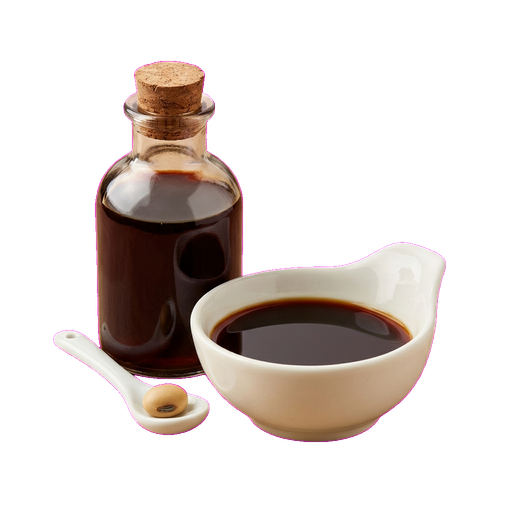
Tamari is a Japanese soy-based sauce made without wheat, making it a gluten-free alternative to classic soy sauce. It has a deep, rich flavor with subtle sweetness and moderate saltiness, while its aroma is softer and more refined than regular soy sauce. Tamari is versatile in the kitchen—suitable for marinades, dips, sushi toppings, and rice seasoning. When substituting regular soy sauce, note that tamari is slightly thicker and may be a bit sweeter, so the quantity sometimes requires minor adjustment.
Micronutrients
per 100 ml
Minerals
About
Tamari is a sauce that is often confused with regular soy sauce, but in fact it is something completely different. The main difference is that its production uses minimal wheat or no wheat at all. If you are cooking for people with gluten intolerance or simply prefer a cleaner soy sauce flavor, tamari will be your faithful assistant. Its consistency is thicker than classic soy sauce, and its taste is richer and deeper.
Taste and Aroma
Tamari gives umami — that very fifth taste note that makes a dish more expressive and full. The taste is simultaneously salty and slightly sweet, with a delicate bitterness and a rich fermented background. The aroma is intense, but not sharp — rather cozy and inviting. Unlike the pungent smell of regular soy sauce, tamari smells softer and more noble.
Role in the Kitchen
Tamari works everywhere you need deep saltiness and umami. It's an ideal choice for marinades for meat and fish — the sauce penetrates the fibers and makes the dish juicier. In soups and broths, it enhances the flavor without unnecessary notes. It's added to dipping sauces, used when stewing vegetables, in Asian salads, and even in some European dishes where delicate saltiness is needed.
Combinations and Proportions
- With ginger and garlic — a classic trio for marinades and sauces
- With rice vinegar — creates a light, fresh sauce for salads
- With mirin or honey — adds sweetness and gloss to glaze
- With sesame oil — deepens the flavor for Asian dishes
- With lemon juice — dilutes the intensity and adds brightness
Tamari is concentrated, so you need less of it than regular soy sauce. For a marinade for one kilogram of meat, 3–4 tablespoons will suffice. In dipping sauces, it is diluted with water or broth in a ratio of 1:1 or 1:2 depending on the desired intensity. Start with a smaller amount — you can always add more, but you cannot remove it.
Selection and Storage
When purchasing, pay attention to the composition — it should contain only soybeans, salt, and water. No additives or preservatives. Tamari color is dark, almost black, with no transparency. If the sauce looks lighter than usual, it's likely a fake or diluted version. Check the production date — fresh sauce works better in dishes.
Tamari is stored for a long time thanks to its high salt content. A sealed bottle can be kept in a kitchen cabinet at room temperature, away from direct sunlight. After opening, the sauce retains its qualities for several months, but it's better to store it in the refrigerator if you've opened a large package. In the cold, it may thicken — this is normal, just take it out 15 minutes before use.
If you're cooking for people with gluten intolerance, always check the label — even tamari sometimes contains wheat. Look for a "gluten-free" mark or make sure it's not in the ingredients.
Nutrition
per 100 ml
- Calories
- 60 kcal
- Protein
- 10 g
- Fat
- 0 g
- Carbs
- 5 g
Micronutrients
per 100 ml
Macronutrients
- Fiber
- 0.88 g
- Sugars
- 1.87 g
- Saturated fat
- 0.012 g
- Monounsaturated fat
- 0.019 g
- Polyunsaturated fat
- 0.048 g
- Omega-3 (EPA + DHA)
- 0 g
- Cholesterol
- 0 mg
- Water
- 72.6 g
Minerals
- Sodium
- 6144.6 mg
- Potassium
- 233.2 mg
- Calcium
- 22 mg
- Magnesium
- 44 mg
- Phosphorus
- 143 mg
- Iron
- 2.62 mg
- Zinc
- 0.47 mg
- Copper
- 0.15 mg
- Manganese
- 0.55 mg
- Selenium
- 0.9 mcg
Vitamins
- Vitamin A (RAE)
- 0 mcg
- Vitamin D
- 0 mcg
- Vitamin E
- 0 mg
- Vitamin K
- 0 mcg
- Vitamin C
- 0 mg
- Vitamin B1 (thiamin)
- 0.06 mg
- Vitamin B2 (riboflavin)
- 0.17 mg
- Vitamin B3 (niacin)
- 4.35 mg
- Vitamin B5 (pantothenic acid)
- 0.41 mg
- Vitamin B6
- 0.22 mg
- Vitamin B9 (folate, DFE)
- 19.8 mcg
- Vitamin B12
- 0 mcg
Measures and weight
- 1 tbsp
- 16.5 g
- 1 tsp
- 5.5 g
- 1 cup
- 275 g
Measure calculator
- Weight
- 100 g
- Calories
- 55 kcal