Usuba
Usuba
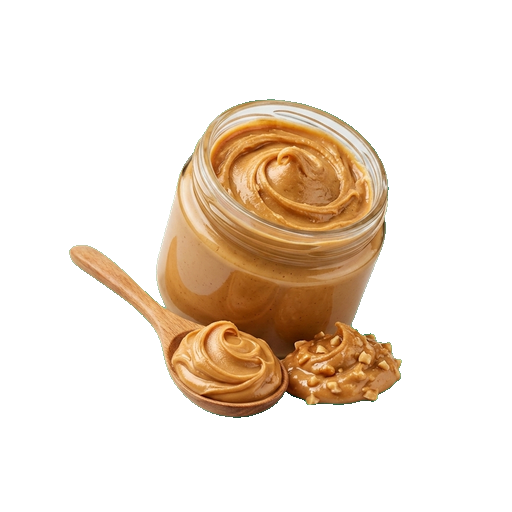
Peanut butter
Peanut butter is a paste made from ground peanuts with an oily consistency that adds a rich nutty flavor and creamy texture to dishes. It is used in Asian cuisine for sauces and marinades, in baking and desserts, as well as a spread. When choosing, pay attention to added sugar and vegetable oil — natural butter contains only peanuts and salt, and its consistency can be either smooth or chunky.
Micronutrients
per 100 ml
Minerals
About
Peanut butter is one of the most versatile ingredients in the kitchen. It's not just a paste made from ground peanuts, but a full-fledged product that works simultaneously as a fat, thickener, flavor base, and protein source. Its creamy texture and rich taste make it indispensable in sweet dishes, sauces, baked goods, and even in savory culinary experiments.
Aroma and taste
Quality peanut butter smells like roasted peanuts — deep, nutty, slightly sweet. In the mouth, it gives a soft nutty flavor with a slight bitterness that appears in the aftertaste. The texture can be creamy or chunky — it all depends on the production method. Creamy butter is easier to mix into dough and sauces, while chunky butter adds interesting texture to baked goods and sweet spreads.
Role in dishes
In baking, peanut butter works as a substitute for butter — it gives softness to cookie crumbs, fluffiness to cupcakes, and moisture to brownies. In sauces and dressings, it creates a creamy base: simply dilute it with lemon juice, soy sauce, or vinegar to get a salad dressing or marinade. In sweet pastes and creams, it works as a main component, giving the dish protein value and richness.
Successful Pairings
- Chocolate and cocoa — a classic combination for cookies, candies and desserts
- Banana — the perfect pair for smoothies, cereals and sweet breads
- Berries — strawberries, raspberries and blueberries highlight nutty flavor
- Honey and maple syrup — enhance sweetness and depth of flavor
- Soy sauce and ginger — the basis for Asian sauces and marinades
- Garlic and hot pepper — for savory pastes and meat sauces
Selection and Storage
When choosing, pay attention to the composition: ideally, it should contain only peanuts and salt, without added oils and sugar. Natural oil may separate — this is normal, just stir it. Store peanut butter best in a cool place in an airtight container: at room temperature it can oxidize faster, in the refrigerator it will thicken, but will remain suitable for use. Use an opened jar within one to two months.
Practical Tips
- If the butter is too thick, warm it in a water bath or simply leave it at room temperature for 15 minutes
- For sauces, dilute the butter gradually: start with a teaspoon of liquid and add more until you reach the desired consistency
- In baking, replace butter with peanut butter in a 1:1 ratio, but keep in mind that the nutty flavor will be more pronounced
- For smoothies and cocktails, use creamy butter — it mixes more easily with liquid
Nutrition
per 100 ml
- Calories
- 588 kcal
- Protein
- 25.8 g
- Fat
- 49.2 g
- Carbs
- 20 g
Micronutrients
per 100 ml
Macronutrients
- Fiber
- 6.323 g
- Saturated fat
- 8.415 g
- Monounsaturated fat
- 30.71 g
- Polyunsaturated fat
- 9.781 g
- Water
- 1.104 g
Minerals
- Sodium
- 220.7 mg
- Potassium
- 654 mg
- Calcium
- 49.85 mg
- Magnesium
- 192.6 mg
- Phosphorus
- 393.2 mg
- Iron
- 1.85 mg
- Zinc
- 3.06 mg
- Copper
- 0.54 mg
- Manganese
- 1.68 mg
- Selenium
- 20.2 mcg
Vitamins
- Vitamin E
- 5.41 mg
- Vitamin K
- 0 mcg
- Vitamin B1 (thiamin)
- 0.12 mg
- Vitamin B3 (niacin)
- 17.2 mg
- Vitamin B6
- 0.38 mg
Measures and weight
- 1 tbsp
- 15 g
- 1 tsp
- 5 g
- 1 cup
- 250 g
Measure calculator
- Weight
- 100 g
- Calories
- 588 kcal