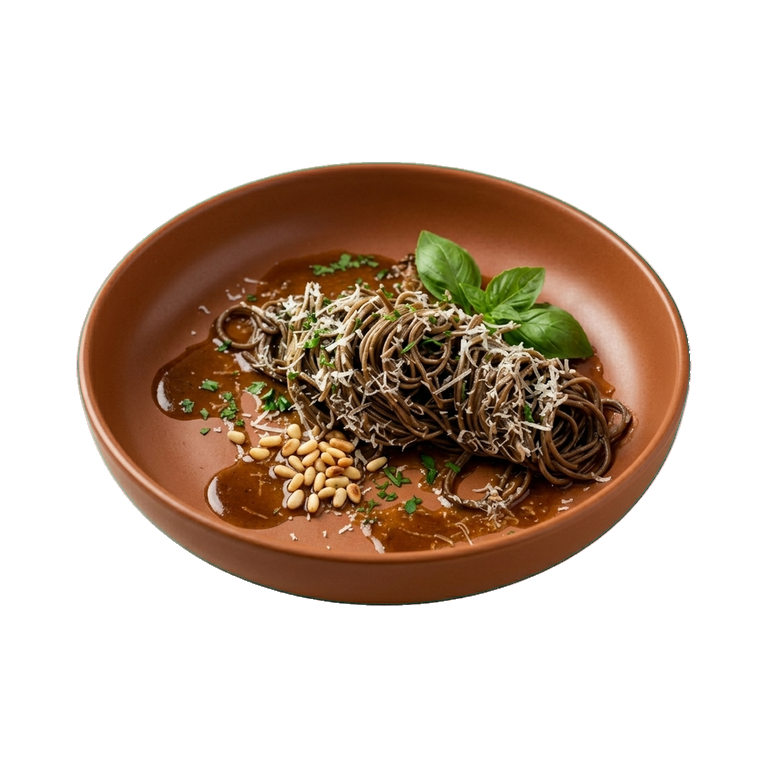
Usuba
Usuba
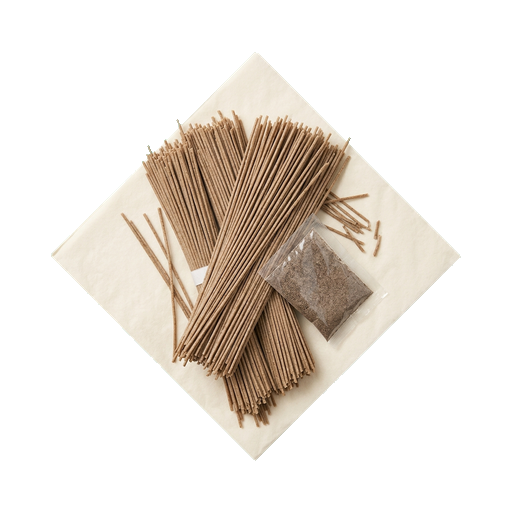
Soba noodles
Buckwheat soba noodles are a traditional Japanese product with a characteristic nutty flavor and dense texture. They are made from buckwheat flour, sometimes with the addition of wheat flour for strength, and have a subtle, slightly astringent aroma. Soba is used in both cold and hot dishes, served in broth or with dipping sauce, absorbs the flavors of accompanying ingredients well, and requires a short cooking time—usually 4–5 minutes—to prevent overcooking.
Micronutrients
per 100 g
Minerals
About
Soba is thin noodles made from buckwheat flour that hold a special place in Asian cuisine. Unlike the familiar wheat pasta, it has a pronounced nutty flavor and a denser texture. It cooks quickly, literally in just a few minutes, and remains springy without falling apart. This makes it an ideal choice for busy cooks who don't want to compromise on quality.
Taste and Aroma
Buckwheat noodles have a deep, slightly sweet nutty profile. They are not a neutral sauce carrier, but an independent ingredient with its own character. The aroma is earthy, with light herbal notes. When you cook soba, the kitchen fills with a pleasant smell, similar to the smell of fresh bread made from semi-sweet dough.
Texture is one of the main advantages. The finished noodles hold their shape, remain slightly elastic, and do not become a soft mush. They absorb sauces well while maintaining their own structure. This is important both for hot dishes and for cold salads.
How to use in dishes
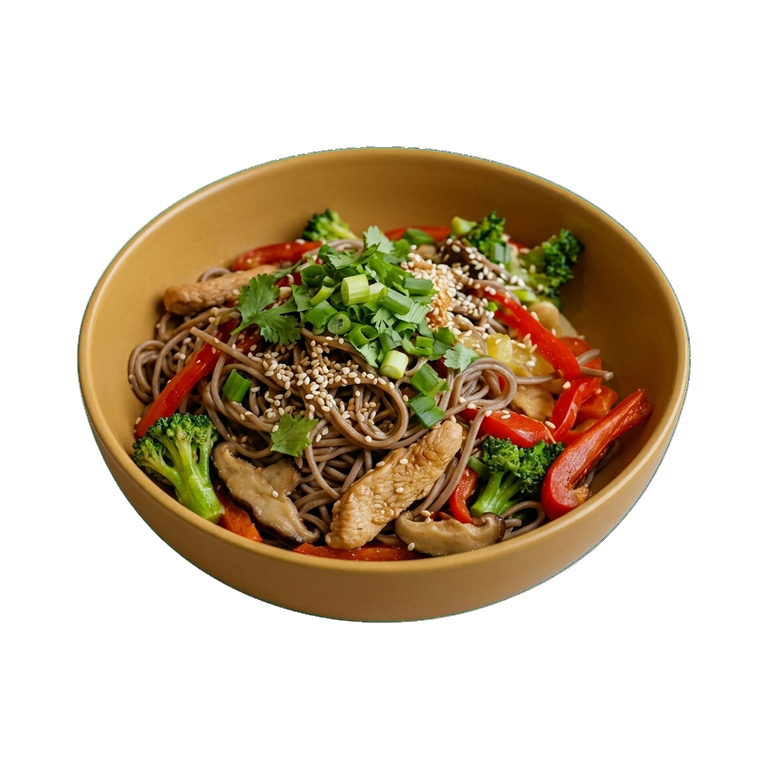
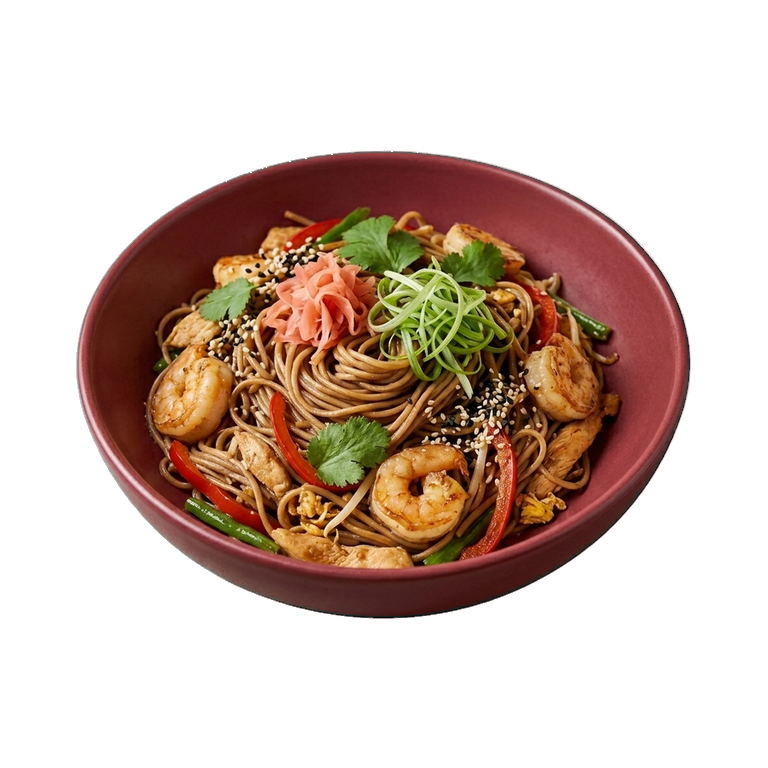
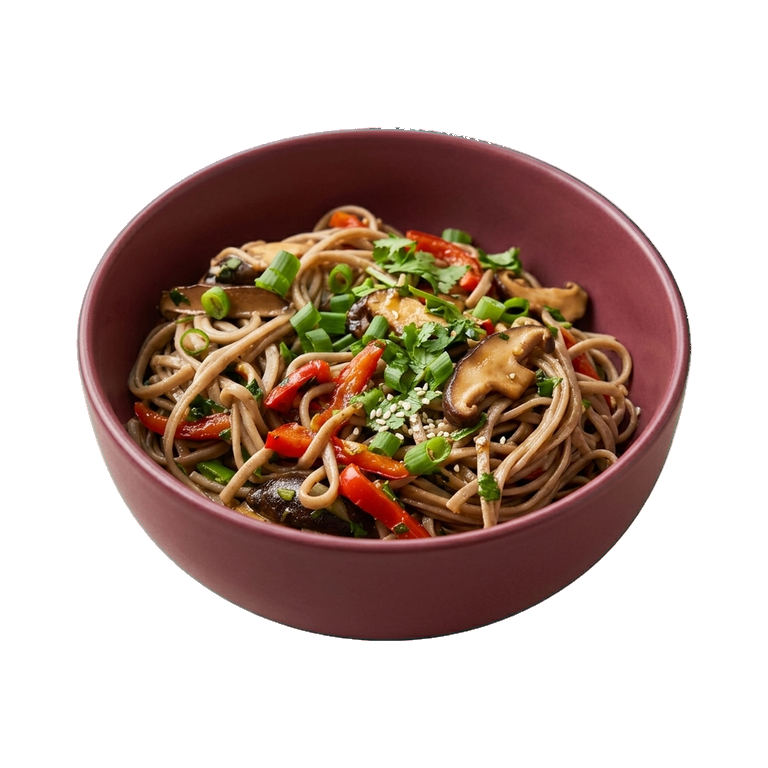
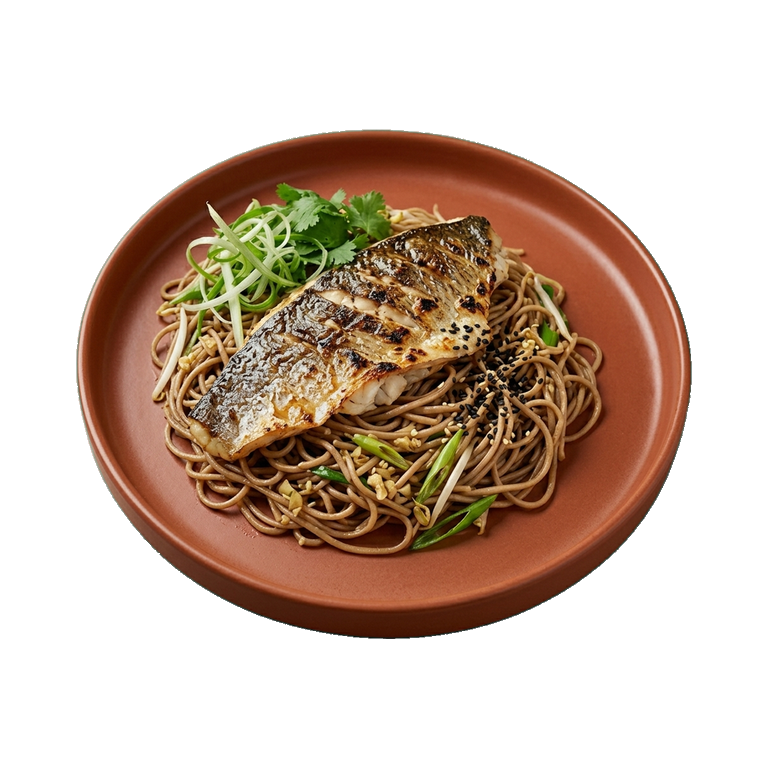
Soba is versatile. It is served hot in a light broth with vegetables, mushrooms, and seafood. Cold noodles work well in summer salads with sesame oil, vegetables, and spicy sauce. It pairs excellently with meat, but is equally good in vegetarian options.
- Hot soba in broth — a classic dish that warms and satisfies quickly
- Cold noodles with sesame sauce — a summer dish that refreshes in the heat
- Salads with vegetables and seafood — soba serves as a base, absorbing all the flavors
- Pasta frittata or casserole — noodles hold their shape well when baked
What goes well with
The nutty flavor of soba works well with spicy and sour components. Sesame oil, soy sauce, rice vinegar, wasabi — all of these emphasize its character without overpowering it. Vegetables with pronounced flavor — radish, carrot, cucumber, avocado — become its natural partners. Seafood, especially shrimp and squid, complement the noodles without competing with them.
Selection and Storage
Look for noodles with a high buckwheat flour content — at least 70–80 percent. If the composition is only buckwheat, the dish will be more aromatic, but the noodles may be more fragile. Mixtures with wheat flour are more durable and easier to work with. The color should be dark, brownish, without a gray coating.
Dry soba is stored in an airtight container at room temperature — it easily absorbs moisture and foreign odors. The shelf life is usually one to two years, but it's better to use it within the first year. Finished noodles shouldn't be kept for long — they are best fresh, immediately after cooking.
Soba requires attention when cooking. Drop it into boiling salted water and cook for 4–5 minutes, stirring occasionally. Do not overcook — overcooked noodles lose their elasticity and become sticky. Immediately after cooking, drain in a colander and rinse with cold water to stop the cooking process and remove excess starch.
Nutrition
per 100 g
- Calories
- 340 kcal
- Protein
- 13 g
- Fat
- 1 g
- Carbs
- 70 g
Micronutrients
per 100 g
Macronutrients
- Saturated fat
- 0.136 g
- Monounsaturated fat
- 0.185 g
- Polyunsaturated fat
- 0.22 g
- Cholesterol
- 0 mg
- Water
- 6.88 g
Minerals
- Sodium
- 792 mg
- Potassium
- 252 mg
- Calcium
- 35 mg
- Magnesium
- 95 mg
- Phosphorus
- 254 mg
- Iron
- 2.7 mg
- Zinc
- 1.71 mg
- Copper
- 0.23 mg
- Manganese
- 1.29 mg
Vitamins
- Vitamin A (RAE)
- 0 mcg
- Vitamin D
- 0 mcg
- Vitamin C
- 0 mg
- Vitamin B1 (thiamin)
- 0.48 mg
- Vitamin B2 (riboflavin)
- 0.13 mg
- Vitamin B3 (niacin)
- 3.21 mg
- Vitamin B5 (pantothenic acid)
- 0.95 mg
- Vitamin B6
- 0.24 mg
- Vitamin B9 (folate, DFE)
- 60 mcg
- Vitamin B12
- 0 mcg
Measure calculator
- Weight
- 100 g
- Calories
- 340 kcal