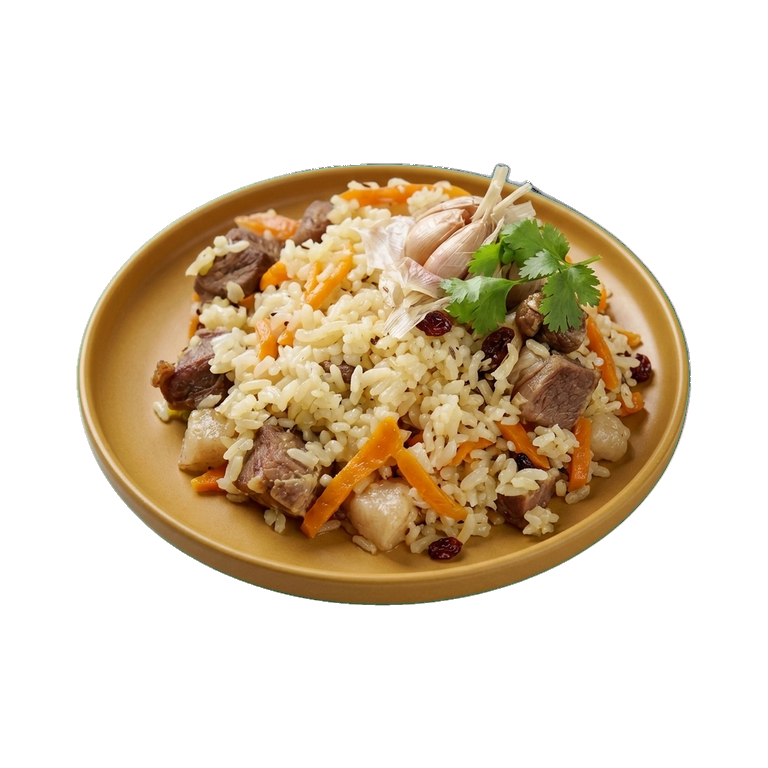
Usuba
Usuba
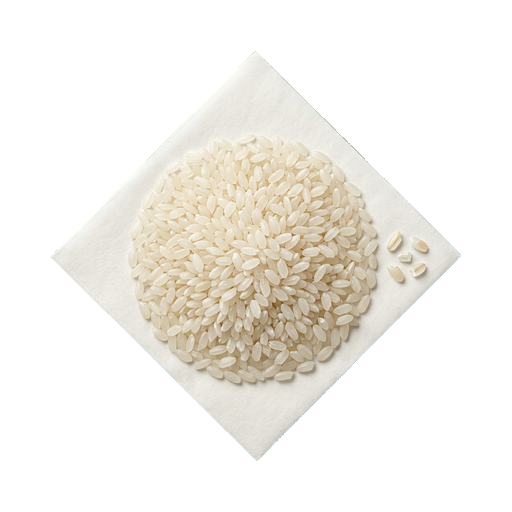
Medium-grain rice
Medium-grain rice has grains 6–7 mm in length that absorb moisture evenly during cooking and remain slightly firm without turning into porridge. This rice is well-suited for risotto, paella, sushi, and pilaf, as the grains hold their shape well and absorb the flavors of sauces and broths. When selecting, pay attention to grain integrity and the absence of foreign matter — quality medium-grain rice cooks in 15–20 minutes and requires no pre-soaking.
Micronutrients
per 100 g
Minerals
About
Medium-grain rice is a versatile kitchen assistant that strikes a golden mean between long-grain and short-grain varieties. Grains measuring 6–7 millimeters in length hold their shape better than round grains, but absorb liquid more actively than long grains. It is precisely this characteristic that makes it an ideal choice for dishes where balance is needed: the rice should be fluffy but not dry, and at the same time not fall apart into porridge.
Taste and Texture
Medium-grain rice cooks faster than its long-grain counterpart — usually 15–18 minutes at standard water ratio. The grains become softer and more tender, but retain their elasticity. During cooking, the rice swells slightly, absorbing just enough liquid to remain fluffy. The flavor is neutral, slightly sweet, which allows it to harmonize both with sharp spices and delicate sauces.
Where and how to cook it
Medium-grain rice is a treasure for risotto, paella, and pilaf. It absorbs broth and aromas more slowly than short-grain rice, so the grains don't stick together into a uniform mass, but they still absorb flavor well. It's suitable for rice side dishes, salads, sushi, and even porridges — anywhere you need a golden mean between texture and absorbency.
- Risotto and paella — rice absorbs broth gradually, remaining crumbly
- Pilaf — pairs well with meat and vegetables, without turning into porridge
- Side dishes for fish and poultry — delicate texture complements delicate dishes
- Rice salads — grains hold their shape while absorbing dressing
- Sushi and rolls — medium-grain rice is stickier than long-grain, but doesn't get mushy
Selection and Storage
When buying, pay attention to the color — the grains should be uniform, white or slightly cream-colored, without dark spots or impurities. The transparency of the grains indicates quality: the more transparent they are, the better the rice absorbs liquid and cooks evenly. Before cooking, rinse the rice with cold water 2–3 times until the water becomes clear — this will remove starch and help the grains remain fluffy.
Store medium-grain rice in a tightly sealed container in a dry place at room temperature. In an airtight container, it will retain its properties for several years. Protect it from moisture and direct sunlight — they can accelerate the oxidation of oils in the grains and spoil the taste.
Medium-grain rice is not just a compromise between extremes, but an independent choice of a chef who knows what their dish needs. It forgives minor errors in water proportions, cooks quickly, and works equally well in family dinners and festive dishes.
Nutrition
per 100 g
- Calories
- 340 kcal
- Protein
- 7 g
- Fat
- 1 g
- Carbs
- 75 g
Micronutrients
per 100 g
Macronutrients
- Fiber
- 1.4 g
- Saturated fat
- 0.158 g
- Monounsaturated fat
- 0.181 g
- Polyunsaturated fat
- 0.155 g
- Cholesterol
- 0 mg
- Water
- 12.89 g
Minerals
- Sodium
- 1 mg
- Potassium
- 86 mg
- Calcium
- 9 mg
- Magnesium
- 35 mg
- Phosphorus
- 108 mg
- Iron
- 4.36 mg
- Zinc
- 1.16 mg
- Copper
- 0.11 mg
- Manganese
- 1.1 mg
- Selenium
- 15.1 mcg
Vitamins
- Vitamin A (RAE)
- 0 mcg
- Vitamin D
- 0 mcg
- Vitamin E
- 0.11 mg
- Vitamin C
- 0 mg
- Vitamin B1 (thiamin)
- 0.58 mg
- Vitamin B2 (riboflavin)
- 0.05 mg
- Vitamin B3 (niacin)
- 5.09 mg
- Vitamin B5 (pantothenic acid)
- 1.34 mg
- Vitamin B6
- 0.14 mg
- Vitamin B9 (folate, DFE)
- 386 mcg
- Vitamin B12
- 0 mcg
Measures and weight
- 1 tbsp
- 12.8 g
- 1 tsp
- 4.3 g
- 1 cup
- 212.5 g
Measure calculator
- Weight
- 100 g
- Calories
- 340 kcal