Usuba
Usuba
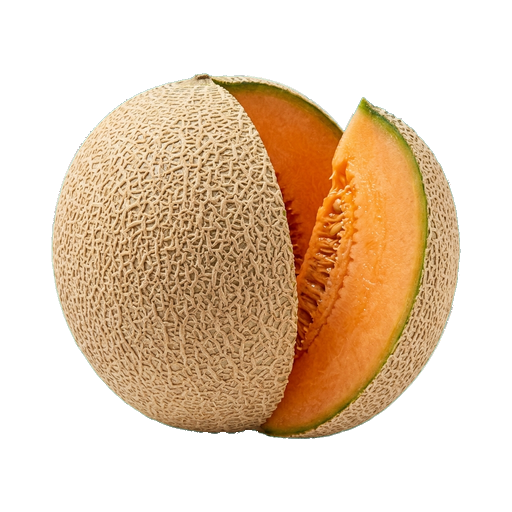
Cantaloupe
Sweet melon with a dense netted skin of beige-brown color and aromatic orange flesh. Used fresh as a standalone dessert, added to fruit salads, smoothies, and ice cream, and also pairs well with prosciutto and other salty ingredients. When selecting, look for a pleasant sweet aroma at the stem end and slight softness when pressed — signs of ripeness.
Micronutrients
per 100 g
Minerals
About
Cantaloupe is a sweet melon with a netted rind and soft orange flesh that has become a classic at summer tables. Its refreshing taste and tender texture make it equally good fresh or as part of complex dishes. The key is learning how to choose a ripe fruit and knowing how to use it in the kitchen.
Aroma and Taste
A ripe cantaloupe smells sweet and slightly spicy, with honey notes. The taste is sweet but not cloying, with a light tartness that balances the sweetness. The flesh melts in your mouth, leaving a fresh aftertaste. An unripe fruit will be bland and hard, so choosing the right one is half the battle.
Role in dishes and pairings
- Fresh slices and balls — ideal in summer fruit salads, especially with blueberries, raspberries and mint
- With prosciutto or bacon — the contrast of sweet and salty creates interesting tension in flavor
- In smoothies and sorbets — melon gives creamy texture and natural sweetness without added sugar
- With seafood — shrimp, crab meat and cantaloupe work together in cold appetizers
- With cheese — mozzarella, ricotta and even sharp cheeses emphasize the sweetness of melon
Selection and Storage
When choosing, focus on weight — a ripe cantaloupe should be heavy for its size. Tap it: the sound should be dull, not hollow. Smell the stem — a sweet aroma indicates ripeness. The skin should be free of dents and soft spots, and the netting should be well-defined.
Keep a whole unripe melon at room temperature — it will ripen in a few days. Ripe cantaloupe is best stored in the refrigerator, where it will last one to two weeks. After cutting, store in an airtight container for a maximum of 4–5 days: the flesh quickly absorbs odors and loses moisture.
Preparation for use
- Wash the melon under running water with a brush to remove dirt from the skin
- Cut in half lengthwise and remove the seeds with a spoon or sharp knife
- Slice into pieces or balls with a special knife — it's more convenient and safer
- Don't throw away the seeds — you can dry them and add them to granola or salad
Cantaloupe is one of the most rewarding ingredients for summer cooking. It doesn't require complex preparation, pairs well with various products, and always comes to the rescue in hot weather. The key is not to be afraid to experiment: melon easily fits into both traditional salads and unexpected combinations.
Nutrition
per 100 g
- Calories
- 34 kcal
- Protein
- 0.8 g
- Fat
- 0.2 g
- Carbs
- 8.2 g
Micronutrients
per 100 g
Macronutrients
- Fiber
- 0.8 g
- Water
- 90.2 g
Minerals
- Sodium
- 30 mg
- Potassium
- 157 mg
- Calcium
- 9 mg
- Magnesium
- 13 mg
- Phosphorus
- 17 mg
- Iron
- 0.38 mg
- Zinc
- 0.44 mg
- Copper
- 0.09 mg
- Manganese
- 0.05 mg
- Selenium
- 1.7 mcg
Vitamins
- Vitamin A (RAE)
- 232 mcg
- Vitamin K
- 2.7 mcg
- Vitamin C
- 10.9 mg
- Vitamin B1 (thiamin)
- 0.05 mg
- Vitamin B2 (riboflavin)
- 0.03 mg
- Vitamin B3 (niacin)
- 0.69 mg
- Vitamin B5 (pantothenic acid)
- 0.09 mg
- Vitamin B6
- 0.04 mg
Measures and weight
- 1 pcs
- 1500 g
Measure calculator
- Weight
- 100 g
- Calories
- 34 kcal