Usuba
Usuba
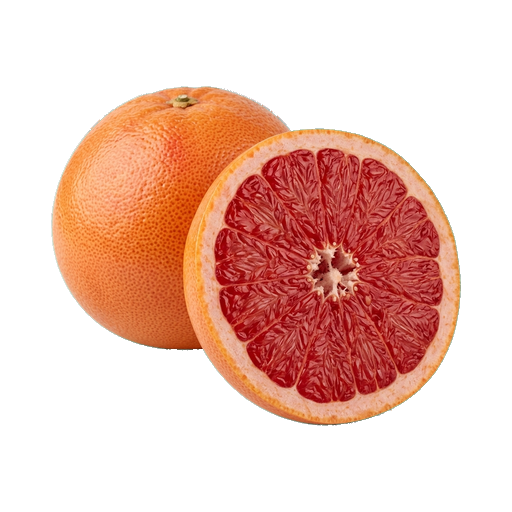
Red grapefruits
Red grapefruits are citrus fruits with pink or deep red flesh, featuring a sweet-bitter taste with a pleasant acidity. They contain more sugar and antioxidants than white varieties, making them less tart and more juicy. In cooking, red grapefruits are used for fresh juices, desserts, salads, and marinades. When selecting, look for heavy fruits with thin skin — this is a sign of juiciness.
Micronutrients
per 100 g
Minerals
About
Red grapefruits are not just a citrus with pink flesh, but a completely different taste experience compared to their yellow cousins. They are sweeter, milder in acidity, and give dishes that very noble bitterness that emerges at the end, when you expect nothing more. In the kitchen, it's a universal helper: it works in salads, cocktails, desserts, and even in main courses with seafood.
Taste and aroma
Red grapefruit offers a sweetness that yellow grapefruit lacks. It's not candy, but the bitterness here is much softer and more pleasant — refreshing rather than off-putting. There is acidity present, but it's not aggressive; it keeps the entire composition in balance. The aroma is fresh, slightly floral, with subtle woody notes that become more pronounced when you break the fruit apart with your hands.
How to use in the kitchen
Red grapefruit is excellent on its own — simply cut in half and eat with a spoon. But its sweetness opens up new possibilities in cooking. The juice works wonderfully in marinades for fish and seafood, adding acidity without harshness. In salads, segments create a bright contrast with hot ingredients — try it with warm chicken or shrimp. You can caramelize the segments with sugar as a garnish for duck or pork.
Successful Pairings
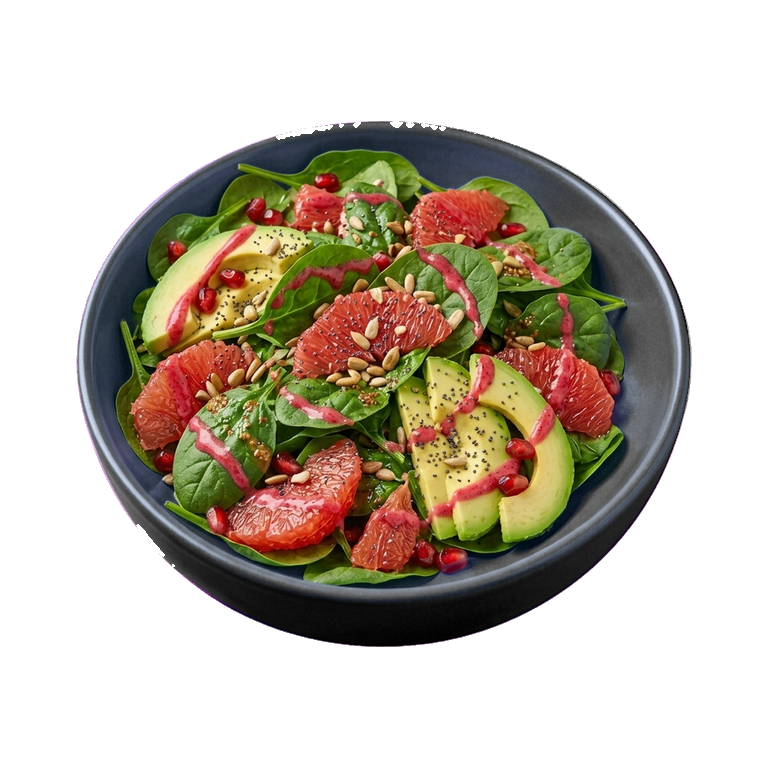
- With avocado and shrimp in light salad
- With ginger and honey in drinks and sauces
- With red fish — salmon, trout, halibut
- With mint and lime in cocktails
- With spices — coriander, turmeric, black pepper
- With white cheeses — mozzarella, feta
Selection and Storage
When choosing, pay attention to the weight of the fruit — it should feel heavy for its size, which is a sign of juiciness. The skin can be either smooth or slightly bumpy, this does not affect quality. Avoid soft indentations and dark spots, which indicate the beginning of rot. A good grapefruit has a pleasant citrus aroma at the base.
At room temperature, grapefruit keeps for 5–7 days, but it's better to store it in the refrigerator, where it stays fresh for 2–3 weeks. A cut fruit should be wrapped in plastic wrap and used within 3–4 days. If you need juice for longer storage, you can freeze it in ice cube trays — these cubes are useful for drinks and sauces.
Nutrition
per 100 g
- Calories
- 32 kcal
- Protein
- 0.7 g
- Fat
- 0.2 g
- Carbs
- 6.5 g
Micronutrients
per 100 g
Macronutrients
- Fiber
- 1.6 g
- Sugars
- 6.89 g
- Saturated fat
- 0.021 g
- Monounsaturated fat
- 0.02 g
- Polyunsaturated fat
- 0.036 g
- Omega-3 (EPA + DHA)
- 0 g
- Cholesterol
- 0 mg
- Water
- 88.06 g
Minerals
- Sodium
- 0 mg
- Potassium
- 135 mg
- Calcium
- 22 mg
- Magnesium
- 9 mg
- Phosphorus
- 18 mg
- Iron
- 0.08 mg
- Zinc
- 0.07 mg
- Copper
- 0.03 mg
- Manganese
- 0.02 mg
- Selenium
- 0.1 mcg
Vitamins
- Vitamin A (RAE)
- 58 mcg
- Vitamin D
- 0 mcg
- Vitamin E
- 0.13 mg
- Vitamin K
- 0 mcg
- Vitamin C
- 31.2 mg
- Vitamin B1 (thiamin)
- 0.04 mg
- Vitamin B2 (riboflavin)
- 0.03 mg
- Vitamin B3 (niacin)
- 0.2 mg
- Vitamin B5 (pantothenic acid)
- 0.26 mg
- Vitamin B6
- 0.05 mg
- Vitamin B9 (folate, DFE)
- 13 mcg
- Vitamin B12
- 0 mcg
Measures and weight
- 1 pcs
- 250 g
Measure calculator
- Weight
- 100 g
- Calories
- 32 kcal