Usuba
Usuba
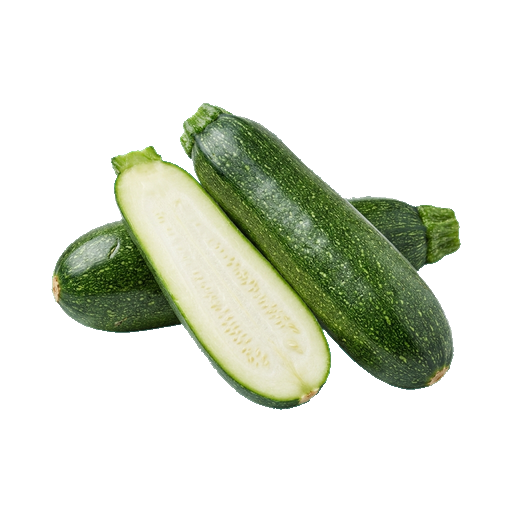
Mini zucchini
Young zucchini with tender skin and small seeds cook faster than regular zucchini and retain a more delicate flavor with subtle sweetness. They can be cooked whole or sliced lengthwise, and are suitable for frying, grilling, baking, and adding to salads. When selecting, pay attention to firmness and uniform dark green color without soft spots, and when storing, keep in the refrigerator for no more than a week.
Micronutrients
per 100 g
Minerals
About
Mini zucchini are young fruits of regular zucchini, harvested at an early stage of ripeness when they reach just 10–15 centimeters in length. Their thin skin, tender flesh, and barely noticeable seeds make them an ideal choice for those who appreciate delicacy and minimal waste. Unlike large zucchini, the mini version requires minimal processing and cooks in just a few minutes.
Taste and Texture
Young zucchini have a tender, delicate flavor with a barely perceptible sweetness. The flesh is dense but not hard, remaining firm during cooking and not falling apart. The skin is so thin that it doesn't need to be peeled — it is completely edible and adds a pleasant green color to the dish. The seeds are barely noticeable, which is especially valuable when preparing whole fruits or slicing them into rings.
How to cook and use
- Grilling and barbecue: whole mini zucchini or halved lengthwise cook beautifully on the grill, getting nice stripes and a light smoke flavor. Just brush with oil, salt, and pepper.
- Pan frying: slice into rings or half-rings and quickly fry in hot oil until golden brown. Ready in 3–4 minutes.
- Baking: whole fruits or halves bake in the oven at 200 degrees for about 15–20 minutes, becoming soft and tender.
- Raw in salads: thinly sliced or shredded mini zucchini add freshness and crunch to summer salads.
- Stuffing: hollow fruits are easily filled with rice, meat, vegetables, or cheese.
Flavor Combinations
Mini zucchini truly shine when paired with garlic, lemon, and fresh herbs — parsley, basil, or mint. They work wonderfully with olive oil, soft cheeses like ricotta or feta, as well as with tomatoes and eggplants in summer stews. For bolder combinations, try bold spices: chili, coriander, turmeric.
Selection and Storage
When buying, choose fruits with smooth, shiny skin without dark spots or dents. They should be firm, not soft. Oversized specimens lose their tenderness, so aim for a pencil-sized fruit or slightly larger. Mini zucchini keep in the refrigerator in the vegetable compartment for 5–7 days. Do not wash them before storage — moisture will accelerate spoilage.
Mini zucchini are a treasure for quick dinners and side dishes when you need something light, nutritious, and beautiful on the plate. They are versatile, cook in minutes, and require no culinary tricks. Simply a good vegetable that's worth keeping on hand during the season.
Nutrition
per 100 g
- Calories
- 16 kcal
- Protein
- 1.2 g
- Fat
- 0.3 g
- Carbs
- 3.1 g
Micronutrients
per 100 g
Macronutrients
- Fiber
- 1.1 g
- Saturated fat
- 0.083 g
- Monounsaturated fat
- 0.031 g
- Polyunsaturated fat
- 0.169 g
- Cholesterol
- 0 mg
- Water
- 92.73 g
Minerals
- Sodium
- 3 mg
- Potassium
- 459 mg
- Calcium
- 21 mg
- Magnesium
- 33 mg
- Phosphorus
- 93 mg
- Iron
- 0.79 mg
- Zinc
- 0.83 mg
- Copper
- 0.1 mg
- Manganese
- 0.2 mg
- Selenium
- 0.3 mcg
Vitamins
- Vitamin A (RAE)
- 25 mcg
- Vitamin D
- 0 mcg
- Vitamin C
- 34.1 mg
- Vitamin B1 (thiamin)
- 0.04 mg
- Vitamin B2 (riboflavin)
- 0.04 mg
- Vitamin B3 (niacin)
- 0.71 mg
- Vitamin B5 (pantothenic acid)
- 0.37 mg
- Vitamin B6
- 0.14 mg
- Vitamin B9 (folate, DFE)
- 20 mcg
- Vitamin B12
- 0 mcg
Measures and weight
- 1 pcs
- 50 g
Measure calculator
- Weight
- 100 g
- Calories
- 16 kcal