Usuba
Usuba
Pea sprouts
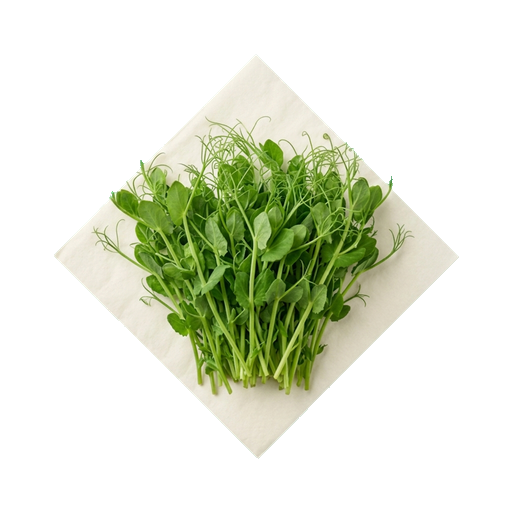
Tender green pea shoots with a delicate sweet flavor and crispy texture are commonly used in Asian cuisine for garnishing dishes and adding freshness. They are rich in vitamins and micronutrients, making them perfect for salads, soups, stir-fries, and as a side dish to main courses. When selecting pea shoots, pay attention to their firmness — they should be fresh and bright green, and are best stored in the refrigerator in an airtight container for no more than a week.
Micronutrients
per 100 g
Minerals
About
Pea shoots are young sprouts of the plant that are harvested at an early stage of development. In cooking, they are valued for their delicate texture, fresh slightly sweet taste, and crunchiness. They are one of the few ingredients that simultaneously decorates a dish and adds nutritional value to it.
Taste and aroma
Pea shoots have a delicate, slightly sweet taste with herbaceous notes. They don't overpower other ingredients but rather enhance them. The texture is crispy yet tender — they don't require heat treatment and retain their freshness even in warm dishes.
Where to use
- Salads and vegetable compositions — sprouts add freshness and volume without heaviness
- Sushi and Asian rolls — a classic component that provides crunch and lightness
- Side dishes for main courses — topping before serving preserves their crispness
- Sandwiches and subs — add texture and vitamins without moisture
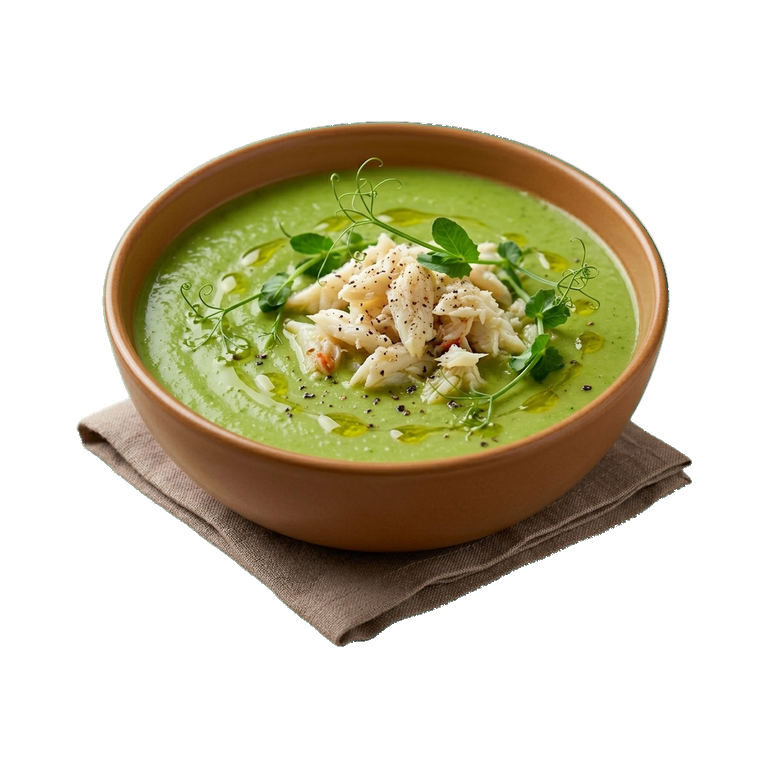
- Cream soups — garnish and contrasting texture to smooth consistency
Successful Pairings
Pea shoots work well with lemon juice, olive oil, and light vinegars. They do not clash with delicate fish dishes, fresh vegetables, and young cheeses. They look excellent alongside avocado, radish, and cucumber.
Selection and Storage
- Choose sprouts that are bright green in color without yellowing and wilting
- They should be crispy to the touch, not soft or slimy
- Store in the refrigerator in an airtight package or container for no more than 3–5 days
- Rinse with cold water before use and dry with a paper towel
Add pea shoots at the last moment before serving — this way they will retain their crunch and maximum freshness. If the dish is hot, you can place the shoots on top right before the guest starts eating.
Nutrition
per 100 g
- Calories
- 30 kcal
- Protein
- 3 g
- Fat
- 0.4 g
- Carbs
- 4 g
Micronutrients
per 100 g
Macronutrients
- Saturated fat
- 0.124 g
- Monounsaturated fat
- 0.061 g
- Polyunsaturated fat
- 0.326 g
- Cholesterol
- 0 mg
- Water
- 62.27 g
Minerals
- Sodium
- 20 mg
- Potassium
- 381 mg
- Calcium
- 36 mg
- Magnesium
- 56 mg
- Phosphorus
- 165 mg
- Iron
- 2.26 mg
- Zinc
- 1.05 mg
- Copper
- 0.27 mg
- Manganese
- 0.44 mg
- Selenium
- 0.6 mcg
Vitamins
- Vitamin D
- 0 mcg
- Vitamin C
- 10.4 mg
- Vitamin B1 (thiamin)
- 0.23 mg
- Vitamin B2 (riboflavin)
- 0.16 mg
- Vitamin B3 (niacin)
- 3.09 mg
- Vitamin B5 (pantothenic acid)
- 1.03 mg
- Vitamin B6
- 0.27 mg
- Vitamin B9 (folate, DFE)
- 144 mcg
- Vitamin B12
- 0 mcg
Measures and weight
- 1 bunch
- 50 g
Measure calculator
- Weight
- 100 g
- Calories
- 30 kcal