Usuba
Usuba
Ancho pepper
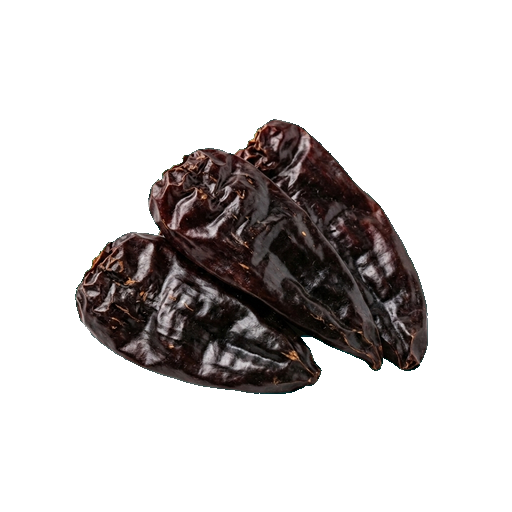
Ancho pepper is a dried poblano pepper with smooth, wrinkled skin and a dark brown color. It has a mild, slightly sweet flavor with subtle bitterness and fruity notes, without sharp heat, making it ideal for sauces, soups, and Mexican dishes. When selecting, pay attention to firmness and integrity — it should be flexible but not brittle. Before using, soak it in hot water to soften and develop its flavor.
Micronutrients
per 100 g
Minerals
About
Ancho pepper is a dried poblano, one of the most popular dried peppers in Mexican cuisine. When poblano loses moisture, it becomes dark, almost black, with deep wrinkles on the surface. In this form, the pepper reveals a completely different character: warm, slightly sweet, with fruity notes and a light bitterness. Ancho is not spicy — this is its main difference from other dried peppers, which is why it is eagerly used by those who prefer flavor over heat.
Aroma and taste
Ancho pepper smells of dried fruits, plum, tobacco, and cocoa. It's a complex, multi-layered aroma that fully reveals itself only when soaked or roasted. On the palate, it's sweet with berry notes, sometimes with a slight smokiness. Heat is virtually absent — a maximum of 1000 Scoville units, which makes it ideal for those who want pepper flavor without the burn.
Role in Dishes
- Base for sauces — ancho peppers are soaked, blended until smooth, and made into a rich sauce for enchiladas, braised meat, or soups
- Seasoning for marinades — the pepper adds depth and sweetness, works well with beef and pork
- Mole component — a traditional Mexican sauce made from many ingredients
- Powder — dried and ground ancho can be used as a spice for dusting or mixing with other seasonings
Pairings and Harmonies
Ancho works well with acidity — lemon juice or vinegar bring out its sweetness. It pairs well with garlic, coriander, cumin, and oregano. Meat, beans, chocolate, coffee — all of these enhance its deep, fruity notes. The pepper combines beautifully with other dried peppers: with guajillo for more sweetness or with chipotle for smokiness.
Selection and Storage
Look for peppers that are flexible but not brittle — this is a sign of freshness. The color should be dark, uniform, without gray spots or mold. Smell them: the aroma should be clean, without mustiness. Store ancho peppers in an airtight container in a cool, dry place — this way they will last a year or even longer.
Preparation for use
- Remove the seeds and stem — they are bitter and not needed in most dishes
- Soak in hot water for 15–20 minutes until the pepper softens
- Drain the water (it can be used in sauce for more flavor) and blend the pepper into a smooth paste
- If you need powder, dry fry the pepper in a pan for 1–2 minutes to enhance the aroma, then grind in a coffee grinder
Ancho pepper is not just an ingredient, it's an invitation to Mexican cuisine. Its softness and sweetness make it accessible for experimentation, and the depth of flavor guarantees that the dish will turn out interesting. Start with a simple sauce — and you'll understand why ancho is so beloved by chefs around the world.
Nutrition
per 100 g
- Calories
- 299 kcal
- Protein
- 13.5 g
- Fat
- 12.3 g
- Carbs
- 64.2 g
Micronutrients
per 100 g
Macronutrients
- Fiber
- 21.6 g
- Saturated fat
- 0.82 g
- Monounsaturated fat
- 0.492 g
- Polyunsaturated fat
- 4.511 g
- Omega-3 (EPA + DHA)
- 0 g
- Cholesterol
- 0 mg
- Water
- 22.63 g
Minerals
- Sodium
- 43 mg
- Potassium
- 2411 mg
- Calcium
- 61 mg
- Magnesium
- 113 mg
- Phosphorus
- 201 mg
- Iron
- 10.93 mg
- Zinc
- 1.42 mg
- Copper
- 0.51 mg
- Manganese
- 1.28 mg
- Selenium
- 2.9 mcg
Vitamins
- Vitamin A (RAE)
- 1022 mcg
- Vitamin D
- 0 mcg
- Vitamin C
- 2 mg
- Vitamin B1 (thiamin)
- 0.18 mg
- Vitamin B2 (riboflavin)
- 2.26 mg
- Vitamin B3 (niacin)
- 6.4 mg
- Vitamin B5 (pantothenic acid)
- 1.99 mg
- Vitamin B6
- 3.54 mg
- Vitamin B9 (folate, DFE)
- 69 mcg
- Vitamin B12
- 0 mcg
Measures and weight
- 1 pcs
- 17 g
Measure calculator
- Weight
- 100 g
- Calories
- 299 kcal