Usuba
Usuba
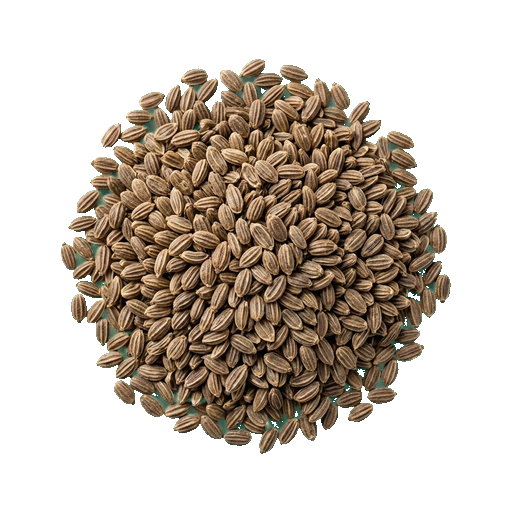
Celery seeds
Celery seeds have a sharp, slightly bitter taste with spicy notes and a characteristic strong aroma. They are used as a seasoning in soups, marinades, pickles, and meat dishes, as well as added to bread and sausages. When choosing, pay attention to the integrity of the seeds and a rich smell — a quality product should be stored in an airtight container, as it quickly loses its aroma in light and during prolonged storage.
Micronutrients
per 100 g
Minerals
About
Celery seeds are small but mighty helpers in the kitchen. They possess an intense aroma and a sharp, slightly bitter taste that is instantly recognizable in a dish. Unlike celery stalks and leaves, seeds concentrate the entire character of the plant and require respectful handling — a pinch can transform a dish, while a handful can ruin it.
Aroma and Taste
Celery seeds smell of earth, grass, and something spicy all at once. The taste is sharp, somewhat piquant, with notes of bitterness. When you crush or heat them, the aroma becomes even brighter and more pronounced. This quality makes them ideal for spices that need to be "awakened" before adding to a dish.
Where to use
Celery seeds work well in soups, especially vegetable and meat broths. They are indispensable in vegetable marinades, in pickling brines for preservation, and in sauces for meat. A few seeds will enhance a salad with tomatoes or cucumbers. In bread baking and cheese making, they add depth and complexity of flavor.
Successful Combinations
- With black pepper, bay leaf and cloves in marinades
- With tomatoes, onions and garlic in vegetable dishes
- With dill and caraway in canning
- With salt as a seasoning for meat and fish
- With turmeric and coriander in oriental dishes
Dosage and Precautions
Celery seeds have a strong character, so start with a quarter teaspoon per serving and add to taste. For a soup serving four, half a teaspoon is sufficient. If you are making a marinade, seeds are usually taken at the rate of one teaspoon per liter of liquid. Remember: bitterness increases with prolonged storage of seeds, so use them within a year of purchase.
Selection and Storage
Choose seeds of brown or grayish-brown color — they should be whole, without dust and lumps. The smell should be fresh and bright. Store in an airtight glass jar in a cool, dark place, away from direct sunlight and moisture. With proper storage, seeds will retain their properties for about a year.
If you want to soften the taste of celery seeds, soak them in warm water for a few minutes before adding to the dish — the sharpness will fade somewhat, but the aroma will remain.
Nutrition
per 100 g
- Calories
- 305 kcal
- Protein
- 11.6 g
- Fat
- 15.2 g
- Carbs
- 27.3 g
Micronutrients
per 100 g
Macronutrients
- Fiber
- 11.8 g
- Sugars
- 0.67 g
- Saturated fat
- 2.19 g
- Monounsaturated fat
- 15.93 g
- Polyunsaturated fat
- 3.72 g
- Omega-3 (EPA + DHA)
- 0 g
- Cholesterol
- 0 mg
- Water
- 6.04 g
Minerals
- Sodium
- 160 mg
- Potassium
- 1400 mg
- Calcium
- 1767 mg
- Magnesium
- 440 mg
- Phosphorus
- 547 mg
- Iron
- 44.9 mg
- Zinc
- 6.93 mg
- Copper
- 1.37 mg
- Manganese
- 7.57 mg
- Selenium
- 12.1 mcg
Vitamins
- Vitamin A (RAE)
- 3 mcg
- Vitamin D
- 0 mcg
- Vitamin E
- 1.07 mg
- Vitamin K
- 0 mcg
- Vitamin C
- 17.1 mg
- Vitamin B1 (thiamin)
- 0.34 mg
- Vitamin B2 (riboflavin)
- 0.29 mg
- Vitamin B3 (niacin)
- 3.06 mg
- Vitamin B6
- 0.89 mg
- Vitamin B9 (folate, DFE)
- 10 mcg
- Vitamin B12
- 0 mcg
Measures and weight
- 1 tbsp
- 9.8 g
- 1 tsp
- 3.3 g
- 1 cup
- 162.5 g
Measure calculator
- Weight
- 100 g
- Calories
- 305 kcal