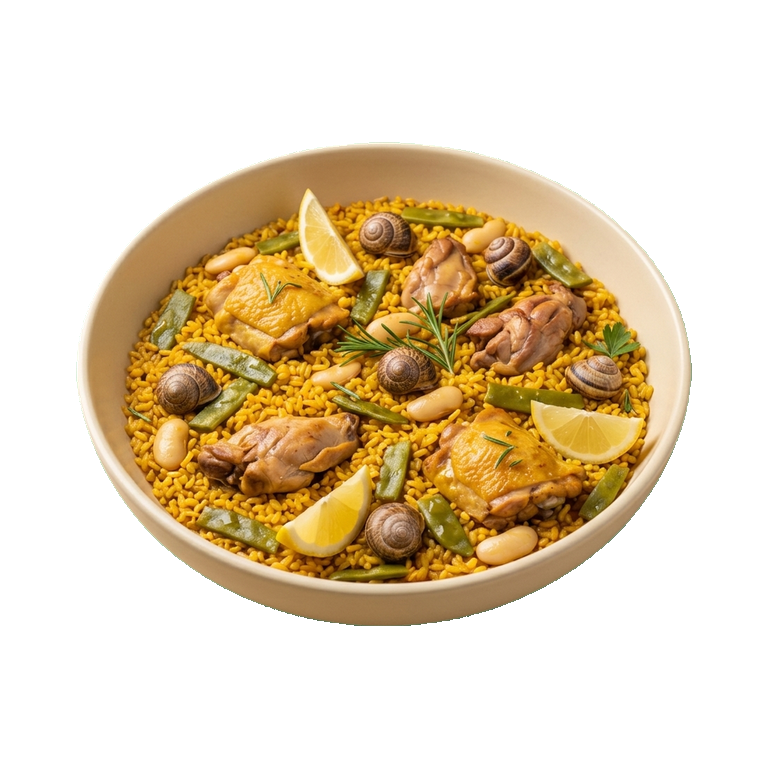
Usuba
Usuba
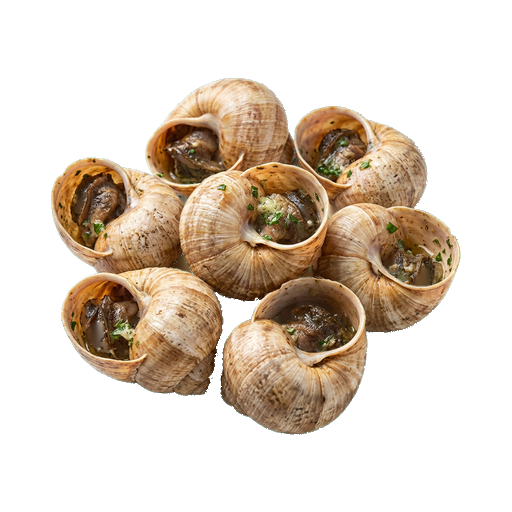
Snails
Snails are the meat of freshwater or marine mollusks, which are cooked in their shells or separately. The meat has a firm, slightly rubbery texture and a delicate flavor, often described as something between fish and poultry, with a subtle herbal or briny note depending on the species. Snails absorb the flavors of olives, garlic, and herbs, so they are prepared with rich sauces, butter, and spices. When substituting, keep in mind that the meat requires fairly long cooking to become tender.
Micronutrients
per 100 g
Minerals
About
Snails are a delicacy that has long ceased to be exotic on European tables and increasingly appears on restaurant and home menus. Snail meat is tender, slightly sweet, with a barely perceptible nutty flavor. It absorbs the aromas of sauces and spices, so snails can be prepared in a wide variety of ways — from classic to avant-garde.
Aroma and flavor
The taste of snails depends on what they ate and how they were prepared. The meat is dense but not tough, with a fine texture. By itself, it is neutral, almost tasteless, which makes it an ideal canvas for sauces. This is why snails are rarely served on their own — they truly shine when combined with butter, garlic, parsley, and white wine.
Role in dishes
Snails require preliminary preparation. They need to be cleaned, boiled or stewed to make the meat softer and safer. After that, they are extracted from their shells and used in various dishes. The classic version is escargot à la bourguignonne, when the snail is returned to its shell with butter, garlic and parsley, and then baked in the oven.
- Baked in shells with aromatic butter
- In creamy and wine sauces
- In pâtés and terrines
- In soups and broths
- Pan-fried with mushrooms and vegetables
Successful Combinations
Snails work wonderfully with ingredients that add aroma and depth to a dish. Garlic and parsley are a classic duo, but it's also worth experimenting with thyme, tarragon, and sage. White wine, butter, and light cream create the perfect sauce base. Mushrooms, especially white ones, highlight the tenderness of the meat, and lemon adds freshness.
Selection and Preparation
Snails can be purchased in canned form (already cleaned and boiled), frozen, or live. Canned snails are the most convenient option for home cooking: they require minimal preparation and store well. Before use, rinse them with cold water to remove excess brine. If you are working with frozen snails, thaw them in the refrigerator, then boil them in salted water with vegetables and spices for 10–15 minutes.
- Canned snails — rinse and use immediately
- Frozen — thaw in the refrigerator and boil
- Live — require fasting and thorough cleaning before cooking
Canned snails are stored in a cool place for up to two years. After opening the can, transfer the remaining snails to a glass container, cover with brine, and keep in the refrigerator for no more than a week. Frozen snails can be stored for several months at a temperature of minus 18 degrees.
Nutrition
per 100 g
- Calories
- 90 kcal
- Protein
- 16.1 g
- Fat
- 1.4 g
- Carbs
- 2 g
Micronutrients
per 100 g
Macronutrients
- Fiber
- 0 g
- Sugars
- 0 g
- Saturated fat
- 0.361 g
- Monounsaturated fat
- 0.259 g
- Polyunsaturated fat
- 0.252 g
- Omega-3 (EPA + DHA)
- 0.119 g
- Cholesterol
- 50 mg
- Water
- 79.2 g
Minerals
- Sodium
- 70 mg
- Potassium
- 382 mg
- Calcium
- 10 mg
- Magnesium
- 250 mg
- Phosphorus
- 272 mg
- Iron
- 3.5 mg
- Zinc
- 1 mg
- Copper
- 0.4 mg
- Selenium
- 27.4 mcg
Vitamins
- Vitamin A (RAE)
- 30 mcg
- Vitamin D
- 0 mcg
- Vitamin E
- 5 mg
- Vitamin K
- 0.1 mcg
- Vitamin C
- 0 mg
- Vitamin B1 (thiamin)
- 0.01 mg
- Vitamin B2 (riboflavin)
- 0.12 mg
- Vitamin B3 (niacin)
- 1.4 mg
- Vitamin B6
- 0.13 mg
- Vitamin B9 (folate, DFE)
- 6 mcg
- Vitamin B12
- 0.5 mcg
Measures and weight
- 1 pcs
- 12 g
Measure calculator
- Weight
- 100 g
- Calories
- 90 kcal