Usuba
Usuba
Venison
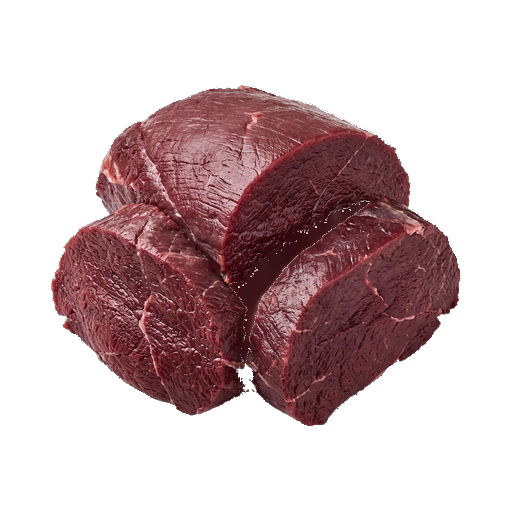
Venison has a dark color and a denser structure than beef, with a characteristic forest aroma and a slightly sweet flavor. Venison contains less fat, so it's important not to dry it out during cooking — it's better to use methods with added liquid or fat, and avoid cooking it beyond medium doneness. This meat works well with acidic marinades and spices that tenderize its structure and highlight its natural taste.
Micronutrients
per 100 g
Minerals
About
Venison is meat that often remains in the shadow of popular beef and pork, though entirely undeservedly. It possesses its own, distinctly pronounced character: dark red color, dense fiber structure, and a rich, slightly gamey flavor. If you've ever tried game meat but wanted something more delicate and versatile in cooking, venison is exactly what you should try.
Aroma and Flavor
The taste of venison depends directly on the age of the animal and its diet. Young venison is more tender and milder in flavor, with barely noticeable gaminess. Meat from an adult animal is more intense, with deep, meaty notes and a slight metallic undertone. Venison fat is thinner than beef fat, so the meat seems leaner, even though it may not be entirely so.
The aroma of raw meat can be sharp and rich, but with proper handling and cooking it becomes noble and appealing. Spices, herbs, and marinades here work not to overpower the taste, but to reveal it and soften the gamey notes.
Role in dishes and cooking methods
Venison is excellent in dishes where a strong, expressive meat flavor is needed. Steaks from the tenderloin turn out juicy and aromatic with medium roasting. Ground pieces go into minced meat for cutlets, meatballs, and fillings. Tough parts with a large amount of connective tissue require prolonged stewing — they produce incredibly aromatic stews and soups.
- Quick searing (steaks, medallions) — minimal heat treatment emphasizes natural flavor
- Stewing and boiling (cabbage soup, borscht, stew) — prolonged cooking softens fibers and develops deep flavor
- Marinating before cooking — helps tenderize meat and add new flavor layers
- Ground meat and cutlets — a versatile way to use pieces with a tougher structure
Pairings and flavor combinations
Venison pairs well with acidity and herbs. Red wine, vinegar, cranberry, and juniper are classic partners that emphasize its game character. Black pepper, rosemary, thyme, and bay leaf add depth and nobility.
Potatoes, root vegetables, mushrooms, and sauerkraut make excellent side dishes. They create a contrast to the intense flavor of the meat and help balance the dish. Creamy sauces with mustard or berry gravies also complement venison well, adding softness and sweetness.
Selection and Storage
When choosing venison, pay attention to the color: it should be dark red, almost burgundy. The meat should be firm and elastic, without slime and foreign odors. White fat on the edges of the piece is a good sign of quality. Fresh meat smells natural, without putrid or sharp unpleasant notes.
- In the refrigerator — 3–4 days in the coldest part, wrapped in parchment or plastic wrap
- In the freezer — up to 8–12 months in airtight packaging or vacuum-sealed bags
- Thaw in the refrigerator for 24 hours before cooking, not at room temperature
If you plan to cook venison later, marinating before freezing is an excellent way to prepare the meat and improve its texture. Oil, vinegar, spices and herbs will help the meat retain moisture and acquire a softer flavor even after prolonged storage.
Venison requires respect for the cooking process, but the result is worth the effort. This is meat for those who appreciate bold flavors, are willing to experiment, and are not afraid to go beyond the usual menu.
Nutrition
per 100 g
- Calories
- 155 kcal
- Protein
- 22.7 g
- Fat
- 6.8 g
- Carbs
- 0 g
Micronutrients
per 100 g
Macronutrients
- Fiber
- 0 g
- Sugars
- 0 g
- Saturated fat
- 0.95 g
- Monounsaturated fat
- 0.67 g
- Polyunsaturated fat
- 0.47 g
- Omega-3 (EPA + DHA)
- 0 g
- Cholesterol
- 85 mg
- Water
- 73.57 g
Minerals
- Sodium
- 51 mg
- Potassium
- 318 mg
- Calcium
- 5 mg
- Magnesium
- 23 mg
- Phosphorus
- 202 mg
- Iron
- 3.4 mg
- Zinc
- 2.09 mg
- Copper
- 0.25 mg
- Manganese
- 0.04 mg
- Selenium
- 9.7 mcg
Vitamins
- Vitamin A (RAE)
- 0 mcg
- Vitamin E
- 0.2 mg
- Vitamin K
- 1.1 mcg
- Vitamin C
- 0 mg
- Vitamin B1 (thiamin)
- 0.22 mg
- Vitamin B2 (riboflavin)
- 0.48 mg
- Vitamin B3 (niacin)
- 6.37 mg
- Vitamin B6
- 0.37 mg
- Vitamin B9 (folate, DFE)
- 4 mcg
- Vitamin B12
- 6.3 mcg
Measure calculator
- Weight
- 100 g
- Calories
- 155 kcal