Usuba
Usuba
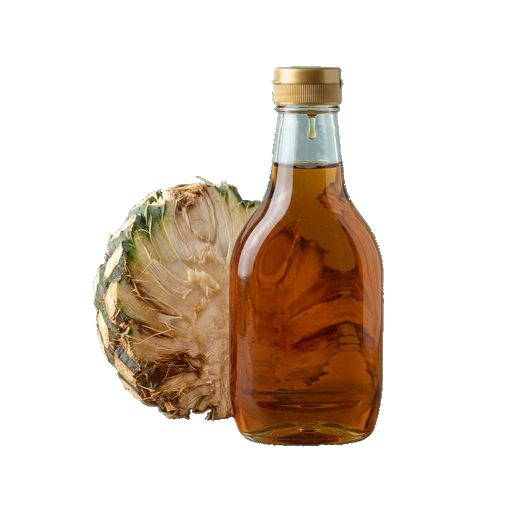
Agave syrup
Agave syrup is a sweet syrup derived from blue agave juice, with a mild, slightly caramel flavor and liquid consistency. It dissolves more slowly in cold liquids than regular sugar, making it well-suited for cocktails, iced tea, and beverages. In baking and hot dishes, it can be used as a substitute for honey or sugar, keeping in mind that it is approximately 25% sweeter than sugar, so the portion should be slightly reduced.
Micronutrients
per 100 g
Minerals
About
Agave syrup is a thick, transparent liquid with a honey color that has become a popular alternative to regular sugar in kitchens around the world. It is obtained from the juice of the agave plant through heating and concentration. Its taste is milder and more delicate than honey, with a subtle caramel note. Its main advantage in cooking is high sweetness with a low glycemic index, which makes it attractive for those monitoring their blood sugar levels.
Taste and Aroma
Agave syrup has a neutral and unobtrusive taste — it doesn't overpower other ingredients but complements them. This is especially valuable in beverages: in coffee, tea, and cocktails, the syrup dissolves without sediment and leaves no aftertaste. In baked goods and desserts, it works as a background, allowing the main flavors — vanilla, cocoa, citrus — to shine brighter. The aroma is barely noticeable, which sets it apart from more aromatic honey or maple syrup.
Where to use it
In hot beverages, agave syrup is simply indispensable: it dissolves instantly and requires no stirring, unlike crystalline sugar. In cocktail practice, it is added to shakes, mojitos, margaritas — its liquid consistency facilitates mixing. For baking, agave syrup requires minor adjustments to the recipe: it is more liquid than sugar, so you need to slightly reduce the amount of other liquids in the dough.
- Cold drinks: smoothies, lemonades, iced tea
- Sweet sauces and glazes for desserts
- Natural sweeteners for porridges and yogurts
- Base for homemade energy bars
- Marinades and sauces for meat — adds a light sweetness
How to Choose and Store
When purchasing, pay attention to the color: light syrup has a milder taste, dark syrup has a slightly more pronounced flavor. Both options are good; the choice depends on what you're cooking. Check that the ingredients contain only agave juice, without additives or preservatives. The syrup is stored in a tightly sealed bottle at room temperature — it won't spoil for months due to the high concentration of sugars. If the syrup has thickened or started to crystallize, simply place the bottle in warm water for a few minutes.
What pairs with
Agave syrup works well alongside citrus, ginger, cinnamon, and vanilla. It doesn't compete with their aroma but creates a harmonious background. In beverages, it can be combined with lemon juice, mint, and fresh berries. For sweet sauces, it pairs well with cocoa, peanut butter, or coconut milk. In savory dishes—marinades and dressings—agave complements soy sauce, vinegar, and hot spices well, creating a balance between salty, sour, and sweet.
The main advantage of agave syrup is that it is versatile and does not require special skills. Add it to your favorite dish instead of sugar, and you will immediately feel the difference: the beverage will become smoother, baked goods — more tender, and sauce — more silky. This is not magic, but simply a different form of sweetness that sometimes works better.
Nutrition
per 100 g
- Calories
- 310 kcal
- Protein
- 0.1 g
- Fat
- 0.1 g
- Carbs
- 76.3 g
Micronutrients
per 100 g
Macronutrients
- Fiber
- 0.2 g
- Sugars
- 68.03 g
- Saturated fat
- 0 g
- Monounsaturated fat
- 0 g
- Polyunsaturated fat
- 0 g
- Omega-3 (EPA + DHA)
- 0 g
- Cholesterol
- 0 mg
- Water
- 22.94 g
Minerals
- Sodium
- 4 mg
- Potassium
- 4 mg
- Calcium
- 1 mg
- Magnesium
- 1 mg
- Phosphorus
- 1 mg
- Iron
- 0.09 mg
- Zinc
- 0.01 mg
- Copper
- 0.01 mg
- Manganese
- 0.01 mg
- Selenium
- 1.7 mcg
Vitamins
- Vitamin A (RAE)
- 8 mcg
- Vitamin D
- 0 mcg
- Vitamin E
- 0.98 mg
- Vitamin K
- 22.5 mcg
- Vitamin C
- 17 mg
- Vitamin B1 (thiamin)
- 0.12 mg
- Vitamin B2 (riboflavin)
- 0.17 mg
- Vitamin B3 (niacin)
- 0.69 mg
- Vitamin B6
- 0.23 mg
- Vitamin B9 (folate, DFE)
- 30 mcg
- Vitamin B12
- 0 mcg
Measures and weight
- 1 tbsp
- 21 g
- 1 tsp
- 7 g
- 1 cup
- 350 g
Measure calculator
- Weight
- 100 g
- Calories
- 310 kcal