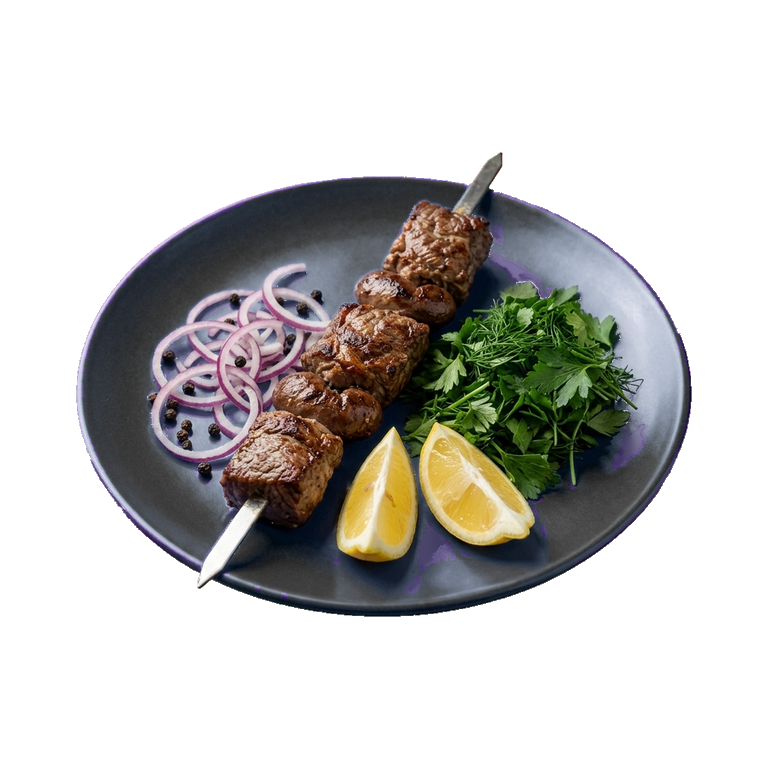
Usuba
Usuba
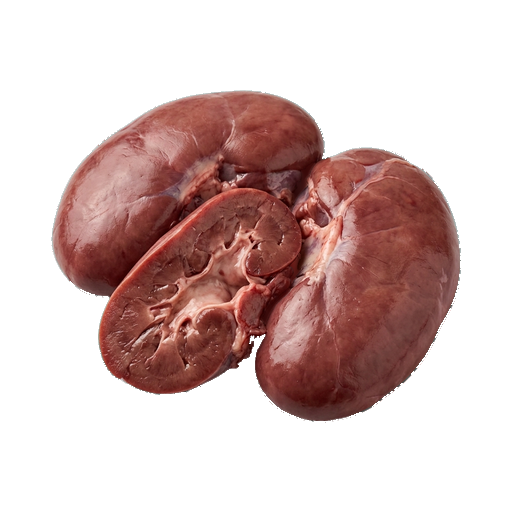
Lamb kidneys
Lamb kidneys are offal with an intense, distinctive smell and dense texture, requiring careful preliminary preparation. They are soaked in cold water or milk for several hours to soften the taste and eliminate the pungent aroma. Kidneys are used in classic dishes — stews, pâtés, baked with mustard or red wine — and are valued for their rich, full-bodied flavor that pairs well with sharp spices and acidic sauces.
Micronutrients
per 100 g
Minerals
About
Lamb kidneys are one of the most underrated offal cuts in the kitchen. They require careful preparation, but the result is worth the effort: tender meat with a characteristic but not sharp flavor, which becomes the basis for many traditional and modern dishes.
Aroma and Flavor
The taste of lamb kidneys is milder than beef kidneys, with a pleasant gamey note that doesn't overpower the dish. The aroma is pronounced, but with proper preparation, it doesn't become intrusive. The texture is firm yet tender, especially if not overcooked. Raw kidneys have a sharp smell, which completely disappears during soaking and heat treatment.
Preparation — the main step
- Soak the kidneys in cold water for at least an hour, preferably 2–3 hours, changing the water several times — this removes the sharp smell
- Clean off the films and fat, cut in half and remove the white tubes inside
- Blanch in boiling salted water for 5–7 minutes, then cool and dry
- After this, the kidneys are ready for frying, stewing or adding to stew
How to Cook
Lamb kidneys are excellent in quick dishes — they are fried over high heat for just a few minutes to preserve their tenderness. They work wonderfully in sauces with wine, mustard, or butter. They are added to stews and braised dishes, where they absorb the aromas of spices and broth. On the grill, kidneys acquire an appetizing crust if marinated beforehand.
Pairings and Seasonings
- Mustard and red wine — a classic combination that highlights the flavor
- Butter, lemon juice and parsley — a simple and elegant option
- Onion, garlic and herbs (thyme, rosemary) — the base for stewing
- Tomatoes and olive oil — for a Mediterranean approach
Selection and Storage
Choose kidneys that are bright red or dark brown in color, without spots or damage. They should be firm to the touch. Use fresh kidneys within a day if stored in the refrigerator. For long-term storage, freeze them in airtight packaging — they will maintain quality for up to three months.
The main rule: do not overcook. Overcooked kidneys become tough and lose their flavor. Quick cooking over high heat or slow stewing — both methods work, the key is to avoid the middle ground.
Nutrition
per 100 g
- Calories
- 83 kcal
- Protein
- 15.1 g
- Fat
- 2.6 g
- Carbs
- 0.3 g
Micronutrients
per 100 g
Macronutrients
- Fiber
- 0 g
- Saturated fat
- 1 g
- Monounsaturated fat
- 0.63 g
- Polyunsaturated fat
- 0.55 g
- Omega-3 (EPA + DHA)
- 0.08 g
- Cholesterol
- 337 mg
- Water
- 79.23 g
Minerals
- Sodium
- 156 mg
- Potassium
- 277 mg
- Calcium
- 13 mg
- Magnesium
- 17 mg
- Phosphorus
- 246 mg
- Iron
- 6.38 mg
- Zinc
- 2.24 mg
- Copper
- 0.45 mg
- Manganese
- 0.12 mg
- Selenium
- 126.9 mcg
Vitamins
- Vitamin A (RAE)
- 95 mcg
- Vitamin C
- 11 mg
- Vitamin B1 (thiamin)
- 0.62 mg
- Vitamin B2 (riboflavin)
- 2.24 mg
- Vitamin B3 (niacin)
- 7.51 mg
- Vitamin B5 (pantothenic acid)
- 4.22 mg
- Vitamin B6
- 0.22 mg
- Vitamin B9 (folate, DFE)
- 28 mcg
- Vitamin B12
- 52.4 mcg
Measures and weight
- 1 pcs
- 100 g
Measure calculator
- Weight
- 100 g
- Calories
- 83 kcal