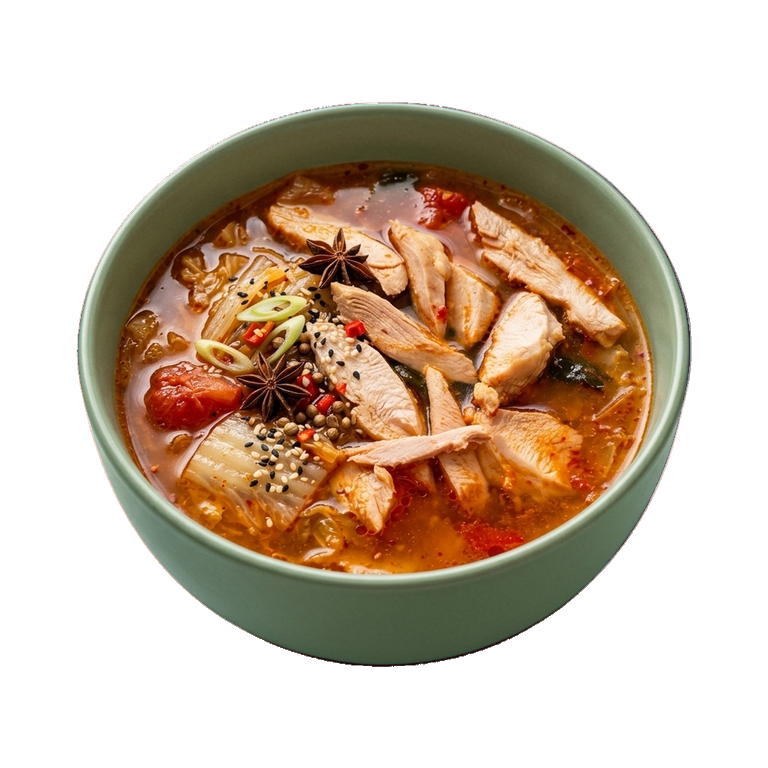
Usuba
Usuba
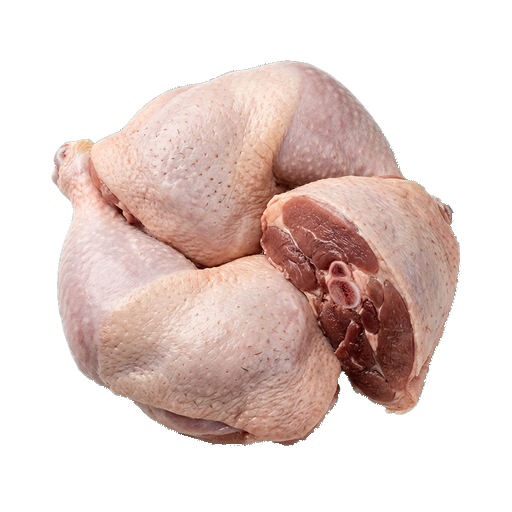
Turkey thigh
Turkey thigh is dark meat with a higher fat and connective tissue content than the breast, making it juicier and more flavorful when cooked properly. Thanks to its dense structure, it withstands prolonged stewing, roasting, and boiling well without losing moisture, and is perfect for stews, soups, and ground meat. When selecting, pay attention to the color of the meat — it should be dark red or brownish, and the skin should be free of damage and unpleasant odor.
Micronutrients
per 100 g
Minerals
About
Turkey thigh is one of the most rewarding cuts for home cooking. It is dark meat with a pronounced flavor that is almost impossible to dry out. Thanks to its high fat and collagen content, the thigh remains juicy even with prolonged heat treatment, making it an ideal choice for both beginners and experienced cooks.
Taste and Aroma
Thigh meat is much more expressive than breast. It has a rich, slightly gamey aroma and a dense texture. During cooking, it releases thick, flavorful juices that become the basis for an excellent sauce or gravy. The taste is quite distinctive, so thigh works well with bold spices and intense marinades.
How to Cook
- Baking whole in the oven is the simplest method. The thigh cooks at 180–200 degrees for about an hour until golden brown.
- Braising in a pot or skillet with vegetables and broth gives tender meat and a rich sauce.
- Grilling or roasting in the oven at high temperature creates crispy skin with juicy meat inside.
- Slow cooking in a multicooker or on the stovetop is ideal for stews and soups, the meat becomes very tender.
Best Combinations
Turkey thigh works well with autumn vegetables — carrots, onions, celery, potatoes. Herbs like thyme, rosemary, and sage emphasize its deep flavor. Don't be afraid to add acidity: lemon juice, wine, or tomatoes will help balance the richness. Spices — black pepper, paprika, garam masala — also find their place here.
Selection and Storage
- Pay attention to the color: the meat should be dark red or brownish, without gray spots.
- The skin should be intact, without damage and sticky coating.
- In the refrigerator, the thigh is stored for 3-4 days in the coldest part; in the freezer — up to 6 months.
- Before cooking, let the meat sit at room temperature for 20-30 minutes — this way it cooks more evenly.
Turkey thigh is a meat that forgives mistakes and rewards you with generous flavor. It's cheaper than chicken thigh while offering a larger volume and a more interesting flavor profile. If you haven't cooked turkey yet, start with this cut.
Nutrition
per 100 g
- Calories
- 144 kcal
- Protein
- 19.3 g
- Fat
- 7.5 g
- Carbs
- 0 g
Micronutrients
per 100 g
Macronutrients
- Fiber
- 0 g
- Sugars
- 0 g
- Saturated fat
- 2.386 g
- Monounsaturated fat
- 2.994 g
- Polyunsaturated fat
- 2.454 g
- Omega-3 (EPA + DHA)
- 0.009 g
- Cholesterol
- 83 mg
- Water
- 71.28 g
Minerals
- Sodium
- 75 mg
- Potassium
- 239 mg
- Calcium
- 4 mg
- Magnesium
- 20 mg
- Phosphorus
- 161 mg
- Iron
- 1.31 mg
- Zinc
- 2.6 mg
- Copper
- 0.08 mg
- Manganese
- 0.01 mg
- Selenium
- 19.8 mcg
Vitamins
- Vitamin A (RAE)
- 29 mcg
- Vitamin D
- 0.5 mcg
- Vitamin E
- 0.16 mg
- Vitamin K
- 0 mcg
- Vitamin C
- 0 mg
- Vitamin B1 (thiamin)
- 0.05 mg
- Vitamin B2 (riboflavin)
- 0.27 mg
- Vitamin B3 (niacin)
- 5.6 mg
- Vitamin B5 (pantothenic acid)
- 1.18 mg
- Vitamin B6
- 0.42 mg
- Vitamin B12
- 2.1 mcg
Measures and weight
- 1 pcs
- 250 g
Measure calculator
- Weight
- 100 g
- Calories
- 144 kcal