Usuba
Usuba
Cuttlefish
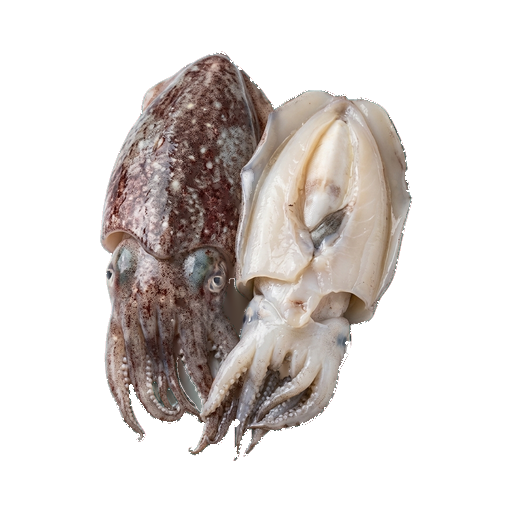
Cuttlefish is a soft-bodied sea mollusk covered in spotted skin, used in Mediterranean and Asian cuisine. The meat has a firm, slightly crunchy texture and a pronounced seafood flavor with a hint of sweetness. When cooking cuttlefish, proper heat treatment is essential — it can be boiled, stewed, fried, or grilled, but overcooking makes the meat tough and rubbery, so it is important to follow the cooking time carefully.
Micronutrients
per 100 g
Minerals
About
Cuttlefish is a sea mollusk that is often confused with squid, although they are completely different creatures. While squid is elongated and swift, cuttlefish is dense, meaty, with a more tender meat structure. In the kitchen, it is a real treasure: the meat is versatile, cooks quickly, and absorbs the flavors of sauces, spices, and oil better than many other seafood.
Taste and Texture
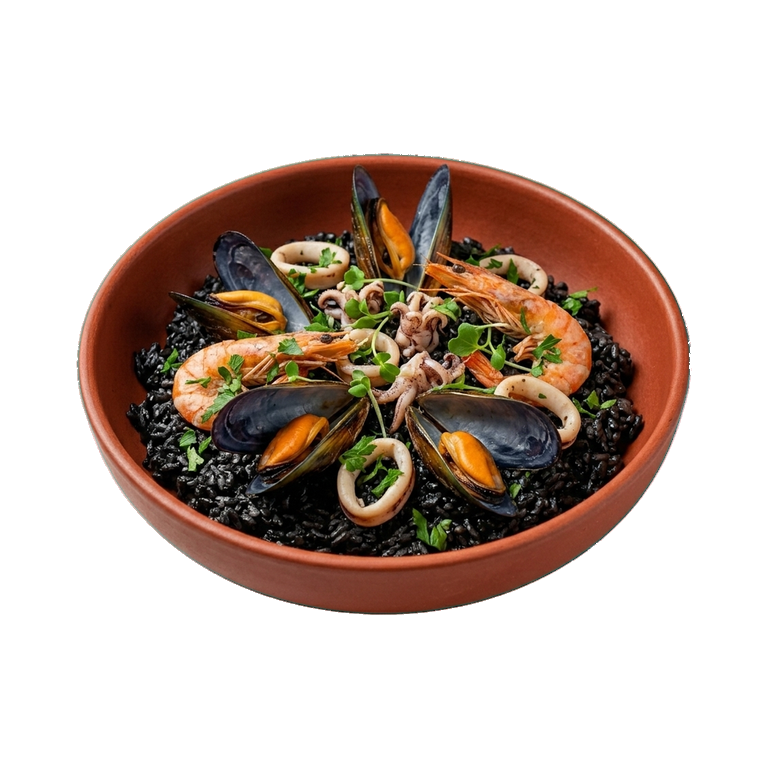
Cuttlefish meat is tender, slightly sweet, with a pronounced seafood flavor, but without a sharp bitterness. The texture is firm, but not tough — if cooked properly, cuttlefish practically melts in your mouth. The key is not to overcook it: even five extra minutes can make it rubbery. The ink that it releases under stress is not waste, but a valuable ingredient for sauces and risotto, giving the dish a deep, slightly bitter taste and black color.
How to cook
Cuttlefish is great because it allows for different approaches. You can boil it in salted water with lemon and bay leaf for just 3–5 minutes for salads and appetizers. Fry it over high heat in olive oil with garlic and parsley — you'll get a crispy exterior and tender interior. Braise it in red wine, tomatoes, and spices for hours — the meat becomes even softer and absorbs all the aroma. For risotto or black pasta, use the ink: it adds not only color but also umami.
Pairings and dishes
- Olive oil, lemon, garlic — a classic base for any squid dish
- Tomatoes, red wine, herbs — ideal for stewing
- Hot spices, chili pepper — will emphasize the seafood flavor
- White wines, butter — for more delicate, refined sauces
- Rice, pasta — squid with ink creates rich, elegant dishes
Selection and Storage
You can recognize fresh cuttlefish by its firm body, pleasant sea smell without ammonia, and shiny skin. Frozen is an equally good option if you thaw it correctly: in the refrigerator, not at room temperature. Fresh cuttlefish keeps in the refrigerator for no more than two days, frozen for several months. Before cooking, clean the cuttlefish of its entrails and ink sac, rinse it under running water. If you want to preserve the ink for sauce, remove it carefully.
Cuttlefish is one of the few seafood products that is equally good in a festive risotto and in a simple lemon salad. It doesn't require complex techniques, but it rewards every attention to detail.
Nutrition
per 100 g
- Calories
- 79 kcal
- Protein
- 16.2 g
- Fat
- 1.1 g
- Carbs
- 0.5 g
Micronutrients
per 100 g
Macronutrients
- Fiber
- 0 g
- Saturated fat
- 0.118 g
- Monounsaturated fat
- 0.081 g
- Polyunsaturated fat
- 0.134 g
- Omega-3 (EPA + DHA)
- 0.105 g
- Cholesterol
- 112 mg
- Water
- 80.56 g
Minerals
- Sodium
- 372 mg
- Potassium
- 354 mg
- Calcium
- 90 mg
- Magnesium
- 30 mg
- Phosphorus
- 387 mg
- Iron
- 6.02 mg
- Zinc
- 1.73 mg
- Copper
- 0.59 mg
- Manganese
- 0.11 mg
- Selenium
- 44.8 mcg
Vitamins
- Vitamin A (RAE)
- 113 mcg
- Vitamin C
- 5.3 mg
- Vitamin B1 (thiamin)
- 0.01 mg
- Vitamin B2 (riboflavin)
- 0.91 mg
- Vitamin B3 (niacin)
- 1.22 mg
- Vitamin B5 (pantothenic acid)
- 0.5 mg
- Vitamin B6
- 0.15 mg
- Vitamin B9 (folate, DFE)
- 16 mcg
- Vitamin B12
- 3 mcg
Measures and weight
- 1 pcs
- 150 g
Measure calculator
- Weight
- 100 g
- Calories
- 79 kcal